1805-1815 ca. Empire Style, High-Waisted Dress, American. Typical style of dress worn in the time of Jane Austen. Long sleeves under short sleeves, square neckline, back fastening. Via Five Colleges and Historic Deerfield Museum Consortium. museums.fivecolleges.edu
Definition Empire Style Dress: High-waisted white gown defined women’s fashion during the Regency Era. ‘Empire’ is the name given to the period when Napoleon Bonaparte built his French Empire. High-waisted, loose gowns were adopted by the aristocracy as a symbol of turning away from the fussy, elaborate and expensive clothing worn in the 1700s.
1790-1810 ca. Jane Austen Style White Linen Shift Or Chemise, American. #RegencyEra #JaneAusten #underclothing https://books2read.com/SuziLoveFashionWomen1801-1804
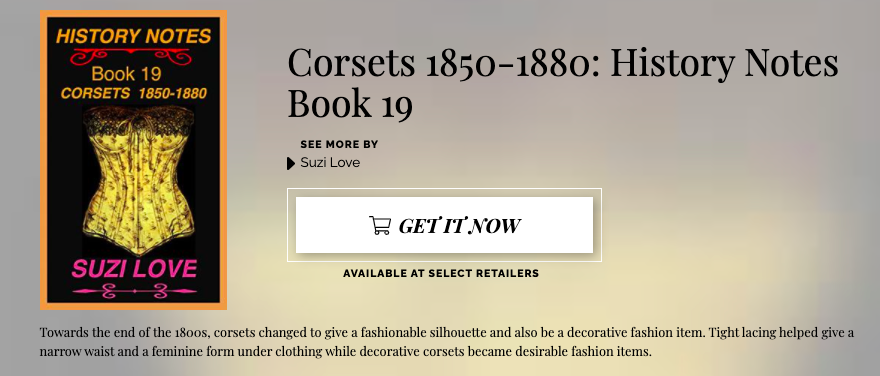
1879-1885 ca. Linen Riding Corset, English. https://books2read.com/SuziLoveCorsetBook19 Woven linen corset, weighs 0.14kg, and worn for riding. Made on a loom with pockets for bones and busk, woven corsets were lightweight, flexible, washable and patented in France in 1832 by Jean Werly. Stitched corsets made from seamed pattern pieces provided more support when on horseback. Manufacturer: Charles Bayer. via Victoria and Albert Museum, London, UK.
The 26th December was St. Stephen’s Day, the first Christian martyr and patron saint of horses, so Boxing Day became associated with horse racing and sports. It was also when the English churches alms boxes were opened and the contents given to the poor of the parish. In the song Good King Wenceslas, the king gave the poor man meat, wine and wood “on the feast of Stephen.” Written by John Mason Neale and first published in 1853, the lyrics celebrate the spirit of Boxing Day which was generosity. King Wenceslas watches a poor man “gath’ring winter fuel. and he then brings the peasant food and logs for his fire. In parts of Europe, St. Stephen’s Day is considered the second day of Christmas.
On the Boxing Day holiday, servants, apprentices, and the poor were presented with gifts. The origin of the holiday is unknown, but was probably first observed in the Middle Ages and the name may come from the opening of alms boxes that had been placed in churches over the holidays for distribution to the poor. It may also be because servants opened their gift boxes on the day after Christmas because on Christmas Day they were busy cooking and serving a large festive meal for their employers. December 26th is also the feast day of St. Stephen, the first Christian martyr and patron saint of horses, so Boxing Day has now become associated with horse racing and sports.
One of the earliest records of these box gifts dates from 1663. In an entry in his diary, English Parliamentarian Samuel Pepys writes that he sent a coach and messenger to his shoemaker to deliver “something to the boys’ box against Christmas” in addition to funds to cover his bill. During Queen Victoria’s reign, Boxing Day became a chance for church parishioners to deposit donations into a box that was put out for the purpose by the clergyman. The money in the boxes was given to the poor.
Some villages followed the custom of the Hunting of the Wren, where small boys captured a wren, killed it, and then mounted it on a pole and carry to every house in the village while singing a song. Money collected was used for a village dance. In London, and in many other parts of Europe, large families and establishments keep regular lists of tradesman’s servants, apprentices, and other persons, who come about making a sort of annual claim on them for a Christmas box on this day.’
‘The custom of annual donations at Christmas, and on New Year’s-day, is very ancient, being copied by the Christians from the Polytheists of Rome, at the time the public religion was changed. These presents, now-a-days, are more commonly made on the morrow of Christmas. From this circumstance the festival of St. Stephen has got the nickname of Christmas Boxing-day, and by corruption, Boxing-day.’ From:- The Lady’s Monthly Museum, Vernor & Hood: Christmas-boxes, 1824.
‘On the day after Christmas, tradespeople are visited by persons in the employment of their customers for a “Christmas-box,” and every man and boy who thinks he is qualified to ask, solicits from those on whom he calculates as likely to bestow. A writer, in 1731, describes Boxing-day at that time from his own experience. ” By that time I was up, my servants could do nothing but run to the door. Inquiring the meaning, I was answered, the people were come for their Christmas-box : this was logic to me; but I found at last, that, because I had laid out a great deal of ready-money with my brewer, baker, and other tradesmen, they kindly thought it my duty to present their servants with some money for the favor of having their goods. This provoked me a little; but being told it was ‘ he custom,’ I complied. These were followed by the watch, beadles, dustmen, and an innumerable tribe; but what vexed me the most was the clerk, who has an extraordinary place, and makes as good an appearance as most tradesmen in the parish; to see him come a boxing, alias begging, I thought was intolerable: however I found it was ‘ the custom’ too, so I gave him half-a-crown; as I was likewise obliged to do to the bellman, for breaking my rest for many nights together.’ From The Every-day book and table book by William Hone, 1839
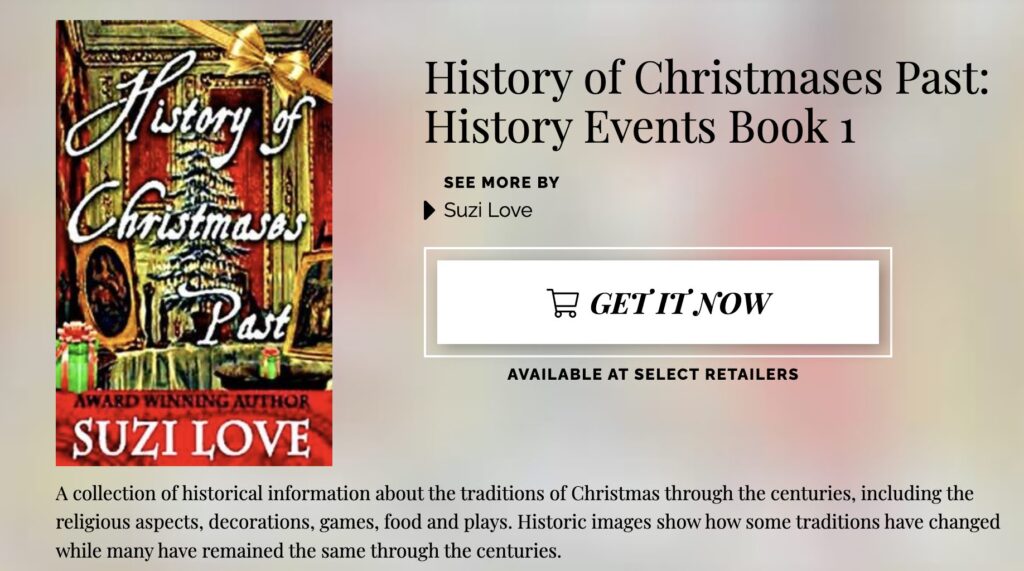
Boxing Day is one of the many customs and traditions associated with Christmas that is featured in History of Christmases Past (Book 1 History Events) by Suzi Love.
The Star of Bethlehem, or Christmas Star appears in nativity story of Gospel of Matthew where wise men from the East, or Magi, follow the star and travel to Jerusalem. The Three Wise Men brought gold, frankincense and myrrh to the newborn king. Myrrh being commonly used as an anointing oil, frankincense as a perfume, and gold as a valuable.
Three Kings came riding from far away,
Melchior and Gaspar and Baltasar;
Three Wise Men out of the East were they,
And they travelled by night and they slept by day,
For their guide was a beautiful, wonderful star.
The Three Kings by Henry Wadsworth Longfellow
Gold, Frankincense and Myrrh were the three presents brought by the Wise Men to the Infant Christ, lying in the manger stall, at Bethlehem. Gold to Christ means that all the affluence of the world surrendered to Him and Gold paid the way for Joseph and Mary and the divine fugitive into Egypt. The gold for Christ, the silver for Christ, the jewels for Christ. The bright, round, beautiful jewel of a world set like a solitaire on the bosom of Christ. The wise men shook myrrh out of their sacks and the cattle snuffed at it but didn’t eat it because it was bitter. This pungent gum resin of Abyssinia was brought to the feet of Christ to show bitter betrayal, persecution, days of suffering and bitter nights. Myrrh was put into His cup when He was dying and put under His head in the wilderness and Myrrh was used on His from the cattle-pen in Bethlehem to the mausoleum. Frankincense means worship and was brought to temples, sprinkled over the living coals, and when they were ready to worship, the cover was lifted and perfumed smoke arose and filled the places of worship and altars.
In modern times, gifts are given on December 25th, or Christmas Day, in most countries but in others it is December 6th, or Saint Nicholas Day, and January 6th, or Epiphany. European countries generally follow the custom of giving each other presents on Christmas Eve.
The origin of Santa Claus begins in the 3rd or 4th century with Saint Nicholas, Bishop of Myra, an area in present day Turkey. By all accounts St. Nicholas was a generous man, particularly devoted to children.Thousands of churches across Europe were dedicated to him and some time around the 12th century an official church holiday was created in his honor. The Feast of St. Nicholas was celebrated December 6 and the day was marked by gift-giving and charity.
After the Reformation, European followers of St. Nicholas dwindled, but the legend was kept alive in Holland where the Dutch spelling of his name Sint Nikolaas was eventually transformed to Sinterklaas, and then Santa Claus. After his death around 340 A.D., he was buried in Myra, but in 1087 Italian sailors purportedly stole his remains and removed them to Bari, Italy, greatly increasing St. Nicholas’ popularity throughout Europe. His kindness and reputation for generosity gave rise to claims he that he could perform miracles and devotion to him increased. St. Nicholas became the patron saint of Russia, where he was known by his red cape, flowing white beard, and bishop’s mitre.
In Greece, he is the patron saint of sailors. In France, the patron of lawyers. In Belgium, the patron of children and travelers. Thousands of churches across Europe were dedicated to him and some time around the 12th century an official church holiday was created in his honor. The Feast of St. Nicholas was celebrated December 6 and the day was marked by gift-giving and charity.
After the Reformation, European followers of St. Nicholas dwindled, but the legend was kept alive in Holland where the Dutch spelling of his name Sint Nikolaas was eventually transformed to Sinterklaas, and then Santa Claus. Dutch children would leave their wooden shoes by the fireplace, and Sinterklaas would reward good children. hence Santa Claus bringing gifts to children who have been good.