↓
 

Suzi Love

Making history fun, one year at a time.

Header_
  • Home
  • Newsletter
  • Pre order form
  • Shop
    • Cart
    • Checkout
    • My account
    • Refund and Returns Policy
  • Blog
  • BOOKS
    • History Events
    • Kelly’s Justice
    • Irresistible Aristocrats
    • History Notes
    • Scandalous Siblings
    • Love After Waterloo
    • Regency Life Series
  • Privacy Policy
  • EVENTS
Home » Regency London » Page 8 << 1 2 … 6 7 8 9 10 >>

Tag Archives: Regency London

Post navigation

← Previous Post
Next Post→

1819 January Dandy Gentleman ‘Going to White’s’ Club In London By Richard Dighton. #RegencyEra #JaneAusten #London

Suzi Love Posted on November 16, 2024 by Suzi LoveNovember 13, 2024

1819 January ‘Going to White’s’. By Richard Dighton. Lord Alvanley walks on the pavement going to White’s Club for gentlemen in London wearing a top-hat, double-breasted coat, strapped trousers, and the high collar of a dandy. Via British Museum, London, UK. britishmuseum.org (PD-Art)
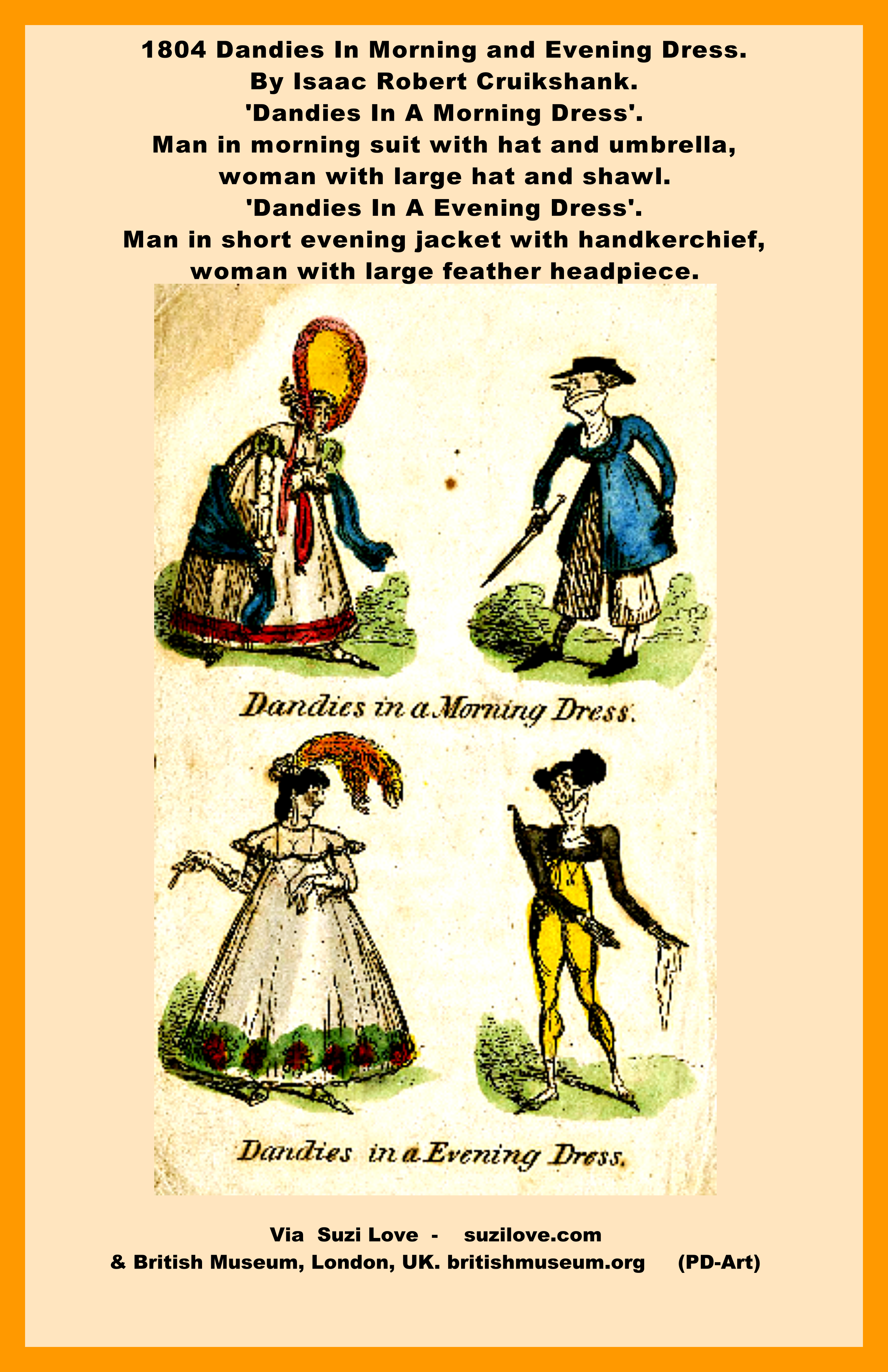
White’s was an exclusive Gentlemen’s Club on St. James Street, London, U.K where well-dressed men, or Dandies, gathered at a special table in front of the large bow window looking out at the street. This became known as a seat of privilege and was used by London’s most famous Dandy, Beau Brummell. Other well-known dandies were William Arden, Joshua Allen, Thomas Raikes and Ball Hughes. Cartoonists loved to ridicule these high-in-the-instep gentlemen who wore the most fashionable clothes and set the fashion trends for the Regency years, and the years when Jane Austen was writing her famous novels.

1819 January 'Going to White's'. By Richard Dighton. Lord Alvanley walks on the pavement going to White's Club for gentlemen in London wearing a top-hat, double-breasted coat, strapped trousers, and the high collar of a dandy. Via British Museum, London, UK. britishmuseum.org (PD-Art)
https://books2read.com/suziloveYGD
1819 January Dandy Gentleman 'Going to White's' Club In London By Richard Dighton. #RegencyEra #JaneAusten #London https://books2read.com/suziloveYGD Share on X
RL_2_D2D_RetailerBuyLink_RL_2
RL_2_D2D_RetailerBuyLink_RL_2 https://books2read.com/suziloveYGD
Posted in 1800s, 1800s Mens Fashions, cartoon, Coat or Pelisse Or Redingote, Customs & Manners, England, fashion accessories, hats, Jane Austen, London, pants, Regency Era, Regency Fashion, shoes, Suit, Suzi Love Images, Vest or Waistcoat | Tagged 1800s men fashion, boots, British history, British Museum, Cartoons, clubs, dandy, fashion accessories, gloves, Hats And Hair, pants, Redingote Or Pelisse Or Coat, Regency Fashion, Regency London, Regency Men, Shoes

1800s Omnibus History, France and England. #RomanticEra #VictorianEra #BritishHistory #Travel

Suzi Love Posted on October 11, 2024 by Suzi LoveSeptember 16, 2024

‘Omnibuses, under the name of carrosses a cinq sous, were started in Paris in 1662. Seven vehicles to carry eight passengers each, all inside, were built, and on March 18th, 1662, they began running. The first one was timed to start at seven o’clock in the morning, but an hour or two earlier a huge crowd had assembled to witness the inauguration ceremony, which was performed l)y two Commissaires of the Chatelet, attired in their official robes. Accompanying them were four guards of the Grand Prevot, twenty men of the City Archers, and a troop of cavalry. ‘

In 1828, George Shillibeer, a London coach builder, visited Paris where he was impressed by the efficiency of the new horse-drawn bus service. The following year, he started a single horse-drawn omnibus connecting Paddington and Regent’s Park to the City of London. Passengers were picked up and set down anywhere along the route and fares were paid on board, in contrast to short-stage coaches which had to be booked in advance. 

This new omnibus was pulled by three horses and carried 22 passengers who sat inside and were protected from the weather. Fares were sixpence and one shilling, less than a hackney cab or short-stage coach, but still too expensive for the lower classes. 

1829 July 4th George Shillibeer's Omnibus, London, U.K. First Omnibus between Paddington and the Bank of
1829 July 4th George Shillibeer Omnibus, London, U.K. First Omnibus between Paddington and Bank of England via the New Road, now Marylebone Rd., Somers Town and City Rd. Via Wikimedia Commons.

In 1832, the London City monopoly of hackney carriages was removed, so horse buses expanded and within two years there were 620 licensed horse buses in London. By the Great Exhibition in 1851, London’s increase in visitors meant this number doubled and the number of routes increased to 150.  By 1856, several bus operators were taken over by the new London General Omnibus Company until, with 600 omnibuses, they were the largest bus company in the world.  In 1833, the first real steam omnibuses, the ‘Era’ and ‘Autopsy’ were invented by Walter Hancock, of Stratford, and started on the London roads. The ‘Era’ was the better omnibus of the two, and the most flattering things were said and predicted of it. Enthusiasts declared that omnibuses of this type would enable passengers to be carried at a cheaper rate and greater speed. The ‘Era’ ran from Paddington to the Bank, the same route as the horse-drawn omnibuses, and carried fourteen passengers, the fare being sixpence all the way. It travelled at the rate of ten miles an hour. Travel on these roads was also dangerous as highwaymen stopped and robbed anyone who came along. Male or female made no difference to highwaymen in Britain, nor to the bushrangers in Australia or the gangs on American roads, as they robbed indiscriminately and often with violence.   

By the end of the 18th Century, however, travel as a pleasurable pursuit came into vogue and numerous guides were written for traveling all over the British Isles as well as on the continent. The 1812  ‘Tour Of Dr. Syntax’ was an ironic look at the new obsession of travel and travel guides. Before he set off for the Lake District, Dr. Syntax said to his wife, “You well know what my pen can do, and I’ll employ my pencil too: I’ll ride and write, and sketch and print and thus create a real mint: I’ll prose it here, I’ll verse it there and picturesque it everywhere. I’ll do what all have done before; I think I shall and somewhat more.”  Georgian and Regency travelers were envious of aristocrats, even if they were of the nobility themselves, and loved to view all the British Great Houses. 

A gentleman and his wife would even drive up to the front door of a mansion house and demand to be given a tour of the house.  If they weren’t admitted, they would write in their journals of the inhospitable nature of the people on a particular estate. Thomas Pennant, William Mavor, and others, loved to write about these bad experiences and have them published.  Paterson’s British Itinerary, a travel guide had 17 editions between 1785-1832 – it outlined the roads used by the stage and mail coaches, the tolls, the bridges, etc.   This new touring craze created an industry of hospitality that encompassed more than simple mail coach trips from place to place, and more than a noble family traveling from their country seat to the Metropolis of London for parliamentary sittings. Inns had to improve the quality of the linens and meals if they wanted to attract the wealthier traveling class. Before that, many travelers carried their own linen, crockery, glasses, and utensils, as they didn’t trust the hygiene or standards of country inns.

Travel became something written about by poets with many sonnets written to the beauty of places like the Lake District in England, or the pyramids in Egypt. Inns became cleaner and more respectable so they could welcome travelers of the upper classes. This also meant that women could travel more as roads were slowly improved from rutted tracks that were only suitable for horse riding to roads that family coaches could travel along, though these roads were still narrow and subject to extremes of weather, such as flooding.  The race was on to travel from places like London to Edinburgh in the fastest possible time.

1800s Omnibus History, France and England. #RomanticEra #VictorianEra #BritishHistory #Travel books2read.com/SuziLoveTravel Share on X
HN_10_D2D_RetailerBuyLink

books2read.com/SuziLoveTravel
HN_10_D2D_RetailerBuyLink_ History Notes Book 10 books2read.com/SuziLoveTravel
Posted in 1800s, England, Europe, France, History, London, Quotations, Regency Era, Romantic Era, Suzi Love Images, travel, Victorian Era | Tagged British history, europe, google books, History Notes, Regency London, Romantic Era, travel, Victorian Era

1826 Almack’s Revisited by Charles White.: ‘It was what most correct persons called ‘horrid bad Almack’s’. #RegencyEra #London #BritishHistory

Suzi Love Posted on September 12, 2024 by Suzi LoveAugust 31, 2024

1826 Almack’s Revisited by Charles White. The ball of this evening passed off as all other balls at the same place, creating envy, jealousy, and hatred in the minds of many of those who have been unsuccessful in procuring tickets; affording real amusement to few, and disappointing a greater portion of those who, by dint of manoeuvring, petitioning, parliamentary interest, or presents, have been enabled to obtain the desired vouchers; and as this was one of the last balls of the season, and a general election already talked of, the mixture of company and the number was much greater than usual; and, consequently, it was what the most correct persons called, “horrid bad Almack’s!”

Almack’s or Willis’s Rooms, King Street, St James, London, UK. Almack’s Assembly Rooms, founded by William Almack at No. 26-28, were on the site of the present Almack House. The club was originally a gaming establishment but moved from Pall Mall. The Assembly rooms were on the South side of King Street in St James’s and were opened on February 12, 1765. At the time the subscription was ten guineas for which there was a ball and supper each week for the twelve weeks of the season.

1826 Almack's Revisited by Charles White.: 'It was what most correct persons called 'horrid bad Almack's'. #RegencyEra #London #BritishHistory
1826 Almack’s Revisited by Charles White.: ‘It was what most correct persons called ‘horrid bad Almack’s’. #RegencyEra #London #BritishHistory
1826 Almack's Revisited by Charles White.: 'It was what most correct persons called 'horrid bad Almack's'. #RegencyEra #London #BritishHistory  books2read.com/suziloveOLD  Share on X
RL_5_D2D_RetailerBuyLink_RL_5_2
https://books2read.com/suziloveOLD
Posted in 1800s, 1800s Mens Fashions, 1800s women's fashion, dancing, England, Google Books, History, London, Pastimes, Regency Era, Regency Fashion, Suzi Love Images | Tagged Almack's Assembly Rooms, Customs and Traditions, dancing, google books, Jane Austen, London, Regency Era, Regency London, Regency People | Leave a reply

1829 July 4th George Shillibeer’s Omnibus, London. First Omnibus between Paddington and Bank of England. #BritishHistory #Travel #Regency #London

Suzi Love Posted on August 31, 2024 by Suzi LoveAugust 24, 2024

1829 July 4th George Shillibeer’s Omnibus, London, U.K. First Omnibus between Paddington and Bank of England via the New Road, now Marylebone Rd., Somers Town and City Rd. Via Wikimedia Commons. books2read.com/SuziLoveTravel

1829 July 4th  George Shillibeer's Omnibus, London, U.K. First Omnibus between Paddington and the Bank of England via the New Road, now Marylebone Rd., Somers Town and City Rd. Four services in each direction daily.  Via Wikimedia Commons.
1829 July 4th George Shillibeer’s Omnibus, London, U.K. First Omnibus between Paddington and Bank of England via the New Road, now Marylebone Rd., Somers Town and City Rd. Via Wikimedia Commons.
1829 July 4th George Shillibeer's Omnibus, London. First Omnibus between Paddington and Bank of England. #BritishHistory #Travel #Regency #London. books2read.com/SuziLoveTravel Share on X
HN_10_D2D_RetailerBuyLink_HN_10.books2read.com/SuziLoveTravel
D2D_RetailerBuyLink_HN_10. books2read.com/SuziLoveTravel
Posted in 1800s, Carriage, London, Regency Era, Suzi Love Images, travel | Tagged carriages, Regency London, Suzi Love Images, travel, WikiMedia Commons | Leave a reply

1809-1829 Magazine for the Bridgertons and Jane Austen: Rudolph Ackermann and ‘The Repository of Arts’, The Strand, London. #JaneAusten #Bridgerton #RegencyEra #London #History

Suzi Love Posted on August 28, 2024 by Suzi LoveAugust 24, 2024

A portrait from 1810-1814 of Rudolph Ackermann, shop owner and founder of ‘The Repository Of Arts’ magazine, The Strand, London. via National Portrait Gallery, London. Plus, an image of Ackermann’s premises in 1809. His ‘Repository of Arts, Literature, Fashion, Manufactures, etc.’ was published from 1809 to 1829 with images of Regency London, Regency furnishings and grand homes as well as beautiful fashion prints and descriptions every month. Ackermann originally supplied artists, amateur and professional, with supplies for watercolor painting. In 1799, he began manufacturing and selling his own watercolor paint blocks which were supplied by other colourmen, although at least three colors were his own mixture – Ackermann’s Green, White and Yellow. From 1817, his eldest son Rudolph Ackermann junior was responsible for the watercolor manufacturing. Ackermann also trained as a carriage designer. He began publishing prints and colour-plate books like ‘The Microcosm of London’ and ‘Doctor Syntax’ in the early 1800s.

The Repository of Arts was one the most popular magazines in Jane Austen’s time as it displayed everything ladies wanted to learn e.g. history, important country seats and houses in England, music, current events such as theatre plays, plus fashion plates and embroidery patterns. Ackermann’s shop in The Strand, London, was one of the fashionable places to shop during the Regency Era. The Repository also included poetry, travel reports, society reports and upcoming lectures. It also included serious subjects e.g. politics, legal matters, medicine and agriculture, a meteorological journal and details of the London markets. In 1817, the price of the magazine was 4 Shillings, so quite expensive for the time.

 In the first issue, published for January 1809, Ackermann included an ‘introduction to the history of the useful and polite arts’ which said: “It is universally admitted, that to cultivate a taste for the arts, and an acquaintance with the sciences, is a pleasure of the most refined nature; but to do this without regard to its influence upon the passions and affections, is to ‘tear a tree for its blossoms, which is capable of yielding the richest and most valuable fruit.’ The cultivation of this taste may and ought to be subservient to higher and more important purposes: it should dignify and exalt our affections, and elevate them to the admiration and love of that Being who is the author of every thing that is fair, sublime, and good in nature.”

1810-1814 Portrait of Rudolph Ackermann, shop owner and founder of The Repository Of Arts magazine. via National Portrait Gallery, London.
1809 January Ackermann's Repository of Arts, 101 Strand, London, U.K. Drawn by Augustus Pugin and Thomas Rowlandson. Published By Rudolph Ackermann. Etching and aquatint with hand coloring.
1809 January Ackermann’s Repository of Arts, 101 Strand, London, U.K. Drawn by Augustus Pugin and Thomas Rowlandson. Published By Rudolph Ackermann. Etching and aquatint with hand coloring.
1809-1829 Magazine for the Bridgertons and Jane Austen: Rudolph Ackermann and 'The Repository of Arts', The Strand, London. #JaneAusten #Bridgerton #RegencyEra #London #Historyhttps://books2read.com/suziloveYLD Share on X
D2D_RL_4_YLD_Young Lady's Day Regency Life Series Book 4 by Suzi Love. A light-hearted look at the longer Regency years and an easy to read view of what a young lady did, wore, and lived. https://books2read.com/suziloveYLD

D2D_RL_4_YLD_Young Lady's Day Regency Life Series Book 4 by Suzi Love. A light-hearted look at the longer Regency years and an easy to read view of what a young lady did, wore, and lived. https://books2read.com/suziloveYLD
Posted in 1800s, 1800s women's fashion, art, Bridgerton, Coat or Pelisse Or Redingote, Decorative Item, Dress Or Robe, England, fashion accessories, furniture, Google Books, hats, History, household, Jane Austen, London, mourning, Music, Pastimes, Regency Era, Regency Fashion, Reticule or Bag, sewing, shoes, Spencer, Suzi Love Images, travel, weddings | Tagged 1800s women's fashion, art, Dress Or Gown, fashion accessories, Fashion Plate, gloves, Hats And Hair, Jane Austen, London, magazines, music, pastimes, Regency Fashion, Regency Life, Regency London, Regency Women, Rudolph Ackermann, Shoes, shopping, The Repository Of Arts

1815 First Quadrille at Almack’s Assembly Rooms, London. #Regency #JaneAusten #Dancing

Suzi Love Posted on August 28, 2024 by Suzi LoveAugust 28, 2024

1815 The First Quadrille at Almack’s Assembly Rooms, London. Left to Right: Marquis of Worcester, Lady Jersey, Clanronald MacDonald and Lady Worcester. “It was not until 1815 that Lady Jersey introduced from Paris the favourite quadrille, which has so long remained popular. I recollect the persons who formed the very first quadrille that was ever danced at Almack’s: they were Lady Jersey, Lady Harriett Butler, Lady Susan Ryde, and Miss Montgomery; the men being the Count St Aldegonde, Mr Montgomery, Mr Montague, and Charles Standish.” From The Reminiscences of Captain Gronow 1810-1860.

The patronesses of Almack’s controlled a lot of a young lady’s acceptance into English society in Jane Austen’s times. To be given a voucher and admitted to an assembly, there was an introduction into London’s polite society.

1815 Lady Jersey introduced the Quadrille from Paris.
Screenshot
1815  The First Quadrille at Almack's Assembly Rooms, London.  Left to Right: Marquis of Worcester, Lady Jersey, Clanronald MacDonald and Lady Worcester. "It was not until 1815 that Lady Jersey introduced from Paris the favourite quadrille, which has so long remained popular. I recollect the persons who formed the very first quadrille that was ever danced at Almack's: they were Lady Jersey, Lady Harriett Butler, Lady Susan Ryde, and Miss Montgomery; the men being the Count St Aldegonde, Mr Montgomery, Mr Montague, and Charles Standish." From The Reminiscences of Captain Gronow 1810-1860.
1815 Early First Quadrille at Almack's Assembly Rooms, London. #RegencyEra #JaneAusten #Dancing https://books2read.com/suziloveYLD Share on X
D2D_RL_4_YLD_Young Lady's Day Regency Life Series Book 4 by Suzi Love. A light-hearted look at the longer Regency years and an easy to read view of what a young lady did, wore, and lived. https://books2read.com/suziloveYLD
Posted in 1800s, 1800s Mens Fashions, 1800s women's fashion, cartoon, dancing, Dress Or Robe, Google Books, Jane Austen, London, pants, Regency Era, Regency Fashion, shoes, Suzi Love Images | Tagged 1800s men fashion, 1800s women's fashion, Almack's Assembly Rooms, Cartoons, dancing, Dress Or Gown, google books, Jane Austen, Regency Fashion, Regency Life, Regency London, Regency Men, Regency Women, Shoes | Leave a reply

1787 St. George’s Church, Hanover Square, London, known for Regency aristocracy weddings in Bridgerton and Jane Austen times, and for pickpockets. #Bridgerton #JaneAusten #London #regencyera #GeorgianEra

Suzi Love Posted on August 24, 2024 by Suzi LoveJanuary 18, 2026

1787 St. George’s Church, Hanover Square, London, U.K. By T. Malton. A favorite place to be married for the Regency aristocracy during Bridgerton and Jane Austen times, but also a haunt of pickpockets.

From the Edinburgh Annual Register 1810: Complaints have been made of numerous robberies, by daring gangs of pickpockets in the daytime, in the public streets, also at churches, chapels, and meetings, particularly at St. George’s church, Hanover-square. The Countess of Aylesford, and several other ladies of distinction, having been robbed there, mentioned the circumstances to Townsend, the officer. The Countess of Aylesford said, she had no doubt but she was robbed by a short fat woman. Townsend went to the church and observed Mary Blakeman, alias Hills, a well-known female pickpocket, genteelly dressed in a black velvet pelisse and a cottage straw bonnet. When he called her outside, no stolen property was found on her person, despite him knowing her to be a thief for 25 years.

London_church_1787_St_George's_Hanover_Square_by_T_Malton.
1787_St_George’s_Hanover_Square_by_T_Malton
1787 St. George’s Church, Hanover Square, London, known for Regency aristocracy weddings in Bridgerton and Jane Austen times, and for pickpockets. #Bridgerton #JaneAusten #London #regencyera #GeorgianEra… Share on X
RL_1_D2D_Regency Overview RetailerLinks
https://books2read.com/suziloveROver
RL_1_D2D_Regency Overview RetailerLinks https://books2read.com/suziloveROver
Posted in 1700s, 1800s, Bridgerton, Customs & Manners, Jane Austen, London, weddings | Tagged Bridgerton, church, Georgian era, Jane Austen, London, Regency Era, Regency London | Leave a reply

1826 ‘Cits’ Dining At The Grand House. From A Regency Gentleman’s Life. #RegencyEra #Cartoon #England

Suzi Love Posted on August 1, 2024 by Suzi LoveJuly 27, 2024
1826  'Cits' Dining At The Grand House. From A Regency Gentleman's Life. #Regency #Cartoon #England
1826 The Cyprian’s Ball At the Argyll Rooms. A Regency Gentleman’s Life. From The English Spy By Robert Cruikshank.
1826 'Cits' Dining At The Grand House. From A Regency Gentleman's Life. #RegencyEra #Cartoon #England https://books2read.com/suziloveYGD Share on X
RL_2_D2D_RetailerBuyLink_RL_2
RL_2_D2D_RetailerBuyLink_RL_2 https://books2read.com/suziloveYGD
Posted in 1800s, 1800s Mens Fashions, 1800s women's fashion, Bridgerton, cartoon, Customs & Manners, Food and Drink, Google Books, household, London, Pastimes, peerage, Regency Era, Regency Fashion, Suzi Love Images | Tagged 1800s men fashion, Cartoons, drinks, England, Food, google books, London, pastimes, Regency Fashion, Regency London, Regency Men

1823 Hackney Cab, London, built by coach builder, David Davies. #Regency #London #Carriage #Travel

Suzi Love Posted on May 12, 2024 by Suzi LoveJune 4, 2024

1823 Hackney Cab, London, U.K. This small cabriolet was built by coach builder, David Davies, and licensed for public convenience. Name ‘hackney’ derived from village of Hackney, Middlesex, famous for horse drawn carriages. French word cabriolet was shortened to cab, hence ‘Hackney Cab’. In 1813, there were 1100 hackney coaches for hire in London. Designs changed constantly and in 1834 Joseph Hansom registered his design for a cabriolet named ‘Hansom Cab’.

1823 Hackney Cab, London, U.K. This small cabriolet was built by coach builder, David Davies, and licensed for public convenience. Name 'hackney' derived from village of Hackney, Middlesex, famous for horse drawn carriages. French word cabriolet was shortened to cab, hence 'Hackney Cab'.
1823 Hackney Cab, London, U.K. This small cabriolet was built by coach builder, David Davies, and licensed for public convenience. Name ‘hackney’ derived from village of Hackney, Middlesex, famous for horse drawn carriages. French word cabriolet was shortened to cab, hence ‘Hackney Cab’.
1823 Hackney Cab, London, built by coach builder, David Davies. #Regency #London #Carriage http://books2read.com/SuziLoveTravel Share on X
HN_10_D2D_RetailerBuyLink_HN_10.books2read.com/SuziLoveTravel
D2D_RetailerBuyLink_HN_10. books2read.com/SuziLoveTravel
Posted in 1800s, Carriage, England, History, London, Regency Era, Suzi Love Images, travel | Tagged carriages, London, Regency Life, Regency London, Suzi Love Images, transport, travel

1809 Messrs. Harding Howell and Co., Draper on Pall Mall, London, U.K. #RegencyEra #London #History

Suzi Love Posted on February 16, 2024 by Suzi LoveFebruary 15, 2024

1809 Messrs. Harding Howell and Co., London, UK. View of interior of Harding Howell and Co., draper’s shop on Pall Mall. Ladies examine latest fashions and fabrics which they could then request of their dressmakers. This house extended 150 feet from front to back and was divided by glass petitions into four departments, furs and fans, haberdashery, jewellery, ornaments and perfumes, and millinery. bl.uk

1809 Interior of Messrs. Harding Howell and Co. Draper's Shop, Pall Mall, London, U.K.
1809 Interior of Messrs. Harding Howell and Co. Draper’s Shop, Pall Mall, London, U.K.
1809 Messrs. Harding Howell and Co., Draper on Pall Mall, London, U.K. #RegencyEra #London #History https://books2read.com/suziloveROver Share on X

RL_1_D2D_Regency Overview RetailerLinks
https://books2read.com/suziloveROver
RL_1_D2D_Regency Overview RetailerLinks https://books2read.com/suziloveROver
Posted in Decorative Item, England, furniture, History, Regency Era, Suzi Love Images | Tagged 1800s women's fashion, fashion accessories, Jane Austen, London, Regency Fashion, Regency London, Regency Women, shopping

Post navigation

← Previous Post
Next Post→

SUBSCRIBE TO SUZI LOVE'S NEWSLETTER.

Recent Posts

  • 1802 Bridgerton and Jane Austen Style Dress Bodices and Two Cute Bonnets. #Bridgertons#Regency #Hats #JaneAusten
  • Love After Waterloo: There’d been nowhere safe to hide a lady and her son at Waterloo. #HistoricalEroticRomance #MilitaryRomance #Waterloo #RegencyRomance #ReadARegency
  • “There is a stubbornness about me that never can bear to be frightened at the will of others. My courage always rises at every attempt to intimidate me.” Jane Austen Pride and Prejudice (1813) #JaneAusten #RegencyEra #Quote
  • 1780-1820 ca. Brown Leather Boots, British, As Worn In Bridgerton and Jane Austen Times. #Bridgerton #JaneAusten #GeorgianEra #RegencyEra #Shoes
  • 1756-1762 ca. Gold and Enamel Étui, French. #GeorgianEra #France #Antiques #WritingToools

Recent Comments

  1. Suzi Love on Book Hooks: Earl of Winchester has no time for mad scientist Lady Jamison yet when he’s with her, desire explodes. #HistoricalMystery #RomCom #VictorianRomance #RegencyRomance
  2. Suzi Love on Book Hooks: Earl of Winchester has no time for mad scientist Lady Jamison yet when he’s with her, desire explodes. #HistoricalMystery #RomCom #VictorianRomance #RegencyRomance
  3. Maggie Blackbird on Book Hooks: Earl of Winchester has no time for mad scientist Lady Jamison yet when he’s with her, desire explodes. #HistoricalMystery #RomCom #VictorianRomance #RegencyRomance
  4. Suzi Love on Book Hooks: Earl of Winchester has no time for mad scientist Lady Jamison yet when he’s with her, desire explodes. #HistoricalMystery #RomCom #VictorianRomance #RegencyRomance
  5. Jana Richards on Book Hooks: Earl of Winchester has no time for mad scientist Lady Jamison yet when he’s with her, desire explodes. #HistoricalMystery #RomCom #VictorianRomance #RegencyRomance

Login

  • Log in

Archives

  • April 2026
  • March 2026
  • February 2026
  • January 2026
  • December 2025
  • November 2025
  • October 2025
  • September 2025
  • August 2025
  • July 2025
  • June 2025
  • May 2025
  • April 2025
  • March 2025
  • February 2025
  • January 2025
  • December 2024
  • November 2024
  • October 2024
  • September 2024
  • August 2024
  • July 2024
  • June 2024
  • May 2024
  • April 2024
  • March 2024
  • February 2024
  • January 2024
  • November 2023
  • October 2023
  • September 2023
  • August 2023
  • July 2023
  • June 2023
  • April 2023
  • March 2023
  • February 2023
  • June 2022
  • April 2022
  • March 2022

Categories

  • 1700s
  • 1700s Mens fashion
  • 1700s Womens Fashion
  • 1800s
  • 1800s Mens Fashions
  • 1800s women's fashion
  • 1900s
  • art
  • Australia
  • Bath
  • bedroom fashion
  • Book Hooks
  • Box Or Container
  • Bridgerton
  • Bus Trips
  • Canada
  • Carriage
  • cartoon
  • Celebrity
  • Chatelaine
  • children
  • Children
  • Christmas
  • Coat or Pelisse Or Redingote
  • Contemporary
  • Corset
  • Couple
  • Customs & Manners
  • dancing
  • December Scandal
  • Decorative Item
  • Dress Or Robe
  • Easter
  • Edwardian Era
  • Embracing Scandal
  • England
  • Ester In Images
  • Europe
  • Events
  • Fashion
  • fashion accessories
  • Food and Drink
  • Four Times A Virgin
  • France
  • furniture
  • Georgian Era
  • Georgian Fashion
  • Google Books
  • Grand Tour
  • Group
  • hats
  • History
  • History Events
  • History Notes
  • History Of Christmases Past
  • household
  • Hygiene
  • Irresistible Aristocrats
  • Jane Austen
  • Keanu Reeves
  • Kellys Justice
  • Legal
  • London
  • Love After Waterloo
  • Loving Lady Katharine
  • medical
  • military
  • money
  • mourning
  • Music
  • Outback Arrival
  • pants
  • Pastimes
  • peerage
  • People
  • Petunia and Pearl Diver
  • Places
  • Pleasure House Ball
  • postal
  • Queensland
  • Quotations
  • Regency Era
  • Regency Fashion
  • Regency Life Series
  • Reticule or Bag
  • riding
  • Romantic Era
  • Royalty
  • Russia
  • Scandalous Siblings Series
  • Scenting Scandal
  • Self Publishing
  • sewing
  • Shirt
  • shoes
  • South Pacific
  • Spencer
  • sports
  • Suit
  • Sunday Snippet
  • Suzi Love
  • Suzi Love Books
  • Suzi Love Images
  • Suzi Love Writing
  • Swain Cove
  • THe Viscount's Pleasure House
  • travel
  • U.S.A
  • underclothing
  • Vest or Waistcoat
  • Victorian Era
  • Victorian Fashion
  • weapons
  • weddings
  • Writing Tools

1800s men fashion 1800s women's fashion antiques Bridgerton British history Cartoons Corset cravat decorative Dress Or Gown England europe fashion accessories Fashion Plate France Georgian era Georgian Fashion gloves google books Hats And Hair historical romance History Notes household Jane Austen jewelry Journal des Dames et des Modes London Metropolitan Museum NYC pants Redingote Or Pelisse Or Coat Regency Era Regency Fashion Regency London reticule or bag riding sewing shawls Shoes Suzi Love Books Suzi Love Images Tailcoat The Repository Of Arts underclothing Vest or Waistcoat Writing Tools

©2026 - Suzi Love - Weaver Xtreme Theme Privacy Policy
↑