1803 White Redingote, Or Overcoat, French. Striped vest, casually knotted white cravat, blue trousers tucked into high boots. Fashion Plate via Journal des Dames et des Modes, or Costume Parisien.
Definition Redingote Or Pelisse Or Walking Dress Or Coat: French word developed from English words, riding coat. Long fitted outdoor coat worn over other garments for warmth. Originally made with several capes and trimmed with large buttons. For women, the coat was often cut away in the front or left open to show off the dress underneath. French fashion plates call these coats Redingotes and they were worn by men, women, and children. English fashion plates call the coats a Pelisse, a walking dress, Promenade dress, or Carriage dress. books2read.com/suzilovePelisse
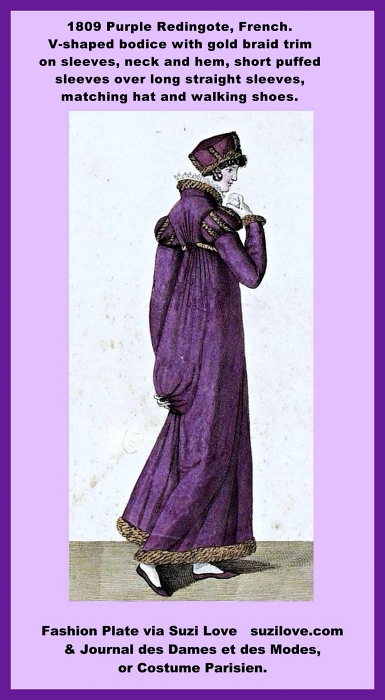
1809 Purple Redingote, Or Coat, French. V-shaped bodice with gold braid trim on sleeves, neck and hem, short puffed sleeves over long straight sleeves, matching hat and walking shoes. Fashion Plate via Journal des Dames et des Modes, or Costume Parisien.
Definition Redingote Or Pelisse: Long fitted outdoor coat worn over other garments for warmth. French word developed from English words, riding coat. Redingotes or Pelisses were needed to cover the flimsy dresses made of lightweight fabrics of the Regency years to provide warmth and some protection from windy conditions when gowns might lift and cause modesty issues. Jane Austen and her contemporaries often walked to places and so would have needed the warmth of a Pelisse or coat in the cold British winters.
“Mama, why doesn’t that man like me?” Daniel asked, his singsong voice echoing loudly around the walled chamber.
Slowly, the Captain turned to face them. He took two steps closer to Daniel and squatted as low as he could manage on one leg, while keeping his bandaged leg straight and using it for balance. “I apologize, your lordship.” He spoke directly to Daniel. “My name is Gabe, and I don’t dislike you. In fact, you remind me of my three nephews and I like them. A lot.” He sighed. “I have several decisions to make, difficult decisions, but that isn’t an excuse for bad manners.” He glanced up at Anne. “As I’m certain your mother has told you.”
Daniel nodded. “Uncle Bren told me to be good for Mama, and you, ‘cause you’re the Captain and you’re taking me and Mama to En…En…” He tugged on her hand. “Where are we going, Mama?”
Anne smiled at her son. “England, darling. We’re going to England.”
Daniel pulled his hand from hers and stepped up to the Captain, careful to avoid his bandaged leg. His tiny hand rested on Gabe’s shoulder and he patted him. “My mama will help. Mama knows ‘bout Englin, and she makes sores better.” He pointed at Gabe’s outstretched leg. “Kisses make it better.”
Anne gasped, while Gabe chuckled. His amber eyes held a twinkle as he spoke to Daniel. “I’m sure your mama’s kisses would make any man feel better.” He looked up at her and smirked. “Will you kiss me, Lady Melton?”
Anne groaned and put her hands to her burning cheeks, thankful that Daniel’s focus was on his new friend and not her red face. When Gabe stood and slowly drew his bandaged leg under him, Anne realized that he didn’t have his crutch.
“Captain, please, lean on me.” She moved closer and was relieved when, with a muffled groan, he slid his arm around her shoulder and settled a little of his weight on her.
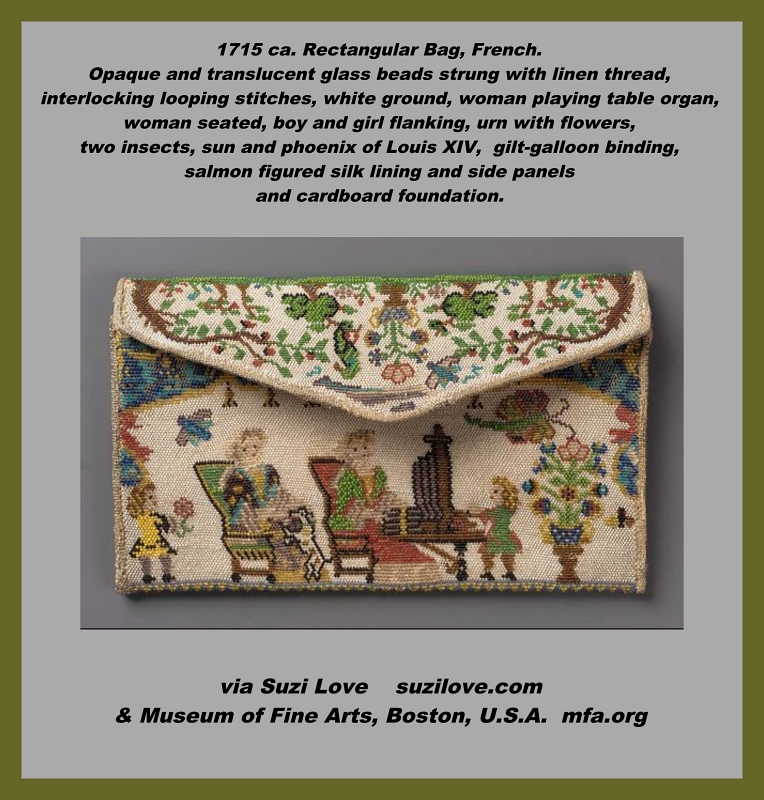
Reticule Or Bag: Purse, often with a drawstring to pull closed and usually made of cloth or covered cardboard and often decorated with beading or embroidery. Carried by a woman during the Regency period to carry all their daily necessities. in the place of pockets.
Spencer: Short jacket, cropped at the waist, worn over a dress, or gown. Delicate and regency dresses provided so little protection from the cold, so over garments were essential for warmth, modesty and good health.
Pelisse Or redingote Or Walking Dress: Coat worn over clothing of both sexes for warmth and protection from the elements.
Travel and Luggage By Suzi Love History Notes Book 10. How did people travel in Jane Austen’s times. In past centuries? What did they take with them to make their long journeys easier? Travel by road, ship, canal, or railway all took a long time and had dangers so people learned to prepare. And then, in the nineteenth century, road improvements, inventions, and scientific developments made travel more pleasurable. books2read.com/SuziLoveTravel
1715 ca. Rectangular Envelope Style Bag, French. Polychrome opaque and translucent glass beads strung with linen thread, held together by interlocking looping stitches (sablé). Design on white ground: woman playing table organ, woman seated, boy and girl flanking, urn with flowers right, two insects and curtain above (obv.); sun and phoenix of Louis XIV, ribbon above inscribed IE VIS SANS MOURIR, inscribed at bottom and right SI IE MEURS CE NEST QUE POVR REVIVRE (rev.); vegetative scene (flap). Gilt-galloon binding. Salmon figured silk lining and side panels. Cardboard foundation. via Los Angeles County Museum of Art, California, USA. collections.lacma.org
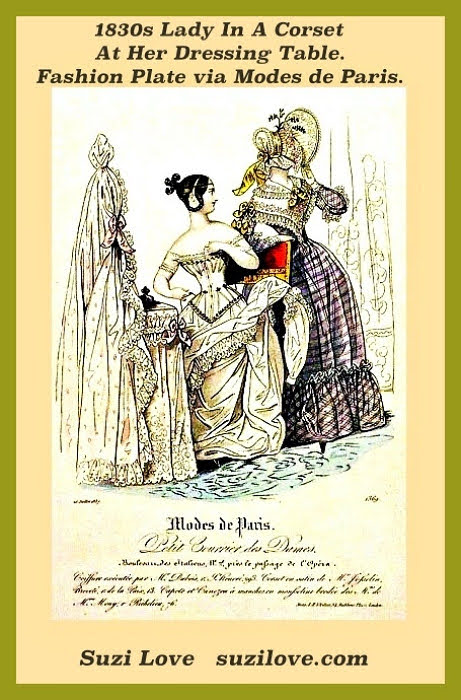
1830s Lady In A Corset At Her Dressing Table. Fashion Plate via Modes de Paris.
Romantic Era women’s corsets supported plus fitted well to give a fashionable silhouette. Becoming a fashion item, rather than simply hidden underclothing. https://books2read.com/SuziLoveCorsetBook18
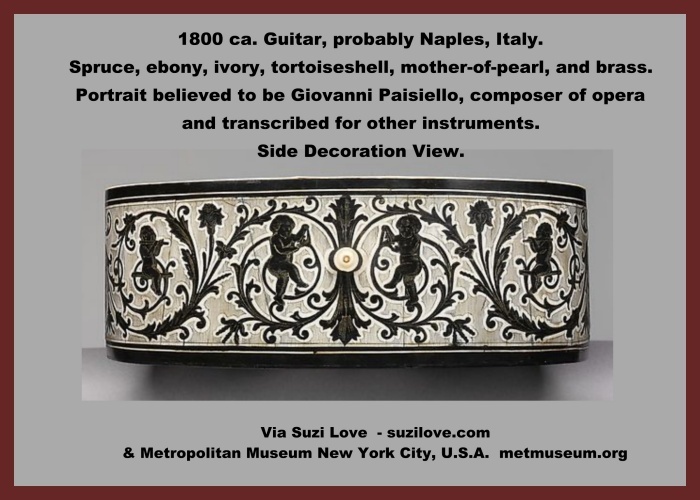
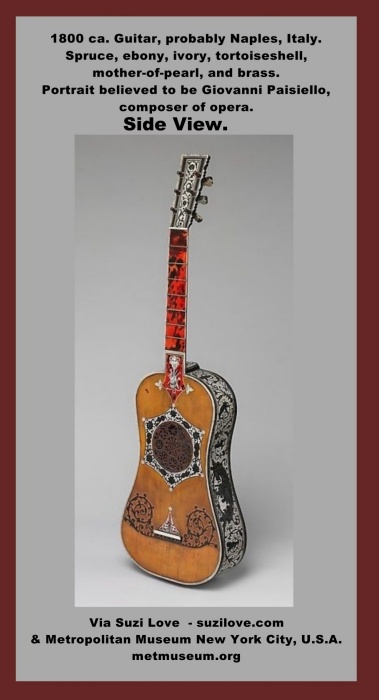
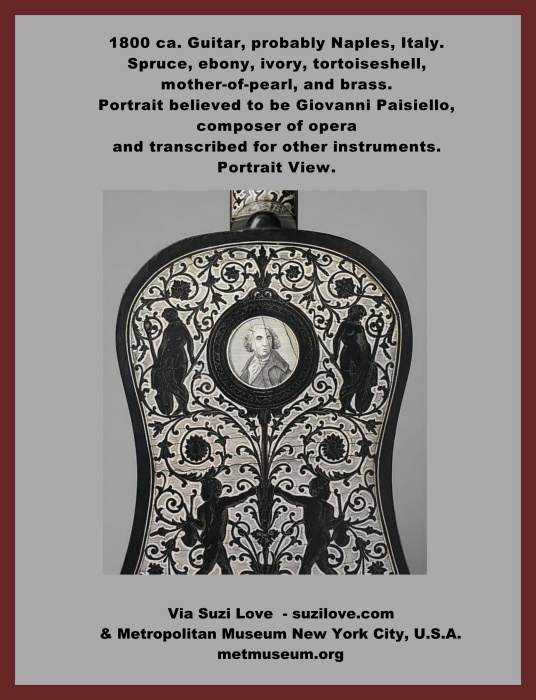
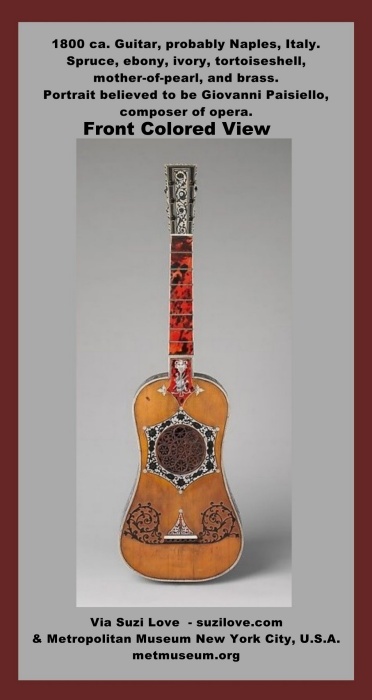
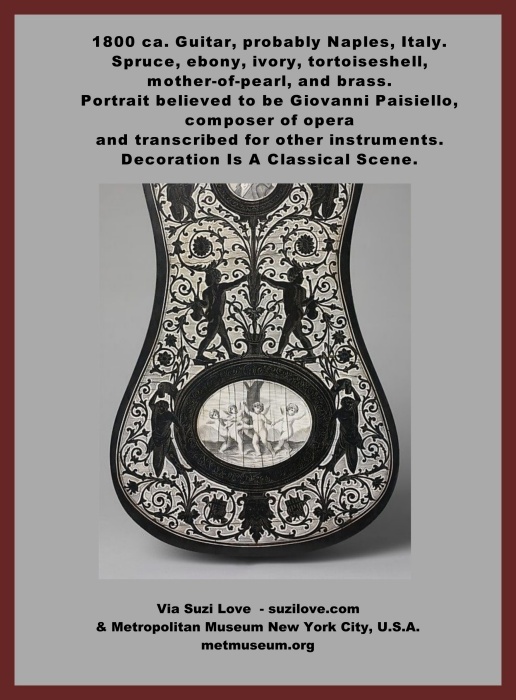
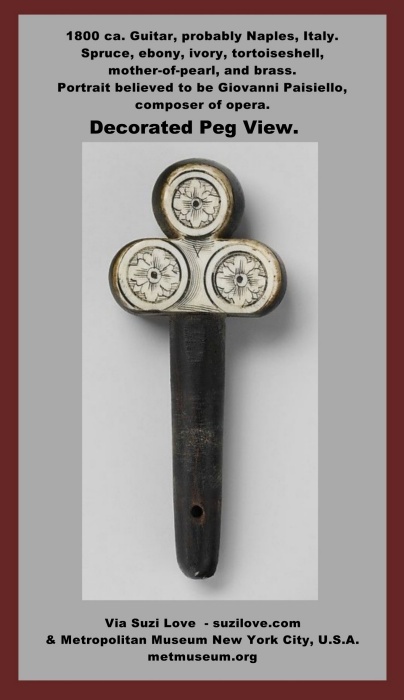
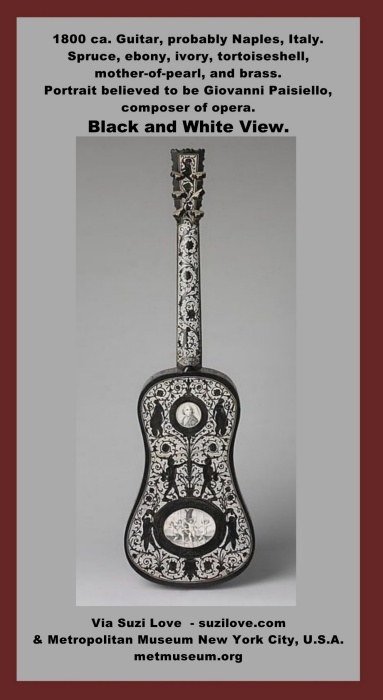
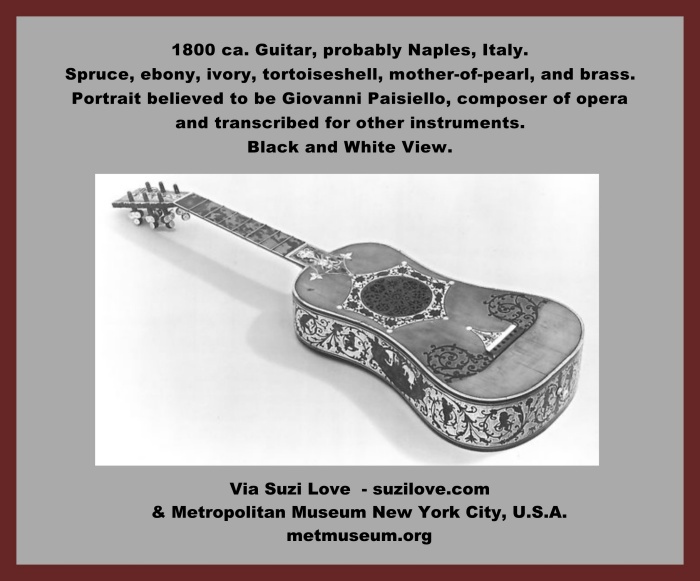
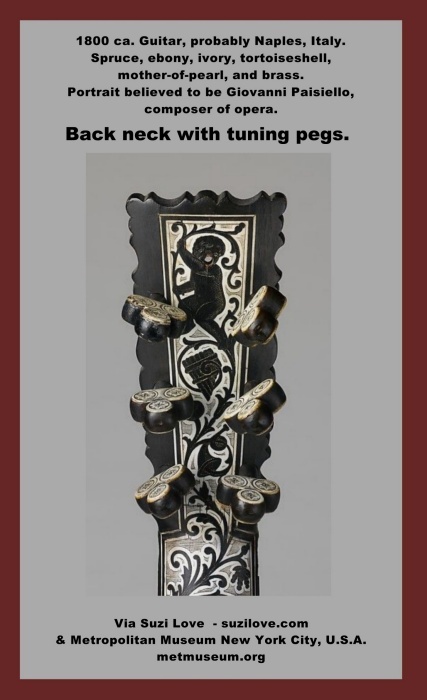
1800 Guitar, Probably Naples, Italy. The sort of guitar people in Jane austen’s era would have played in their homes. Spruce, ebony, ivory, tortoiseshell, mother-of-pearl, and brass. This highly decorated guitar is an early example of a six-string, single-course guitar. The elaborate decoration features classical figures, musical instruments, and floral motifs made from ebony and fit into an ivory ground covering the back, sides, neck, and headstock of the guitar.
A second guitar at the Yale Collection of Musical Instruments features the same decoration, only in reverse, indicating that the decoration was made at the same time by cutting through thin layers of stacked ebony and ivory. A portrait in the center of the upper back is believed to be of Giovanni Paisiello based on his 1791 portrait. Paisiello was a composer of opera and many of his works were transcribed for use on other instruments and his pieces were a favorite of guitarists.
The fingerboard is covered with tortoiseshell over read paint with an ivory satyr inlaid where the neck meets the body. A carved wooden rosette may be a replacement and is surrounded by an ivory hexagon with ebony inlaid instruments and flowers matching the back. The decorative style is evocative of so-called Baroque guitars of the seventeenth century. The six-string, single-course guitar became popular in Naples at the end of the eighteenth century and then spread throughout the rest of Europe replacing the earlier five and six double-course guitars. via Metropolitan Museum New York City, U.S.A. books2read.com/suziloveMusicGeneral
What did the lady of the house use to pen notes in Bridgerton and Jane Austen’s years? What sat on the desk of Jane Austen’s male contemporaries when they managed household and estate accounts? books2read.com/SuziLoveWritingTools. Writing Tools, History Notes Book 13.