1818-1820 ca. Gold Redingote, French. Gorgeous Regency Fashion French Redingote of gold silk with the same fabric used to create a trailing pattern down the bodice and front opening. Short puffed sleeves over long straight sleeves in a leg-of-mutton style. via Metropolitan Museum, New York City. metmuseum.org
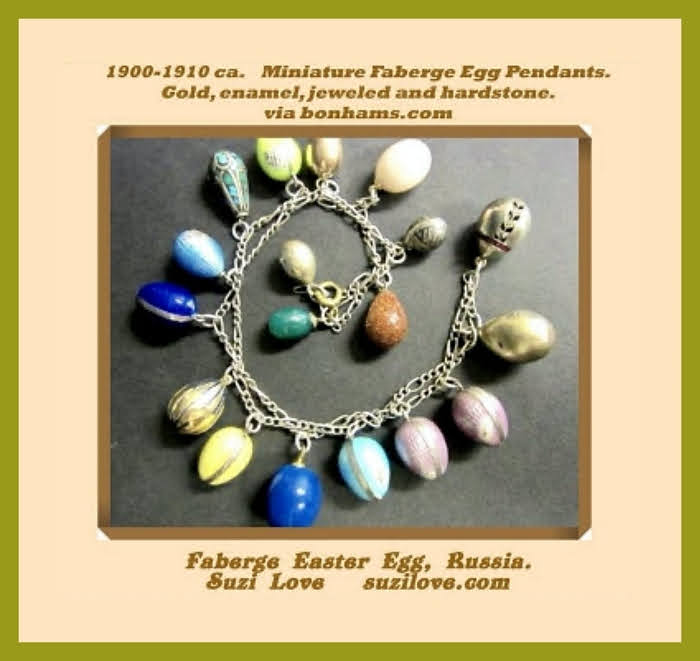
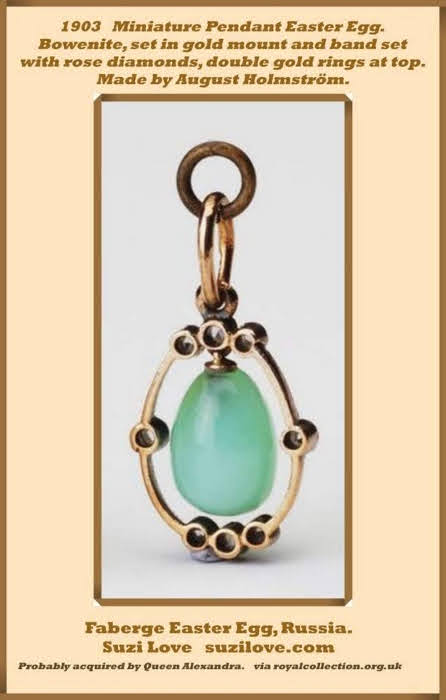
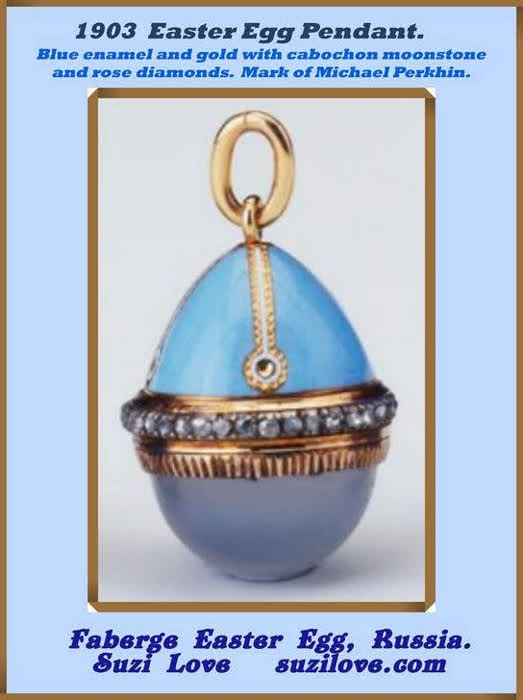
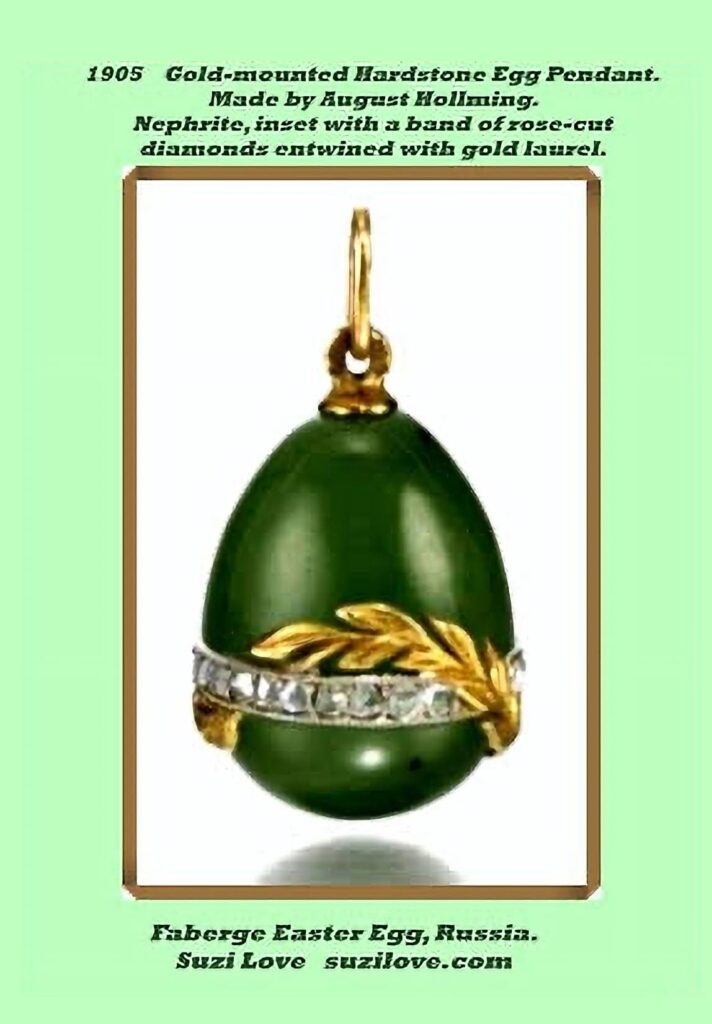
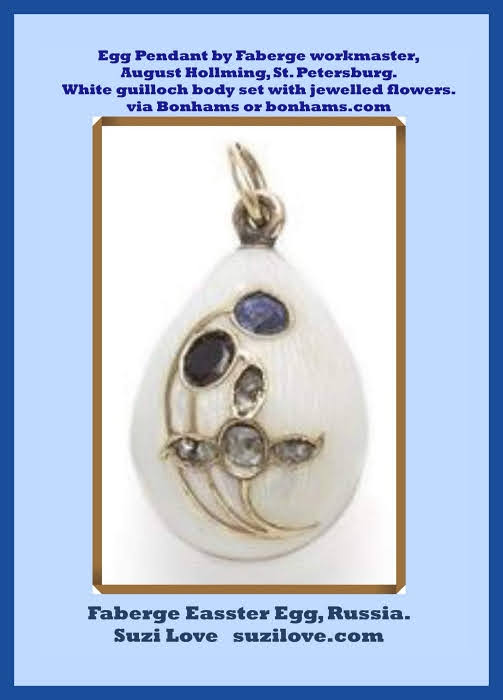
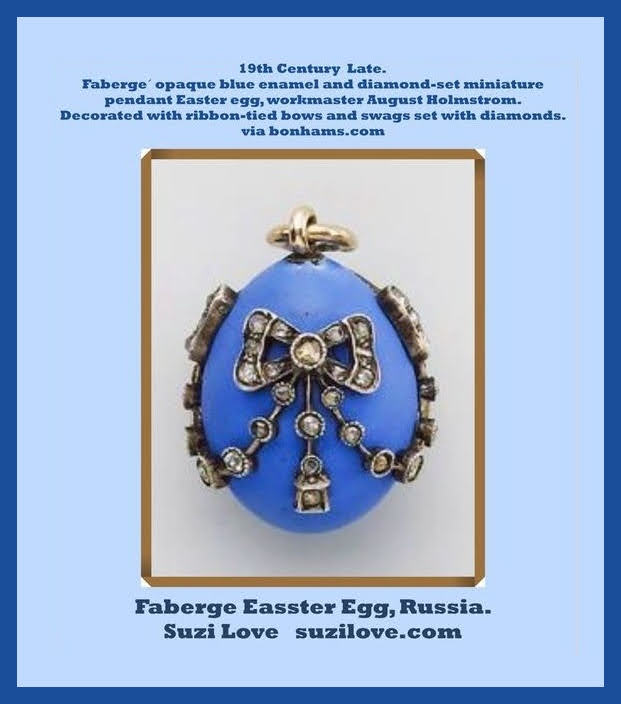
1900s Early Gorgeous Faberge Egg Pendants From Russia. Giving Eggs in spring was a pagan tradition adopted by early Christians. The old tradition was to give dyed chicken eggs and later it became chocolate eggs. The act of Egg giving is popular in Eastern Europe and this tradition indicated the birth of something new. As the Russian monarchy were Russian orthodox Christians, the Tsar wanted to surprise his wife with a jewelled Egg as a symbol of his love and affection. The gift pleased the Tsar’s family so much that his immediate circle, and the wider public, began the tradition of a Faberge from 1885 to 1917 until the revolution destroyed the Royalty.
1890s Gold Faberge Easter Egg Pendant, Russia. Made by Michail Perchin. via hermitagemuseum.org1890s Pendant Shaped like an Amphora. The Fabergé firm, St Petersburg. hermitagemuseum.org1890 ca. Diamond and sapphire egg pendant by Fabergé. via bonhams.com19th-20th Century Fabergé Miniature Easter Egg Pendant. Gold, sapphires, emerald, ruby, via vmfa.museum19th-20th Century Faberge Miniature Easter Egg Pendant. Silver, gilt, emerald. via vmfa.museum. 1900 ca. Miniature Faberge Egg Pendant By Henrik Wigstrom, St. Petersburg. Body with white opaque and translucent green enamel sections surrounding four pink circular rose-cut diamond and enamelled panels. via Bonhams Auctions. 1900s Early Gorgeous Faberge Egg Pendants Made In Russia. 1. #Faberge #Easter #Russia #Jewelry https://books2read.com/suziloveEaster Share on X
1900s Early Gorgeous Faberge Egg Pendants Made In Russia. 2.
The name Faberge is associated with the Russian Imperial family for whom most of the world’s most famous eggs were created. In 1870, Faberge inherited his father’s jewelry business and quickly became known for his brilliant designs. A display of his work and the gold medal he was awarded in Moscow’s Pan-Russian Exhibition of 1882 brought him to the attention of the Russian nobility.
In 1885, Faberge was commissioned by Tsar Alexander III of Russia to create an Easter egg for his wife, the Empress Maria Fedorovna. This became known as The Hen Egg, the first Imperial Faberge Egg, and is made of gold. The Empress was so happy with the gift that Alexander appointed Fabergé a ‘Goldsmith by Special Appointment to the Imperial Crown’ and the following year commissioned another egg. From then on, Faberge was given complete freedom with future Imperial designs which become even more elaborate every year. A famous Fabergé egg is one of sixty eight jeweled eggs made by Fabergé and his assistants for the Russian Tzars and private collectors between 1885 and 1917.
After the Russian Revolution, the House of Faberge was nationalized by the Bolsheviks and the Faberge family fled to Switzerland where Peter Carl Faberge died in 1920. Several of the Faberge Imperial eggs are still missing.
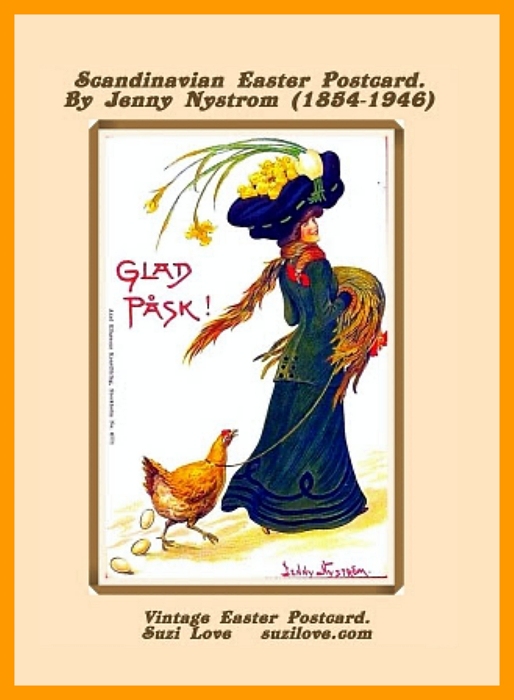
Jenny Nystrom (1884-1946) Vintage Easter Cards. Jenny Eugenia Nyström (1854 – 1946) was a Swedish painter and illustrator who illustrated Easter postcards for, and about, children and happy images.
1818 Brown Silk Dress, English. Regency Fashion. Empire style, high-waisted dress with long sleeves, and with dark brown velour trim on the square neckline and hem. via The Metropolitan Museum, New York City, USA. metmuseum.org
Definition Empire Style Dress: Named after the First Empire in France. Empire dresses had a low neckline and skirts started directly under the bust and flowed into the classical relaxed wide styles of Greece and Rome. This style of dress is associated with Jane Austen and her contemporaries as a high-waisted dress was worn most days. Cotton, silk or taffeta were the popular fabrics. Only the very wealthy could afford white dress in this style as the cottons were imported from India and had to be carefully cleaned, usually by a lady’s maid.
1818 Brown Silk Dress, English, As Worn By the Bridgertons. #Bridgerton #RegencyFashion #HistoricalFashion #metmuseum books2read.com/SuziLoveFashionWomen1815-1819 Share on X Fashion Women 1815-1819 History Notes Book 28
What did Jane Austen wear? This book looks at what was fashionable for women in the Georgian Era and at the end of the Regency Era in Britain and the reconstruction in Europe after the wars. Lifestyles were freer and fashions expressed this by becoming the focus of most women’s lives. A wardrobe full of opulent accessories was requisite. Includes mourning and riding fashion, dresses, hats, shoes, reticules or bags, underclothing, and fashion accessories.
D2D_HN_28_https://books2read.com/SuziLoveFashionWomen1815-1819
1916 Steel Military Surprise Faberge Easter Egg, Russia. Gift from Nicholas II to his wife Tzaritsa Alexandra Fyodorovna. Surprise is a miniature painting on an easel of the Tzarin planning with his generals in field. Faberge Easter Egg, Russia.
The name Faberge is associated with the Russian Imperial family for whom most of the world’s most famous eggs were created. In 1870, Faberge inherited his father’s jewelry business and quickly became known for his brilliant designs. A display of his work and the gold medal he was awarded in Moscow’s Pan-Russian Exhibition of 1882 brought him to the attention of the Russian nobility. In 1885, Faberge was commissioned by Tsar Alexander III of Russia to create an Easter egg for his wife, the Empress Maria Fedorovna. This became known as The Hen Egg, the first Imperial Faberge Egg, and is made of gold. The Empress was so happy with the gift that Alexander appointed Fabergé a ‘Goldsmith by Special Appointment to the Imperial Crown’ and the following year commissioned another egg. From then on, Faberge was given complete freedom with future Imperial designs which become even more elaborate every year. A famous Fabergé egg is one of sixty eight jeweled eggs made by Fabergé and his assistants for the Russian Tzars and private collectors between 1885 and 1917. After the Russian Revolution, the House of Faberge was nationalized by the Bolsheviks and the Faberge family fled to Switzerland where Peter Carl Faberge died in 1920. Several of the Faberge Imperial eggs are still missing.
1811 August Walking Dress for a Mother and a child, English. Mother wears a typical Regency or Jane Austen style high round robe with full long sleeve trimmed with Van Dyke lace at the throat and cuffs and ornamented around the bottom with a Tuscan border in needlework. Short capuchin cloak of buff shot sarsenet fastened with broaches on shoulders and trimmed with deep Chinese silk fringe. Moorish turban bonnet gathered into a broach in centre of the forehead. Purple ridicule, or bag, with gold snap and tassels. Buff kid half boots, parasol with deep Indian awning. Child wears a short sleeved Spanish vest and trousers in one, which looks like a skeleton suit, a tight coat or jacket buttoned to a pair of high-waisted trousers. An Indian dimity waistcoat with long sleeves and collar trimmed with a narrow border of muslin, high shoes of purple morocco and a college cap of purple velvet with a crimson band and carries a parasol. via Rudolph Ackermann’s ‘The Repository of Arts’.
Definition Skeleton Suit: Shirt and trousers made as one connecting piece, often buttoned together, and were one of the earliest fashions designs made especially for children and were worn from the 1790s to the 1820s.
1814 Gentleman’s Ensemble, French. Gentleman in brown tailcoat, white vest, high collared white shirt, knotted white cravat, white pants and white gaiters above black shoes. The style of outfit worn by the men in Jane Austen’s life. Fashion Plate via Journal des Dames et des Modes, or Costume Parisien.