1700s Late Gentlemen’s Coats. A fitted coat was an essential part of a gentleman’s wardrobe in the late 1800s and were generally tailored and cut to fit tightly. Therefore, gentlemen needed a valet, or some other helper, to extricate himself and his shoulders from his glove-like coat. Breeches and a waistcoat in the same fabric usually completed the 18th century’s gentleman ensemble. Coats were generally worn long at the back and had elaborate decoration down the front openings, collars, and sleeve cuffs.
1818 Printed Cotton Gown, American. Brown high-waisted, or Empire line, gown as would have been worn during Jane Austen’s lifetime. Sleeves are puffed at the shoulders with unusual puffs to decorate the long straight sleeves. Hem has multiple rows of ruffles to decorate. via Metropolitan Museum New York City, U.S.A. metmuseum.org
1800-1850 ca. Reticule, Or Bag. Brown bag with monogram and drawstring, British. The Bridgerton family and Jane Austen and their female contemporaries would have sewn, gifted and used a bag similar to this. via Snowshill Manor, National Trust, U.K. nationaltrustimages.org.uk
Definition Reticule: Bag or purse, often with a drawstring to pull closed and usually made of cloth or covered cardboard and often decorated with beading or embroidery. A reticule, or purse, or handbag, was usually carried by a woman during the Regency period to carry all their daily necessities. Earlier, women used pockets that tied at the waistline and were hidden in the folds of their skirts. Empire style, or early 1800s, high-waisted dresses made it impossible to either sewn in a pocket or to tie on a pocket. So women began carrying small, decorated bags called Reticules, or ridicules, which generally pulled close at the top with a drawstring.
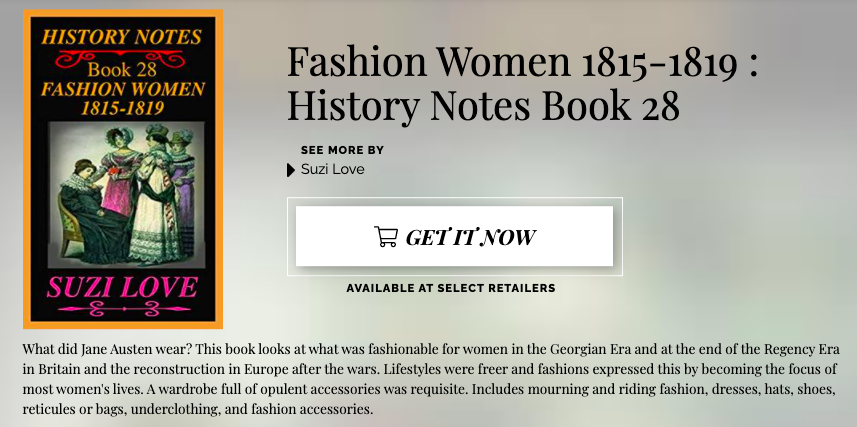
1819 February Pink Ball Dress, English. Underskirt with white lace hem, pink layer with intricate decoration, short puffed sleeves, low décolletage, or neckline, white shawl and white hat with pink feather. Fashion Plate via John Belle’s La Belle Assemblée or, Bell’s Court and Fashionable Magazine, London. Women’s clothing came in the late 1810s came in a wide range of styles to suit every season and occasion. When attending assemblies or balls, ladies in Jane Austen’s times women wore Empire style dresses which were usually made of light fabric and floaty in style and often of a shorter length suitable for dancing. https://books2read.com/SuziLoveFashionWomen1815-1819
Definition Ball Dress: At the end of the 1810s, ball or dancing dresses had higher hemlines that rose several inches above the ankle so ladies wouldn’t trip on their hens or flounces and make a spectacle of themselves.
Definition Aigret, aigrette, egret: Plume of feathers or jeweled ornament in shape of feathers worn on head or hats. During the early 19th century, or Jane Austen’s lifetime, or during the years of the Bridgerton series, the favorite feathers were osprey and heron.
1816 October Half-Dress. A gown of lilac sarsnet, cut low round the bust, which is trimmed with pink ribbon, disposed so as to form a wreath; the shape of the back is marked by hands of pink, and a large bow, in the French style, ornaments the middle of it at bottom. The back is full; a plain light front forms the shape in a most becoming manner. Long full sleeve, composed of clear muslin, trimmed at the wrist with a single row of lace, and finished by a pink bow. Fichu to correspond, very full trimmed round the throat with lace. The bottom of the skirt is edged with pink, and trimmed with a single flounce of blond lace, set on very full, and surmounted by a wreath of French roses. Cornette composed of tulle, finished by a quilling of blond round the face, and fastened by a pink bow under the chin; a bow to correspond ornaments it on the forehead, and a bunch of flowers is placed very far back on the head. The style of this cornette, though French, is so simply elegant and becoming, that we have not for some time seen any half-dress cap to equal it. Plain gold ornaments. White kid gloves, and white kid slippers with pink rosettes. Fashion Plate via Rudolph Ackermann’s ‘The Repository of Arts’.
Definition Half Dress: Between undress and full dress, respectable outfit without an excess of formal accessories and might be worn either day or evening. Could include Afternoon Dress, such as Afternoon Walking Dress and even Evening Dress if not a very formal evening occasion, such as a theatre attendance or dinner engagement.
Definition Empire Style: Named after the First Empire in France, by 1800 Empire dresses had a very low décolleté, or neckline and a short narrow backed bodice attached to a separate skirt. Skirts started directly under the bust and flowed into the classical relaxed wide styles of Greece and Rome. This style of dress is associated with Jane Austen and her contemporaries as a simple cotton high-waisted dress was worn most days and accessorized according to the importance of the occasion.
1816 May Full Evening Dress, English. The type of evening dress the Bridgerton family and Jane Austen and her contemporaries would have worn to a formal evening event, such as a ball. A white satin slip, over which is a white lace dress, ornamented with three quillings of white lace on the skirt, intermixed with bows of white satin ribbon. The body and sleeve, both of which are richly ornamented with colored stones, are formed, as our readers will see by the print, in a very novel style. Head-dress, a cap composed of white satin, finished with a band edged with pearls, and a superb plume of white feathers. Necklace, ear-rings, and bracelets,’ colored stones intermixed with pearls. White satin slippers, and white kid gloves. We are indebted to the elegant invention Of Mrs. Gill, of Cork-street, Burlington-Gardens, for our dress this month. Fashion Plate via Rudolph Ackermann’s ‘The Repository of Arts’.
Definition Full Dress: Most formal of outfits, day or night, with all possible accessories added.
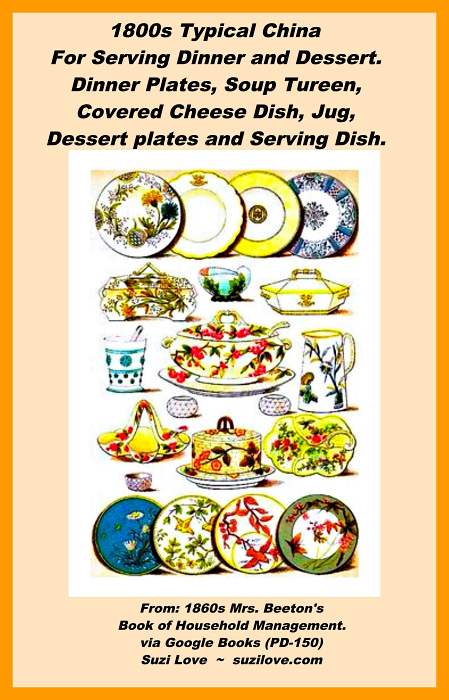
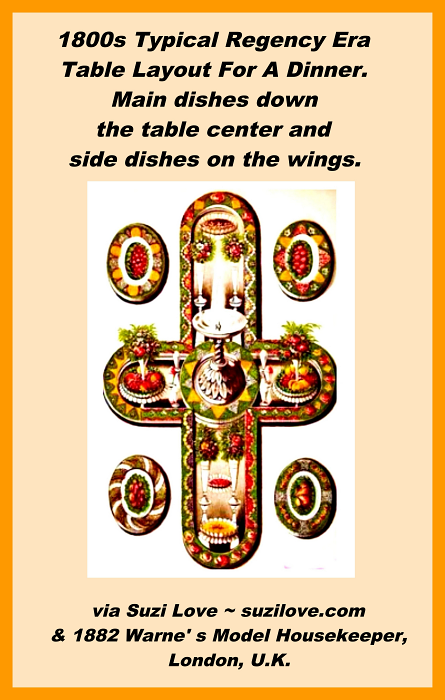
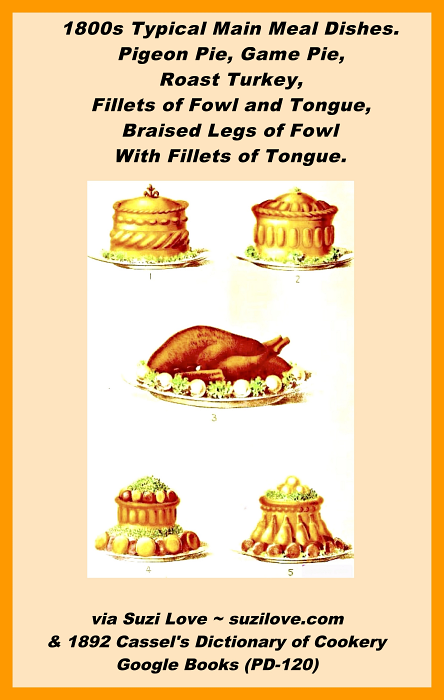
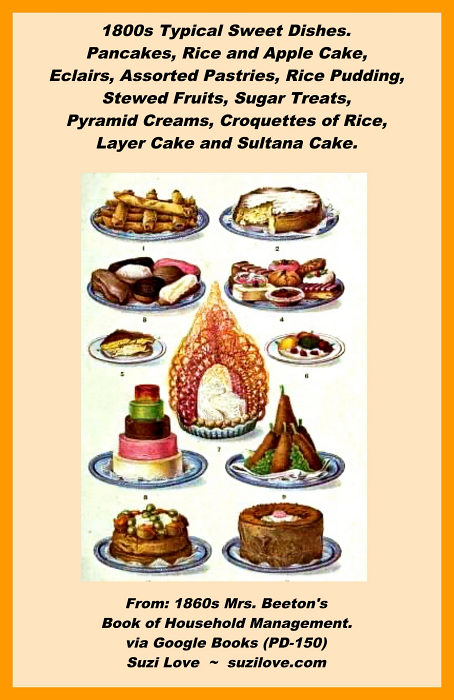
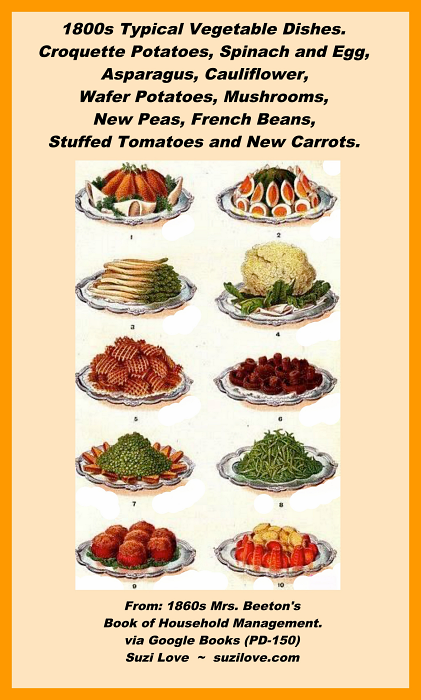
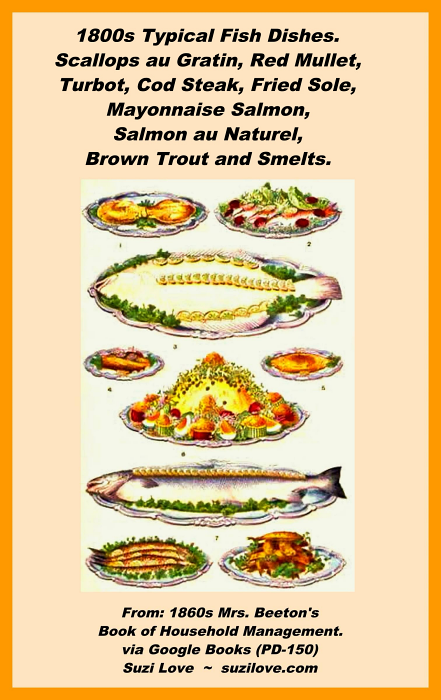
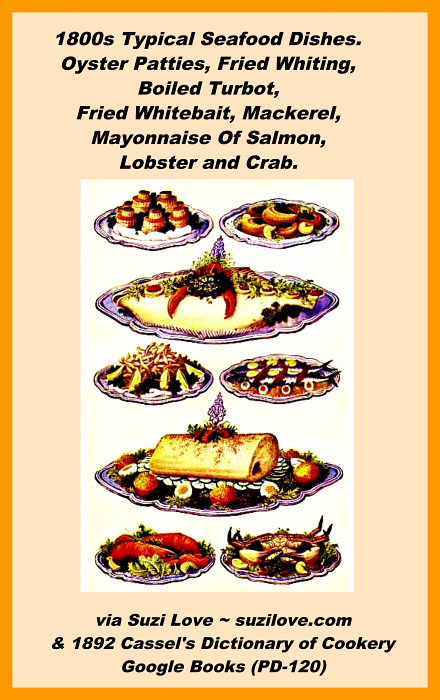
1800s Typical Food Served and Table Settings Used. Historic food from Mrs. Beeton’s Household Management, 1882 Warne’ s Model Housekeeper, London, U.K., 1892 Cassel’s Dictionary of Cookery.
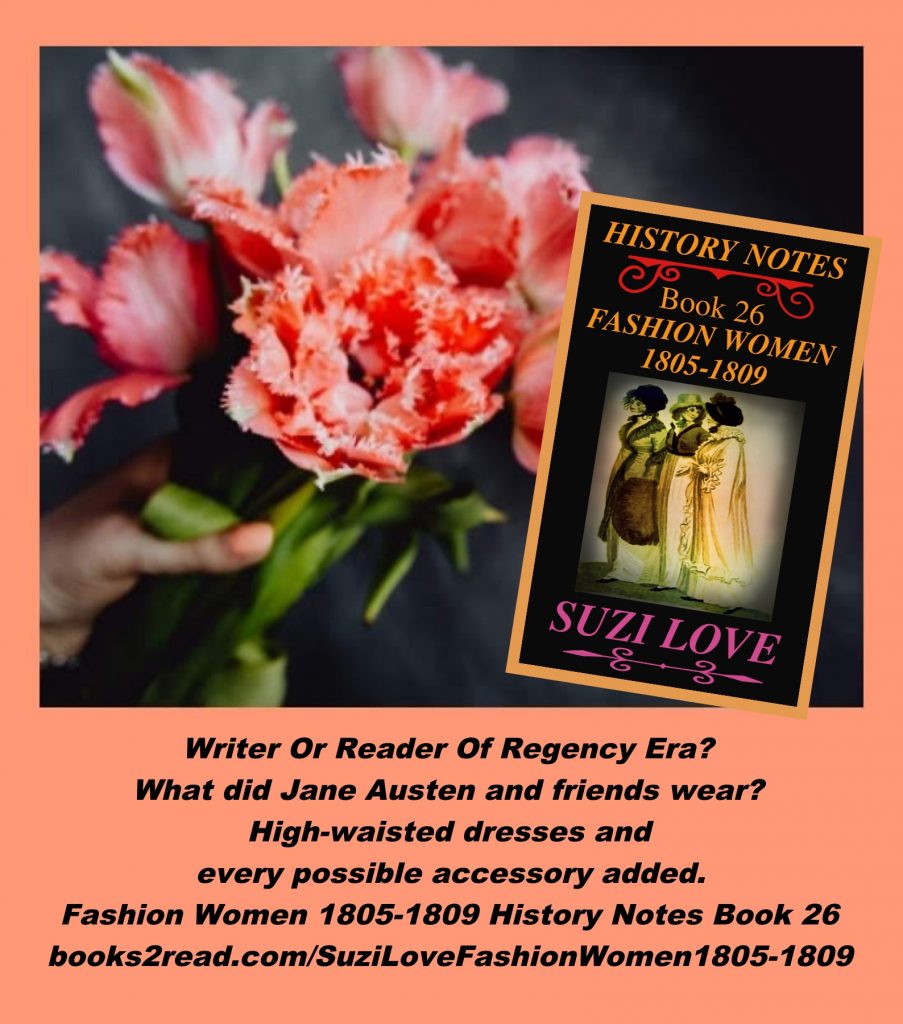
What did Jane Austen and friends wear? Early 1800s fashions were elegant and pretty with high waists and fabrics that were almost transparent. These Empire style gowns, named after Napoleon’s first Empress, became popular throughout Europe, and were then copied around the world. Colorful outwear was added to make an ensemble more attractive and warmer. History Notes Book 26 Fashion Women 1805-1809. https://books2read.com/SuziLoveFashionWomen1805-1809
The Empire waist gown defined women’s fashion during the Regency Era. ‘Empire’ is the name given in France to the period when Napoleon built his French Empire. High-waisted, loose gowns were adopted by the aristocracy as a symbol of turning away from the fussy, elaborate and expensive clothing worn in the 1700s. Jean-Jaques Rousseau advocated copying peasants and returning to a simpler life and more natural fashions. Unrestricting clothing was part of the new Democracy in France and these simpler and flowing fashions were adopted all over Europe, including Britain and despite the continual wars being fought against France during the early 1800s. Not even war stopped fashions from being copied everywhere.
1805-1815 ca. Bonnet. Olive brown stiffened, peaked brim, and lined with ivory satin to protect pale skin from sun.
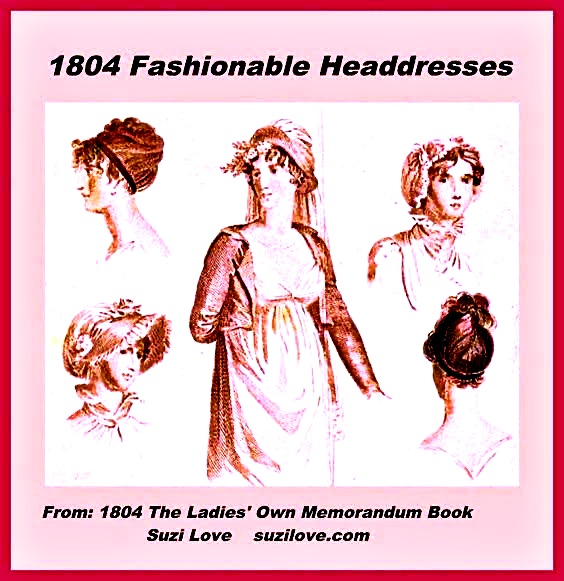
Regency bonnets were made in a wide variety of shapes and sizes, and with elaborate decorations. This was a practical way of offsetting the minimalism popular in Regency Era fashions. During the early 1800s, most young ladies, and some older ones, wore white dresses in the relaxed styles of ancient Greece. This neoclassical movement saw women wearing Empire style, or high-waisted, gowns that were either straight sheaths or flowed from under the bust. The stiffened brim shielded the lady’s face from harmful sun rays, because it was considered essential for an upper class lady to have a pale white skin. The crown of this bonnet is lined with stiffened ivory linen and the brim is lined with ivory satin. For more about this gorgeous bonnet, see Vintage Textile :- vintagetextile.com