1826 Sights the Bridgertons and Jane Austen Saw Around Regency England. The sights that the families and friends would have seen around while traveling around England. via 1826 The English Spy By Robert Cruikshank via Google Books (PD-150)
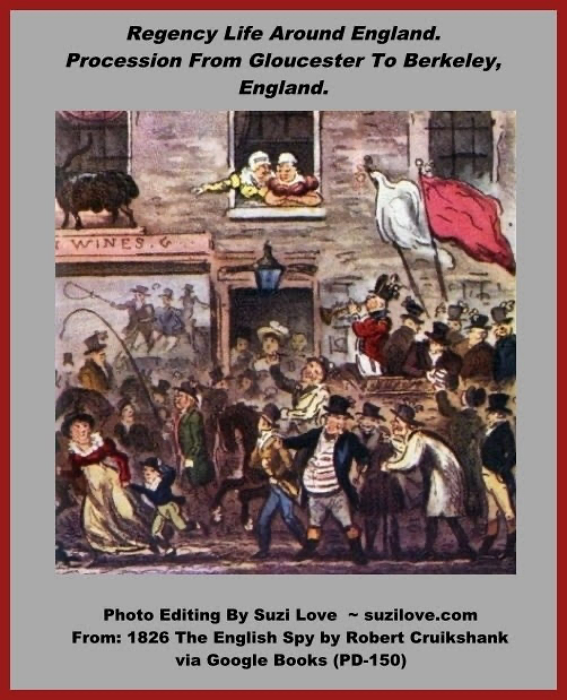
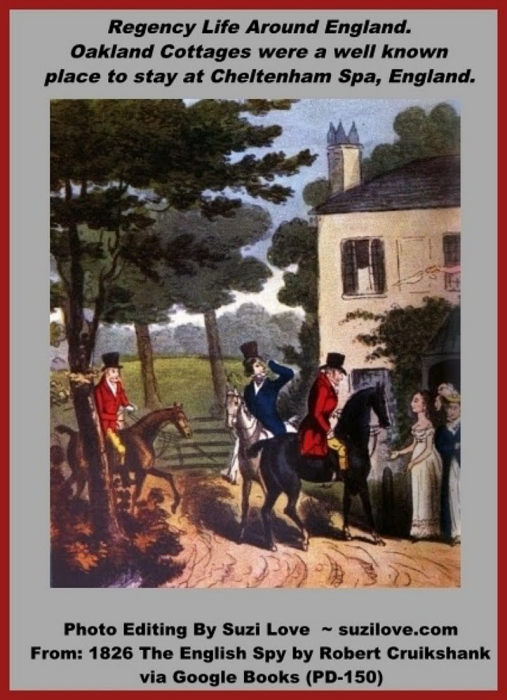
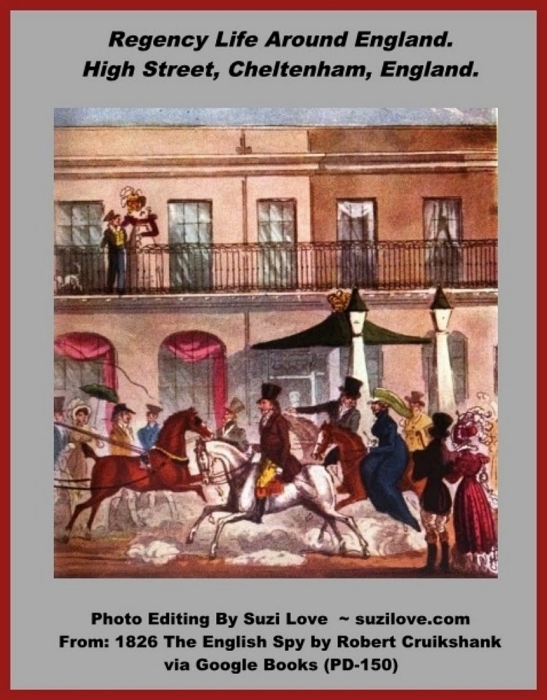
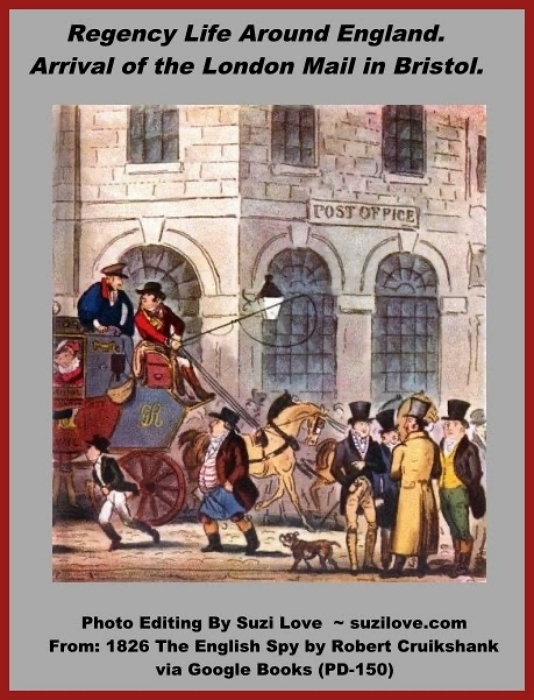
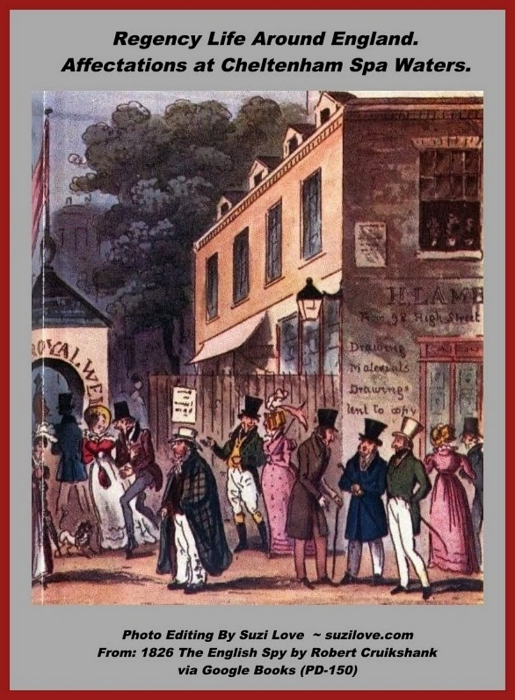
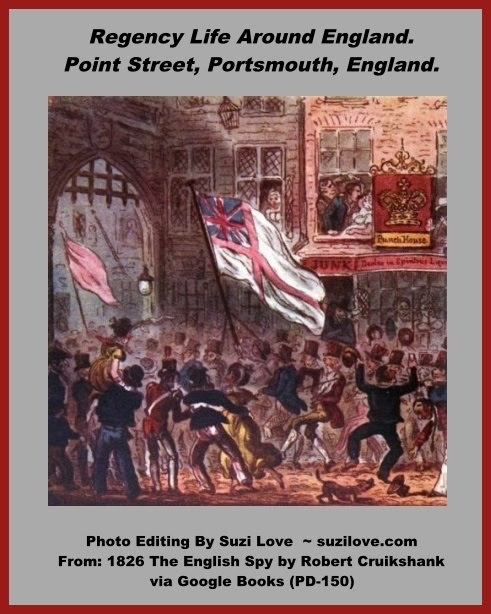
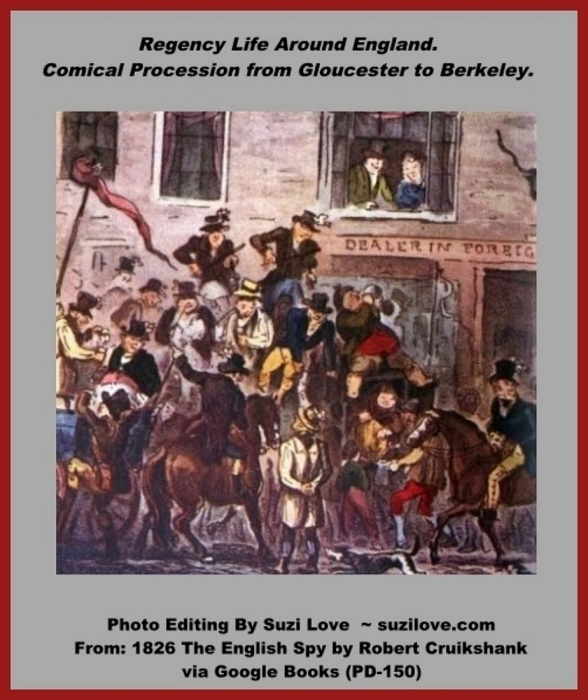
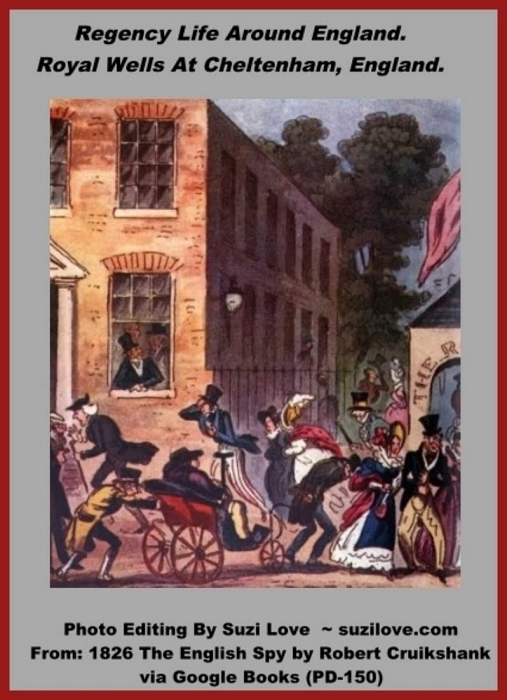
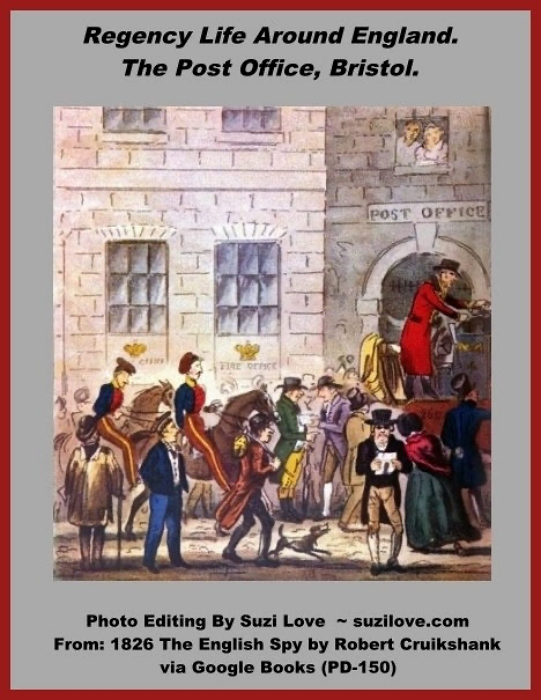


1826 Sights the Bridgertons and Jane Austen Saw Around Regency England. The sights that the families and friends would have seen around while traveling around England. via 1826 The English Spy By Robert Cruikshank via Google Books (PD-150)
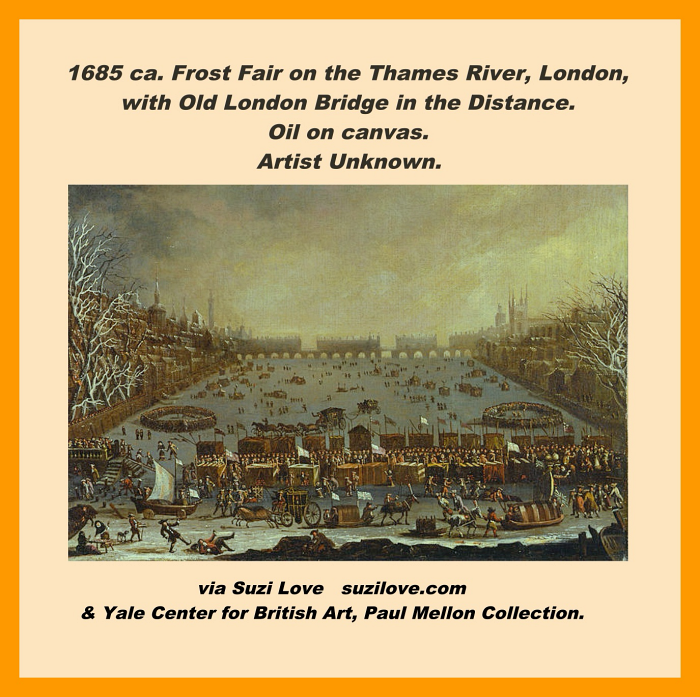
1685 Frost Fair on the Thames River with Old London Bridge in the distance. Oil on canvas. via Yale Center for British Art.

Writing Regency Era Fiction Or Nonfiction? Need more information on Older Gentleman’s Day in early 1800s, or Bridgerton’s and Jane Austen’s Regency Era. A lighthearted overview of an older gentleman’s clothing, social life, and responsibilities in the early 1800s. Take a look at where an older man went, what he wore, and how he managed the family’s finances and his estates. Older Gentleman’s Day Regency Life Series Book 3 books2read.com/suziloveOGD
What Did An Older Gentleman Do In Early 1800s, or Jane Austen’s Regency Era? An overview of an older gentleman’s clothing, social life, and responsibilities in the early 1800s. Take a look at where he went, what he wore, and how he managed the family’s finances. Older Gentleman’s Day Regency Life Series Book 3 books2read.com/suziloveOGD
Strictly speaking, the REGENCY ERA refers to the years between 1811 and 1820 when George IV acted as Prince Regent when his father was unable to remain in power due to his illness, or rather his madness. For convenience, the term REGENCY YEARS is used to describe the longer period from the last two years of the Georgian Era (1809-1810), plus the ten years under the Prince Regent (1811-1820), and up until 1837 when Queen Victoria came to the throne.


What was fashionable for women in Jane Austen’s times? Mourning, riding, daytime, evening clothing, plus underclothing, corsets and accessories. Fashion Women 1810-1814 History Notes Book 27 This book looks at what was fashionable for women in Jane Austen’s times, or the early 1800s, or the Regency Era in Britain. Wars were being fought around the globe so women’s fashion adopted a military look in support of soldiers. Fashions, like the lifestyle, became progressively more extravagant and accessories went from colorful to over-the-top. https://books2read.com/SuziLoveFashion1810-1814
The Lady’s Magazine said of the basis of women’s fashion that was popular for the first twenty years of the 1800s, ‘White is still the prevailing color for robes. For morning dresses, linen gowns, in large diamonds or squares, are fashionable. Indian muslins, plain or embroidered, are preferred to Florence and satins. The designs of embroidery for shawls are of infinite variety. Long gloves, which reach above the elbow, are not yet laid aside. Medallions are hung around the neck from crossed chains and some of these medallions are shaped like the bags, called ridicules. These reticules are of the lozenge or hexagon shape, with a small tassel at each angle. Reticules, or ridicules, are in lozenge or hexagon shapes with a small tassel at each angle. In capotes, or hats, and ribbands, the violet and dark green prevail over jonquil. Bracelets in hair, pear-shaped ear-rings, medallions on square plates, saltiers of colored stones, are still in fashion.’
These are the types of outfits worn by Jane Austen and contemporaries in English magazines, where French fashions were obsessively copied despite the two countries being at war for many years. In Jane Austen’s years, she and her contemporaries spent a lot of time walking outdoors. People were encouraged to partake in outdoor pursuits to maintain good health. Fragile slippers were worn for balls and evening events but for walking sturdier shoes were needed, In the early 1800s, these were typically made of leather, had a very small heel, slightly rounded toes and were laced up on the top.


Are you a reader or writer of Regency Romance? Love Jane Austen’s books? Want to know more about the mourning, riding, underclothing and other Regency Era women’s fashions in Regency romances? What was fashionable for women in Jane Austen’s times? Mourning, riding, daytime, evening clothing, plus underclothing, corsets and accessories. This book looks at what was fashionable for women in Jane Austen’s times, or the early 1800s, or the Regency Era in Britain. Wars were being fought around the globe so women’s fashion adopted a military look in support of soldiers. Fashions, like the lifestyle, became progressively more extravagant and accessories went from colorful to over-the-top.
https://books2read.com/SuziLoveFashion1810-1814

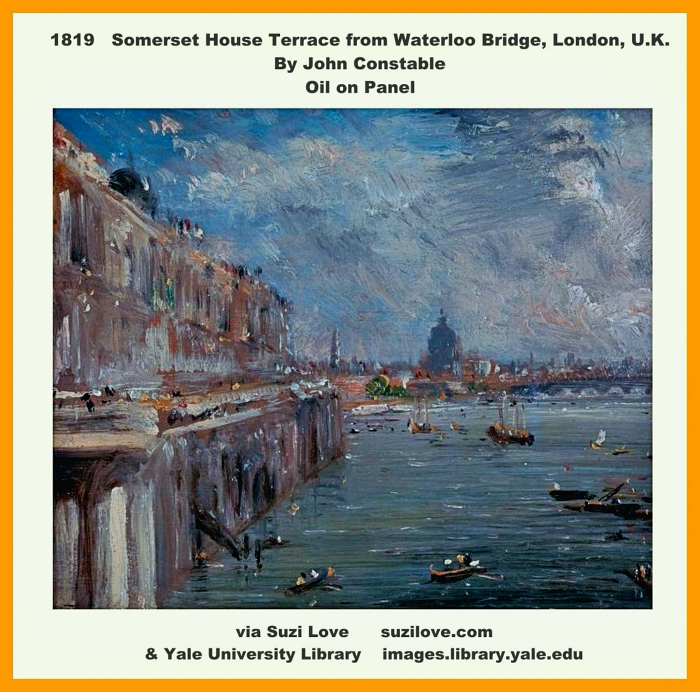
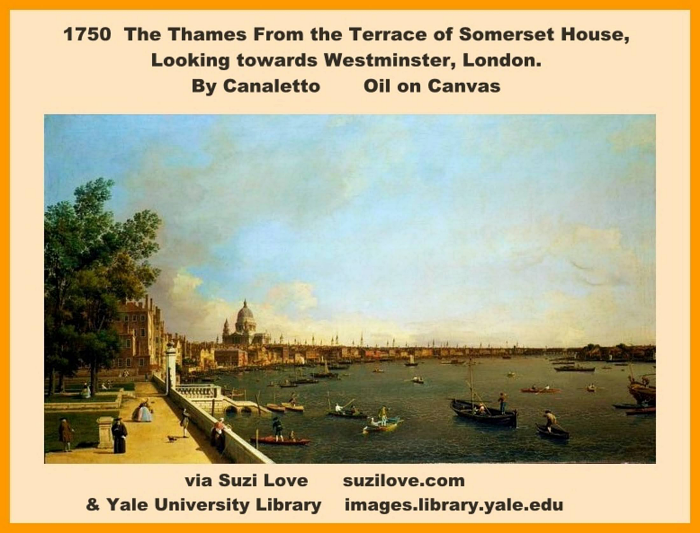
Demolition of the old house, between the Strand and the River Thames, began in 1775 and continued in stages as the new Somerset House was constructed around it. When the new building rose from the rubble, the Royal Academy, which had been one of the last occupants of the old Somerset House, became one of the first occupants of the apartments which fronted the Strand, providing tangible continuity between the old and the new.




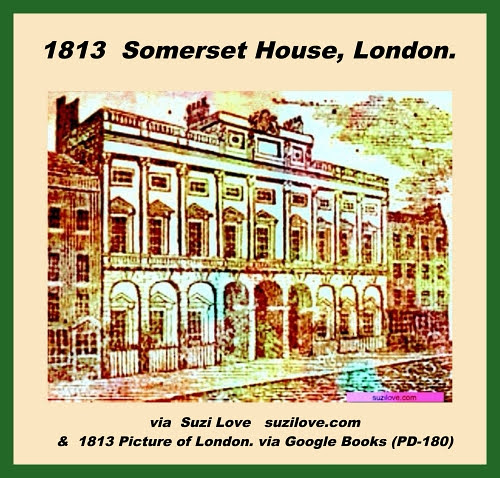
The Royal Academy of Arts
George III, described as an “enthusiastic if undiscriminating collector and patron of the arts”, provided invaluable patronage for the three learned societies. When old Somerset House was relinquished by the Crown, the King reserved to himself the right to appropriate sufficient space in the new building for the Royal Academy of Arts, the Royal Society, and the Society of Antiquaries.
The Great Exhibition Room

The most important part of the building for the Royal Academy was its Exhibition Room. Situated at the top of the steep, winding staircase, it was roughly 53 x 43 feet and 32 feet high including the lantern, and was described by Joseph Baretti as, “undoubtedly at that date the finest gallery for displaying pictures so far built.” It was here that George III was given a preview of the first Royal Academy Exhibition held at his command in 1780.
Year by year, the exhibits increased. There were 547 in 1781, 1,037 in 1801, and 1,165 in 1821, so that the pictures had to be hung almost from floor to ceiling and with the frames touching one another. From 1832 onwards there was talk of the Royal Academy moving to more spacious rooms in what is now the National Gallery, which was being built at the north end of Trafalgar Square. Accordingly, the last exhibition at Somerset House was held in 1836.
When the Academy moved, the most valuable decorations were taken down and reused in their new quarters. Later they were moved to Burlington House, the Royal Academy’s present home, where the ceiling paintings by Benjamin West and Angelica Kauffmann can now be seen in the entrance hall. The Academy’s old rooms at Somerset House were occupied by the Department of Practical Art, or Government School of Design.
The Royal Society
In 1776, they discovered they were to share the building to the east of the Strand entrance with the Society of Antiquaries, and complained to William Chambers that the accommodation would be inadequate; that the library would be too small and that there would be no room for the Society’s museum.
One of the first discoveries announced to the Society in its new quarters was that of a new planet, first observed by William Herschel in 1781. He wished to call the new planet Georgium Sidus in honour of the King, but other astronomers disagreed and today we know the planet as Uranus. Fellows of the Royal Society were keen to prevent war and politics interfering with the advancement of scientific discovery.
During the Napoleonic Wars of 1796-1815, the President of the Royal Society, Sir Joseph Banks, used his influence both in England and France to ensure that explorers of the two nations were not obstructed by the conflicting armed forces, and that French scientists should continue to be elected Fellows of the Society. When Sir Humphry Davy became president in 1820, the Society became oriented more towards pure scientific enquiry, to which ends, George IV founded two Gold Medals.
After the Royal Academy left Somerset House in 1837, the Royal Society remained there until 1857 when it joined the Academy at Burlington House.
The Society of Antiquaries
In 1776, the Antiquaries heard about the proposed new building at Somerset House, they decided to apply to George III, their Patron, for rooms there. After some intense lobbying by the President, the Reverend Dr Milles, the Society’s request for accommodation was favourably considered, and the King was, “most graciously pleased to order that the Society be accommodated with apartments in the new buildings at Somerset House.”
The resident Secretary of the Society was accommodated in the attic with three rooms “with deal dadoes, and Sienna marble and Sicilian jasper chimney-pieces”. The basement was hotly contested between the Royal Society and the Antiquaries, who were eventually allowed a kitchen, cellar, two vaults, and a privy. However, the lobby, originally intended for the footman in waiting, had to accommodate the Antiquaries’ porter as the Royal Society had taken possession of the Porter’s Lodge!
In the 1850s there was a proposal to move the Royal Society and the Antiquaries from Somerset House but, when the Royal Society moved out in 1857, the Antiquaries decided to remain, taking the opportunity to secure sole use of the disputed rooms, until they joined the other two learned societies at Burlington House in 1874.
The Navy Board
When the Admiralty moved into new premises in Whitehall in 1725, it was decided that the Navy Board, over whom the Admiralty had responsibility, should move to a site much closer; from Seething Lane behind the Tower of London to new offices at Somerset House. Chambers proposed to house the Navy Board on the west side of the south wing of the new building, in the part facing the river, with the Seamen’s Waiting Hall in the centre of the building providing an imposing entrance.
The related Sick and Hurt, Navy Pay, and Victualling Offices were to occupy the range of buildings on the west side of the courtyard. By 1789 the move was completed and, for nearly a century, more than a third of Somerset House was home to the various branches of the Navy Board.
General Register Office
In 1836 the General Register Office was created to set up a comprehensive system for the registration of Births, Marriages and Deaths and appoint the first Registrar General based at Somerset House. It was not until 1970, after slightly less than a century and a half at Somerset House, that the General Register Office moved out.
Principal Probate Registry
The Inland Revenue Stamp duty on documents, including newspapers, was only one of many revenue-raising methods administered by the Stamp Office, one of the government departments which moved to the new Somerset House in 1789. In 1834 the Stamp Office united with the Affairs of Taxes and in 1849 Stamps and Taxes joined the Excise to form a new Board of Inland Revenue. The Board of Inland Revenue today still occupies the east and west wings of Somerset House.
1825 The Tower of London.
From: 1825 Views of London © suzilove.com
Their are few places in England with which so many ancient and important national associations are connected the Tower of London.
The annexed View includes most of those buildings, which from their former appropriation are objects of peculiar interest, and from their present use serve to gratify an enlightened curiosity, and aid the researches of the antiquarian.
Among these the White Tower, supposed to have been erected about the year 1080 or 1081, under the superintendence of Gundulph,
Bishop of Rochester, by command of William the Conqueror, is conspicuous. This interesting structure occupies an area of 116 feet north and south, and 96 feet east and west. Its elevation is 92 feet; and, besides being embattled, it is furnished at the angles with turrets, which rise considerably above the roof.
The present View also includes the Wharf or GraveledTerrace which runs between the fortress and the river, and the celebrated “Traitors’ Gate,” by which state prisoners have generally proceeded to Westminster for trial. So many historical circumstances combined with the inherent picturesque characteristics of the scene, give it a peculiar charm, and render it at once popular and impressive.

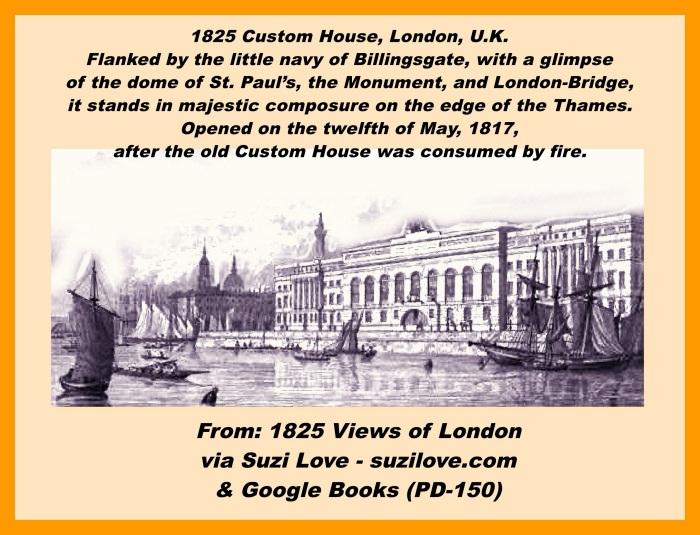
Custom House, London. From 1825 Views Of London. The Custom-House of London appears to much advantage in the accompanying view. Flanked by the little navy of Billingsgate, with a glimpse of the dome of St. Paul’s, the Monument, and London-Bridge in the distance, it stands forward in majestic composure on the edge of the Thames.
The first stone of this building was laid on the Twenty-fifth of October, 1813, the fifty-third Anniversary of his late Majesty’s Accession, and it was opened for business on the twelfth of May, 1817; the old Custom-House in the interim (February, 1814) having been consumed by fire. It is built after a plan by David Laing, Esq. and cost in the erection 167,000 pound besides 29,300 pound paid for the property on which it stands, after deducting 12,440 pounds received for old materials. The length of the front here presented, which is executed in Portland stone, is 484 feet, 101 inches.
The architectural beauties of the Custom House consist in an appropriate simplicity of style, combined with a classical adherence, throughout, to the rules of just proportion. As the Official Registry of the exports and imports of the State, where the complicated concerns of the mercantile interests of this vast Empire are reduced under a few general heads, it imparts a profound moral attraction to the scene.
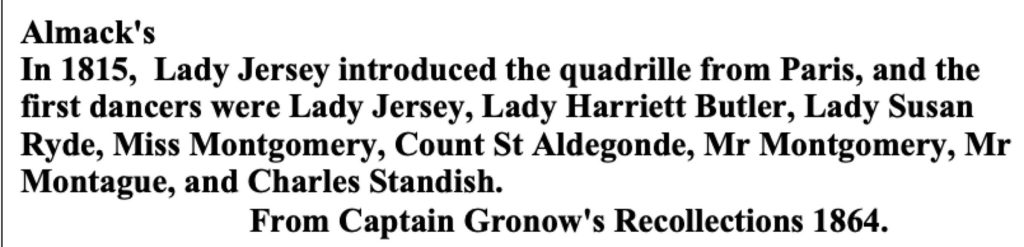
Almack’s Assembly Rooms often appear in Regency Era romances as they were a well known gathering place for those in the Ton looking for wives or husbands. 1770-1840 . Almack’s or Willis’s Rooms, King Street, St James, London, UK. Almack’s Assembly Rooms, founded by William Almack at No. 26-28, were on the site of the present Almack House. The club was originally a gaming establishment but moved from Pall Mall. The Assembly rooms were on the South side of King Street in St James’s and were opened on February 12, 1765. At the time the subscription was ten guineas for which there was a ball and supper each week for the twelve weeks of the season.
Assemblies were held on Tuesdays and Thursdays, but only four or five times a season. Dates were listed in the paper along with the names of the Patronesses. When Lady Jersey took over Almack’s around 1815, assemblies were changed to Wednesdays. Many aristocrats were reportedly offended by something that happened at Almack’s but Lord Jersey is reported to have refused to duel over any inferred slights because it would have meant he was forever involved in a duel. The other well-known Patronesses were Lady Bathurst and Lady Downshire.


1765-1840 ca. Almack’s, or Willis’s, Assembly Rooms, South Side Of King Street, St James, London. commons.wikimedia.org

1800s Early Exterior of Almack’s Assembly Rooms, London, UK.
Captain Gronow, an army officer in London around 1814, wrote about the rules of Almack’s in Captain Gronow’s Recollections and Anecdotes, 1864 , but only gives his views on a few years of Almack’s history.



Fashion Women 1800 By Suzi Love History Notes Book 12 #Regency #Fashion Love gorgeous historical women’s fashions? Take a look at what women wore and carried in 1800 in Europe and around the world. books2read.com/SuziLoveFashionWomen1800