Light-hearted look at Young Lady in Jane Austen’s times, or early 1800s. A glimpse into both the frivolous and more serious occupations filling a young lady’s day in the lifetime of Jane Austen, or the Regency Era, or the early 19th Century. Historic images and historical information show her fashions and frolics. https://books2read.com/suziloveYLD
Do you need more factual and visual information for your historical fiction? Try History Notes Books 1-13. Non-fiction Series: Fashion, music and social manners in the 18th and 19th centuries e.g.
Want a glimpse into the life of a young lady in Jane Austen and the Bridgerton years? #bridgerton #RegencyEra #JaneAusten
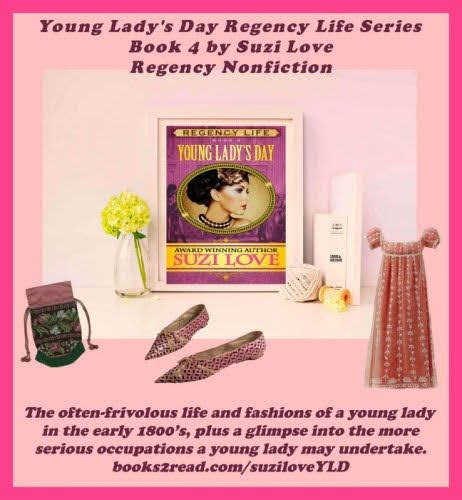
Young Lady’s Day is Book 4 in the Regency Life Series. This book depicts the often-frivolous life and fashions of a young lady in the early 1800’s, but also gives a glimpse into the more serious occupations a young lady may undertake. Through historic images, historical information, and funny anecdotes, it shows how a young lady fills her day, where she is permitted to go, and who she is allowed spend time with. These light-hearted looks at the longer Regency years are an easy to read overview of what people did and wore, and where they worked and played. There is plenty of information to interest history buffs, and lots of pictures to help readers and writers of historical fiction visualize the people and places from the last years of the 18th Century until Queen Victoria took the throne. https://books2read.com/suziloveYLD
Love the life of Jane Austen and her stories? Fan of the Bridgerton series? Reader or writer of the early 1800s, or Regency Era? For information and pictures, try Regency Life Series by Suzi Love. Light-hearted series about Regency Era, or early 1800s. For writers, readers and history lovers.
Thes books use historic images, historical information, and funny anecdotes to give an overview of life through the late Georgian and the Regency years. A light-hearted look at the people, places, and fashions of the times, plus an easy to read overview of the politics and economics. There is plenty of information to interest history buffs, and lots of pictures to help readers and writers of historical fiction visualize the people and places from the last years of the 18th Century until Queen Victoria took the throne.
Try Books 1-5 Regency Life Series by Suzi Love. Regency Overview – Young Gentleman’s Day – Older Gentleman’s Day – Young Lady’s Day – Older Lady’s Day
Regency Era Overview: Images, information and funny anecdotes give an overview of life in Jane Austen’s times or early 1800s. #Regency #JaneAusten #BritishHistory
This book depicts the often-frivolous life and fashions of a young lady in the early 1800’s, but also gives a glimpse into the more serious occupations a young lady may undertake. Through historic images, historical information, and funny anecdotes, it shows how a young lady fills her day, where she is permitted to go, and who she is allowed spend time with. These light-hearted looks at the longer Regency years are an easy to read overview of what people did and wore, and where they worked and played. There is plenty of information to interest history buffs, and lots of pictures to help readers and writers of historical fiction visualize the people and places from the last years of the 18th Century until Queen Victoria took the throne. Young Lady’s Day Regency Life Series Book 4 by Suzi Love. https://books2read.com/suziloveYLD
Young Lady’s Day Regency Life Series Book 4 by Suzi Love. #regency #nonfiction
An early 1800’s glimpse into both the frivolous and more serious occupations filling a young lady’s day. Historic images and historical information show her fashions and frolics.
https://books2read.com/suziloveYLD
1826 The Cyprian’s Ball At the Argyll Rooms. A Regency Gentleman’s Life. From The English Spy By Robert Cruikshank.
Cyprians: High-class prostitutes who dressed well and were interesting and entertaining. They were often under the protection of a wealthy gentleman for a time and were gifted clothing, jewelry and temporary housing. Called a multitude of names, none of which were flattering. Ladybird, lady of easy virtue, impure, fashionable impure, soiled doves, Covent Garden nun, Drury Lane vestal, left-handed wife, short-heeled wench, three-penny upright, woman of pleasure.
1826 The Cyprian’s Ball At the Argyll Rooms. A Regency Gentleman’s Life. From The English Spy By Robert Cruikshank. 1826 The Cyprian’s Ball At the Argyll Rooms. #2 A Regency Gentleman’s Life. From The English Spy By Robert Cruikshank. RL_2_D2D_RetailerBuyLink_RL_2
https://books2read.com/suziloveYGD
Historic images, historical information, and funny anecdotes give an overview of life in the early 1800s. Information for history readers and writers of the Regency Years, for Jane Austen fans and all history buffs. Pictures help visualize the people and places of the long Regency period. https://books2read.com/suziloveROver Regency Overview Regency Life Series Book 1 by Suzi Love.
The Regency Life Series By Suzi Love depicts the ups and downs of life in the early 1800’s, or Jane Austen’s years, or the Regency Era. Fun pictures, historical information, and funny anecdotes show how people fill their days, where they go and with whom they spend their time. These light-hearted looks at the longer Regency years are an easy to read overview of what people did and wore, and where they worked and played. Plenty of information for history buffs and lots of pictures help readers and writers of historical fiction visualize the last years of the 18th Century until Queen Victoria took the throne.
Regency Era Overview: Images, information and funny anecdotes give an overview of life in Jane Austen’s times or early 1800s. #Regency #JaneAusten #BritishHistory
1816 August Back view of a lady in Evening Dress, English. White, high-waisted, dress with short bodice, long sleeves, frilled hem plus decoration above the frill, high plumed headdress, and reading music sheets. “A gown of white soft satin, cut low all round the back and bosom.The skirt gored, and a good deal of fullness thrown behind. The body, which is disposed in small plaits, displays the shape, as our readers perceive by print, to very great advantage; it is trimmed round bosom with a wreath of small white net roses, with a little tuft of pearl in the heart of each. Long loose sleeve, composed of white lace, and finished a la Parisienne with a rich double frill at the wrists.
The skirt is ornamented, in an exquisitely tasteful style, with a broad flounce of rich blond, surmounted by a wreath of roses and deep scallops of white net, the points of which are finished by bows of white satin ribbon. The effect of this trimming is uncommonly beautiful. Hair, cropped and curled full in the back of the neck, and dressed light, and much parted on the forehead: it is ornamented With a superb white ostrich-plume, at the base of which is an aigrette of diamonds. Neck-lace, ear. rings, and bracelets also of diamond. White satin slippers, and white kid gloves. We have to thank the condescension of a lady of much celebrity in the fashionable world, to whom we are indebted for a sight of the very elegant and tasteful dress from which our present print is designed.” Fashion Plate via Rudolph Ackermann’s ‘The Repository of Arts’.
Fashion Women 1815-1819 History Notes Book 28 https://books2read.com/SuziLoveFashionWomen1815-1819
Do you need more factual and visual information for your historical fiction? Try History Notes Books 1-28. Non-fiction Series: Fashion, corsets, Regency Era, music and social manners in the 18th and 19th centuries e.g.