1800 Elegant Young French Gentleman. Pulling on his top coat over a long tan coat. Tan gloves, brown hat, brown boots, cane. Fashion Plate via Journal des Dames et des Modes, or Costume Parisien.
Overcoats: Called many names: Greatcoat, or Carrick, or Garrick, or Coachman’s, or Driving. Or Box Coat. Overcoats were voluminous and covered the other clothing. Usually with many capes, or collars, or pelerines covering the shoulders and with buttons down the front. Popular in the 19th century for riding, driving and travel as they kept the wearer warm and snow and rain off the body. Greatcoat: Overcoat with capes around the shoulders for men. Carrick or Garrick Coat: Other names for a gentleman’s inclement weather coat and worn for driving or travel.
1800 Elegant Young French Gentleman. Pulling on his top coat over a long tan coat. Tan gloves, brown hat, brown boots, cane. Fashion Plate via suzilove.com and Journal des Dames et des Modes, or Costume Parisien. https://books2read.com/SuziLoveFashionMen1800-1819
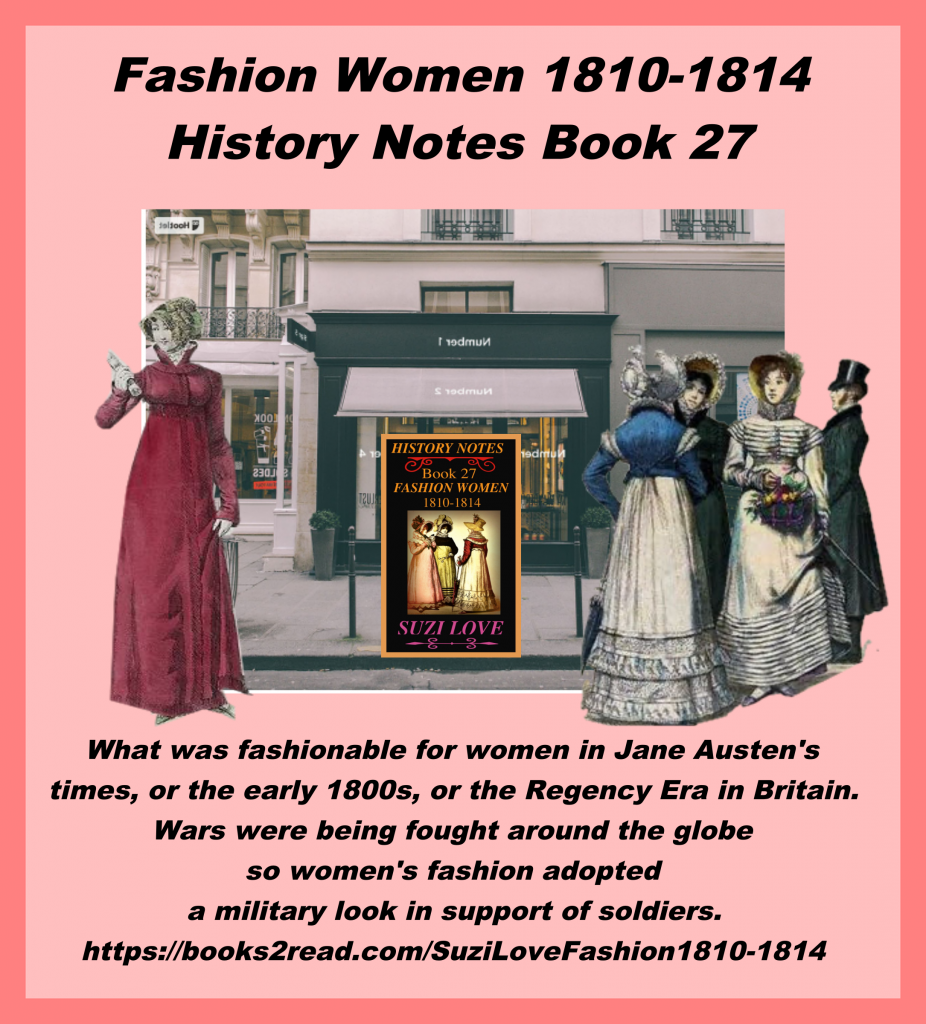
Fashion Women 1810-1814 History Notes Book 27 What was fashionable for women in Jane Austen’s times? Mourning, riding, daytime, evening clothing, plus underclothing, corsets and accessories. This book looks at what was fashionable for women in Jane Austen’s times, or the early 1800s, or the Regency Era in Britain. Wars were being fought around the globe so women’s fashion adopted a military look in support of soldiers. Fashions, like the lifestyle, became progressively more extravagant and accessories went from colorful to over-the-top.
The Lady’s Magazine said of the basis of women’s fashion that was popular for the first twenty years of the 1800s, ‘White is still the prevailing color for robes. For morning dresses, linen gowns, in large diamonds or squares, are fashionable. Indian muslins, plain or embroidered, are preferred to Florence and satins. The designs of embroidery for shawls are of infinite variety. Long gloves, which reach above the elbow, are not yet laid aside. Medallions are hung around the neck from crossed chains and some of these medallions are shaped like the bags, called ridicules. These reticules are of the lozenge or hexagon shape, with a small tassel at each angle. Reticules, or ridicules, are in lozenge or hexagon shapes with a small tassel at each angle. In capotes, or hats, and ribbands, the violet and dark green prevail over jonquil. Bracelets in hair, pear-shaped ear-rings, medallions on square plates, saltiers of colored stones, are still in fashion.’
These are the types of outfits worn by Jane Austen and contemporaries in English magazines, where French fashions were obsessively copied despite the two countries being at war for many years. In Jane Austen’s years, she and her contemporaries spent a lot of time walking outdoors. People were encouraged to partake in outdoor pursuits to maintain good health. Fragile slippers were worn for balls and evening events but for walking sturdier shoes were needed, In the early 1800s, these were typically made of leather, had a very small heel, slightly rounded toes and were laced up on the top.
1805 Pink Redingote, French. Also called a Pelisse, a Walking Dress, or a Carriage Costume, in England. High-waisted, short puffed sleeves over long straight sleeves with elaborate embroidery to decorate, and close-fitting gold hat tied under her chin. Fashion Plate via Journal des Dames et des Modes, or Costume Parisien. Jane Austen and her contemporaries would have worn long coats like this one to keep warm when out and about, visiting, shopping etc. The thin muslin dresses worn in the early 1800s were little protection against European winters, so coats of some sort were added, plus colorful accessories like this shawl and the hat to add color and another layer of warmth.
Definition Redingote Or Coat Or Pelisse: Long fitted outdoor coat worn over other garments for warmth. French word developed from English words, riding coat. French fashion plates call these coats Redingotes and they are designed for women, men and children. English fashion plates call them a Pelisse, a walking dress, Promenade dress, or Carriage dress.
Fashion Women 1805-1809 History Notes Book 26 What did Jane Austen and friends wear? This book looks at early 1800s fashions, which were elegant and pretty with high waists and fabrics that were almost transparent. These Empire style gowns, named after Napoleon’s first Empress, became popular throughout Europe, and were then copied around the world. Colorful outwear was added to make an ensemble more attractive and warmer. https://books2read.com/SuziLoveFashionWomen1805-1809
Travel and Luggage By Suzi Love History Notes Book 10. How did people travel in Bridgerton and Jane Austen’s times. What did they take with them to make their long journeys easier? Travel by road, ship, canal, or railway all took a long time and had dangers so people learned to prepare. And then, in the nineteenth century, road improvements, inventions, and scientific developments made travel more pleasurable. books2read.com/SuziLoveTravel
Horse Power To Steam. Various alternatives to horse power were tested in London’s streets during the 19th century. Steam powered road engines and trams proved too heavy and damaged the roads. Stationary steam engines were used to haul trams attached to a cable but these were only really effective on hills that we too steep for horses. There were also experiments with trams driven gas engines and battery electric power. but was successfully developed. Petrol engines were still primitive and unreliable in the 1890s. In 1900 the reliable horse still dominated the streets of London but new technology was to revolutionize road transport.
1799-1805 ca. Gold dress with small train and very small bodice.. via musee des tissus et des arts decoratifs de lyon. https://books2read.com/SuziLoveFashionWomen1801-1804
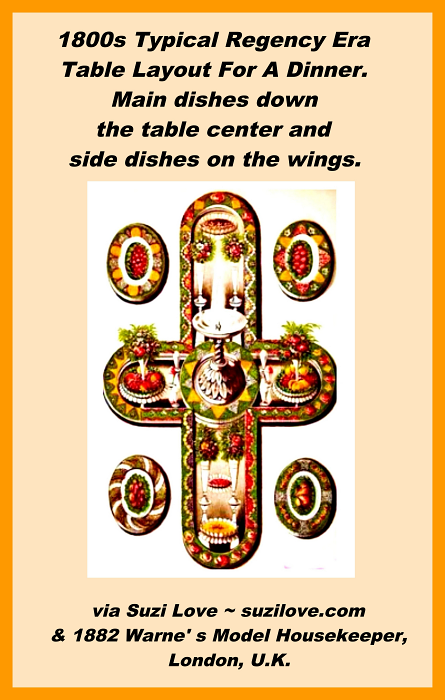
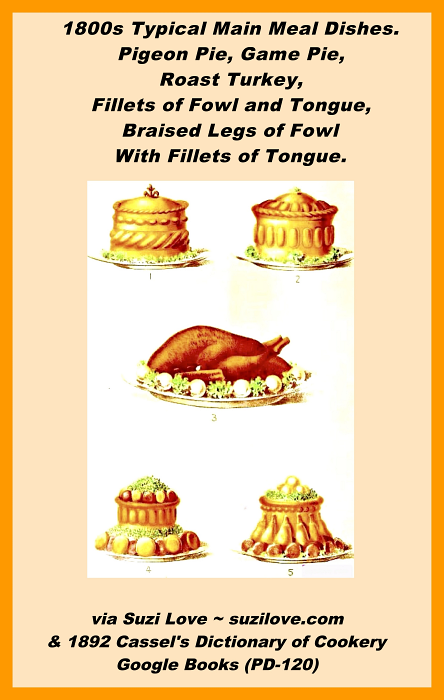
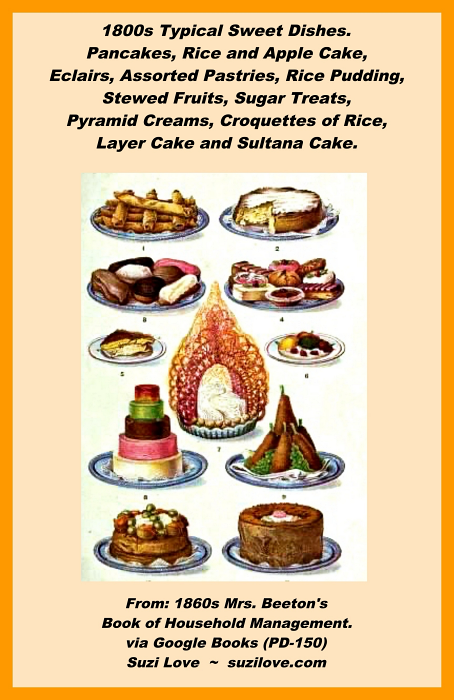
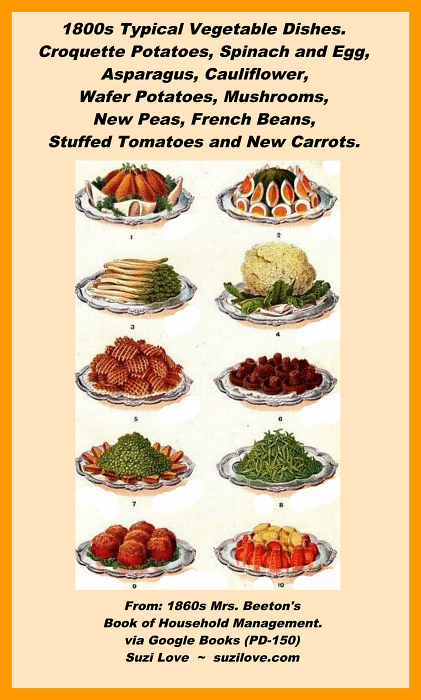
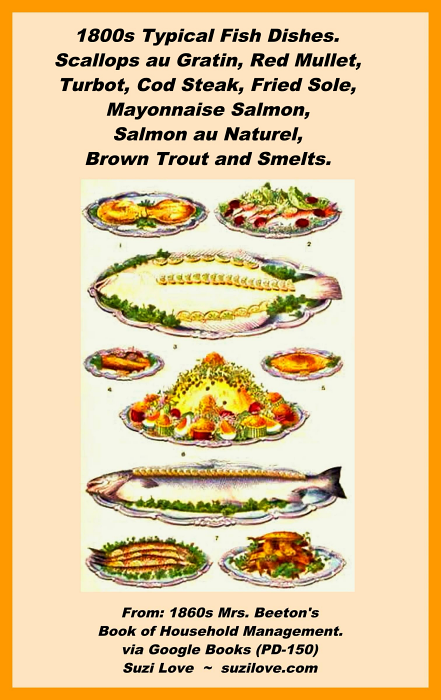
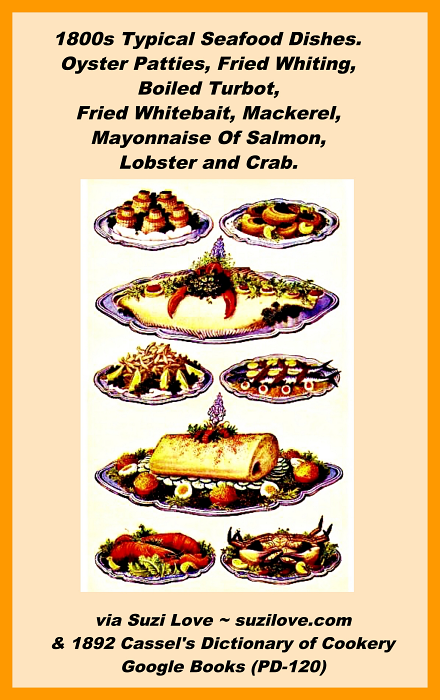
1800s Typical Food Served and Table Settings Used. Historic food from Mrs. Beeton’s Household Management, 1882 Warne’ s Model Housekeeper, London, U.K., 1892 Cassel’s Dictionary of Cookery.
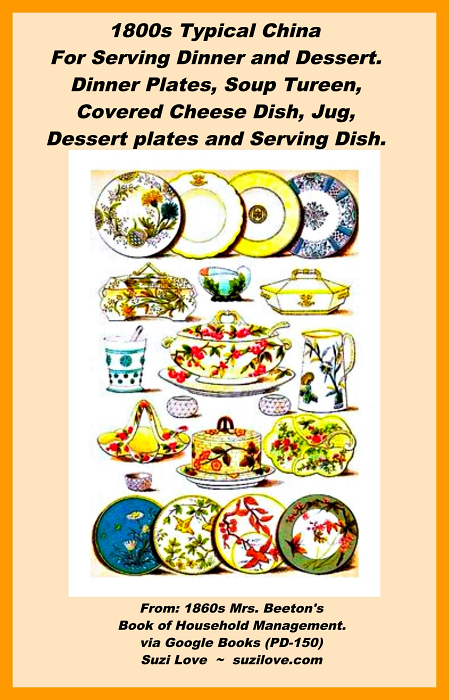
1800s Typical China For Serving Dinner and Dessert. 1800s Typical Regency Era Table Layout For A Dinner.1800s Typical Joints Of Meat. 1800s Typical Fruits Served. 1800s Typical Main Meal Dishes. 1800s Typical Salad and Vegetable Dishes. 1800s Typical Soups. 1800s Typical Sweet Dishes. 1800s Typical Vegetable Dishes. 1800s Typical Fish Dishes. 1800s Typical Seafood Dishes.
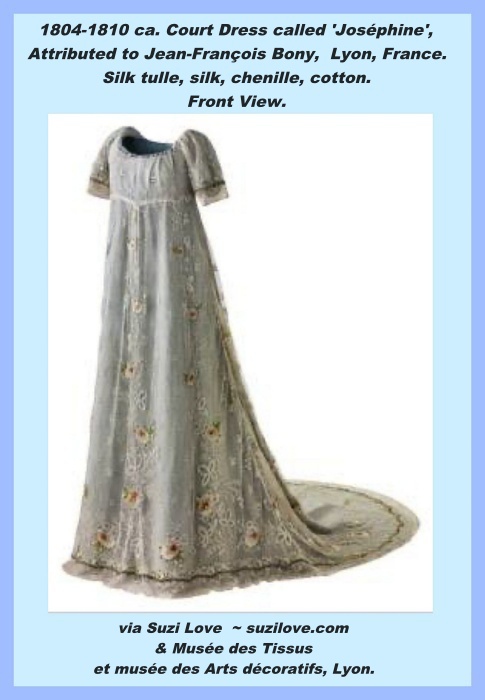
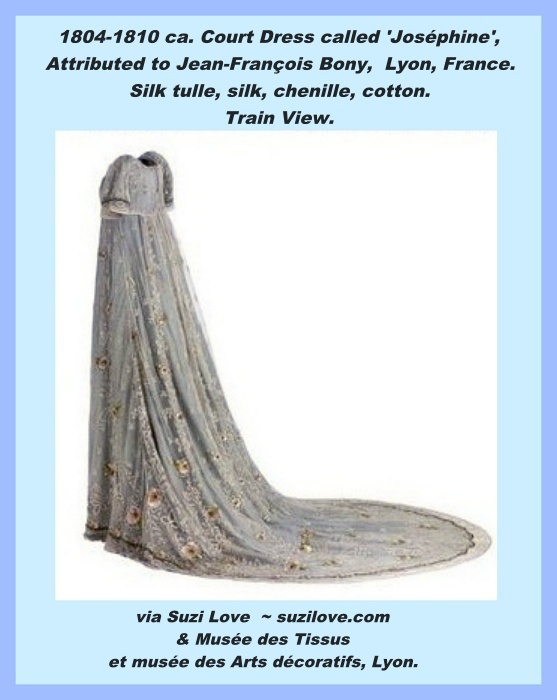
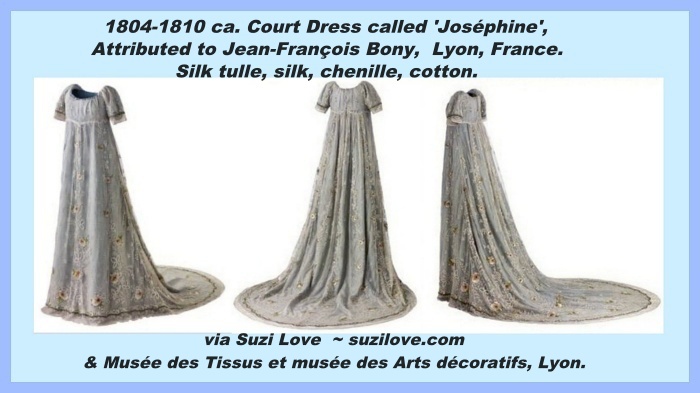
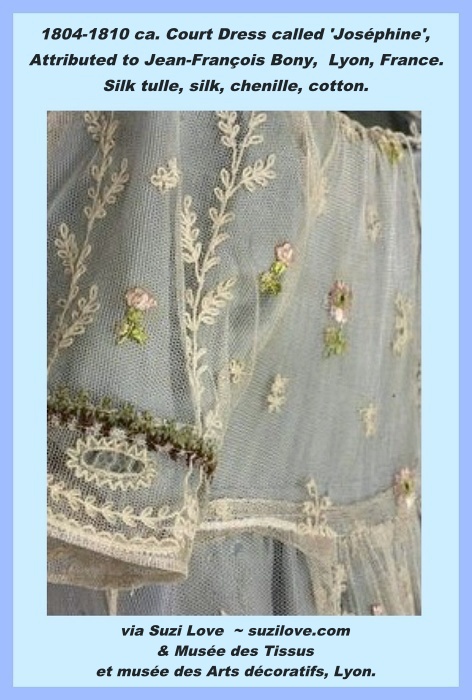
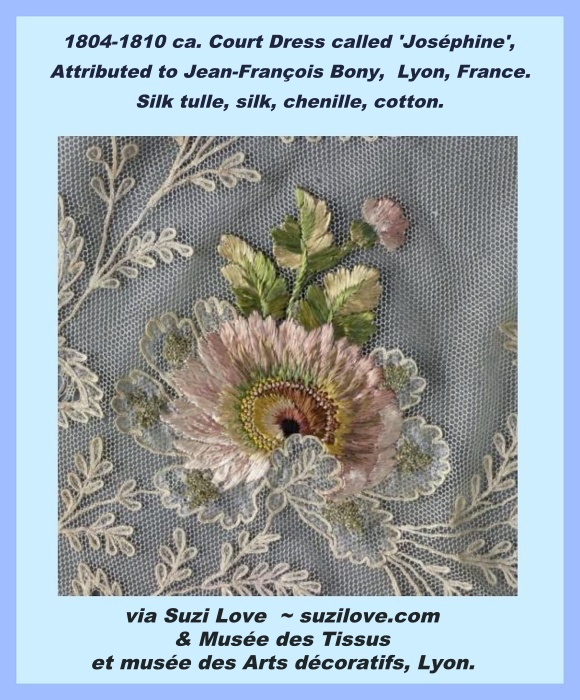
1804-1810 ca. Empire style, or high-waisted, French Court Dress called ‘Joséphine’, Attributed to embroiderer Jean-François Bony, Lyon, France. Silk tulle, silk, chenille, and cotton. via Musée des Tissus et musée des Arts décoratifs, Lyon. via Musée des Tissus et musée des Arts décoratifs, Lyon.
Definition Empire Style: Named after the First Empire in France, by 1800 Empire dresses had a very low décolleté, or neckline and a short narrow backed bodice attached to a separate skirt. Skirts started directly under the bust and flowed into the classical relaxed wide styles of Greece and Rome. This style of dress is associated with Jane Austen and her contemporaries as a simple cotton high-waisted dress was worn most days and accessorized according to the importance of the occasion.
Fashion Women 1805-1809 History Notes Book 26 What did Jane Austen and friends wear? https://books2read.com/SuziLoveFashionWomen1805-1809
1817 June Morning Dress as worn in Bridgerton and Jane Austen’s times in England. A round dress composed of jaconet muslin; the bottom of the skirt is trimmed with an intermixture of tucks and embroidery. The body is perfectly novel, it is a three-quarter height, and displays the whole of the throat and a little of the neck: it is composed of the same material as the dress, and is formed to the shape, in a manner at once singular and becoming, by bands of letting-in lace; it is also profusely ornamented with lace, which is set on very full. Long full sleeve, the fullness confined by a tasteful cuff, which is finished by a lace ruffle. Head-dress the Marlborough cap, composed of white lace, ornamented with full-blown roses and blush colored satin ribbon. For the form of this elegant cap, which is perfectly in the English style, we refer our readers to our print. The hair is parted in front so as to display a little of the forehead, and curled lightly over the temples. Necklace and ear-rings white cornelian mixed with gold. White kid slippers and gloves. We are indebted to the elegant taste of Mrs. Marchant of 40, Gerrard-street, Soho, for both our dresses this month. Fashion Plate via Rudolph Ackermann’s ‘The Repository of Arts’.
Definition Morning or At-Home Dress: Loose and comfortable dress and soft lace cap to be worn at home for reading, painting, sewing or for walking in the garden. To be seen by family, servants and close friends. Not accessorized enough to be out in the wider public, although the pretty pink roses and trim on the cap suggest this outfit may have been worn for receiving visitors at home.
Fashion Women 1815-1819 History Notes Book 28 What did Jane Austen wear? . D2D_HN_28_https://books2read.com/SuziLoveFashionWomen1815-1819
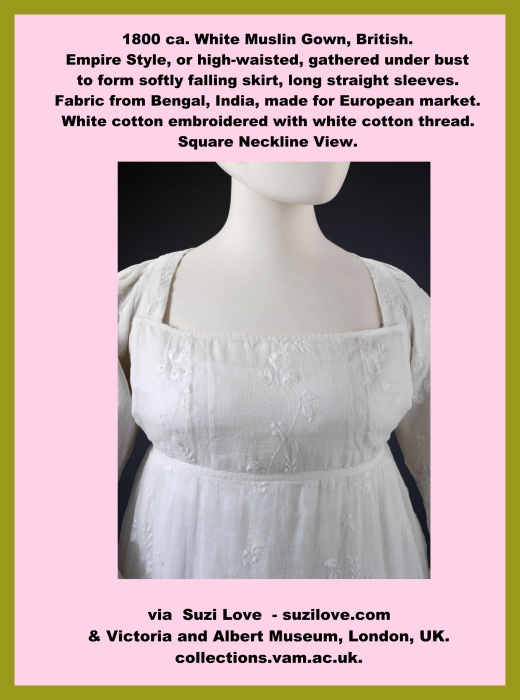
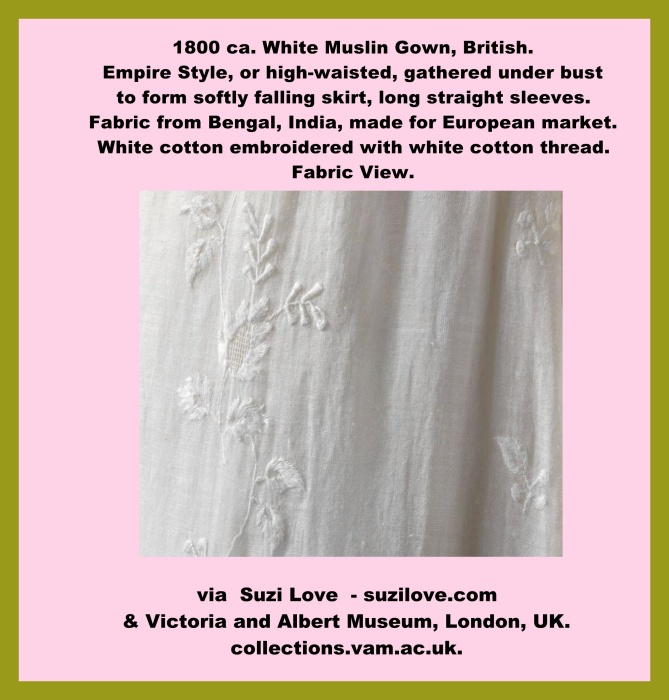
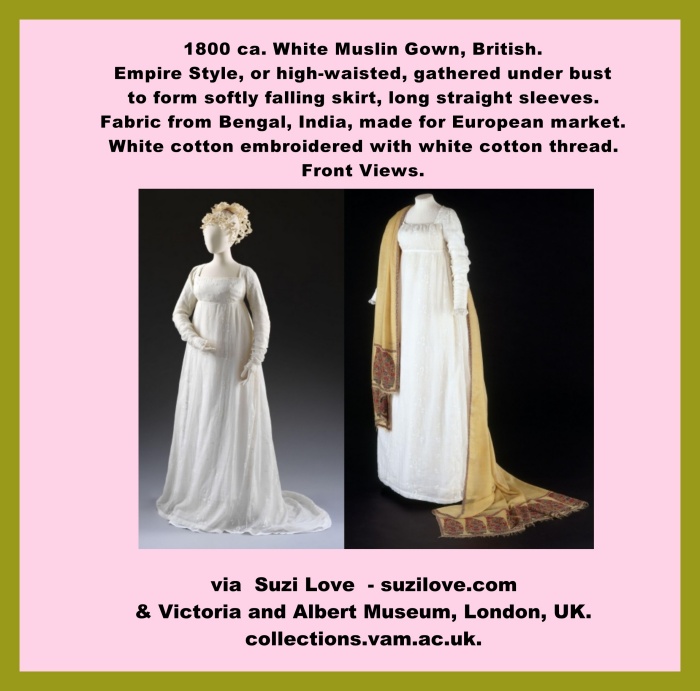
1800 ca. White Muslin Gown, British. Empire Style, or high-waisted, gathered under bust to form softly falling skirt, long straight sleeves. Fabric from Bengal, India, made for European market. White cotton embroidered with white cotton thread. via Victoria and Albert Museum, London, UK. collections.vam.ac.uk.
About 1800 Women’s dress changed dramatically after 1785. The rich fabrics and complicated, formal shapes of the late 18th century gave way to simple, light fabrics that draped easily. These new gowns achieved something of the effect of the simple tunics shown on classical Greek and Roman statues and vases, Muslin embroidered with cotton thread Fabric made in India, gown made in England Given by Miss Frances Vickers Museum no. 444-1888 (2013) Victoria and Albert Museum, London.
By the end of the 18th century, rigidly tailored garments for both men and women were replaced by styles made for ease and comfort, resulting in the neoclassical style of the 1780s. Inspired in part by the statuary of ancient Greece and Rome, the new fashion was epitomised by light cotton gowns falling around the body in an unstructured way, held around the high waist with a simple sash and accompanied by a soft shawl draped around exposed shoulders. This style was ideal for the Indian imports like Kashmiri shawls and Bengali muslin, as used in this embroidered gown. Championed by such influential figures as Emma Hamilton in England and Madame Récamier in France, the so-called ‘Empire’ style catapulted Indian muslin into the forefront of fashion.
Definition Empire Style Dress: Named after the First Empire in France. Empire dresses had a low neckline and skirts started directly under the bust and flowed into the classical relaxed wide styles of Greece and Rome. This style of dress is associated with Jane Austen and her contemporaries as a high-waisted dress was worn most days. Cotton, silk or taffeta were the popular fabrics. Only the very wealthy could afford white dress in this style as the cottons were imported from India and had to be carefully cleaned, usually by a lady’s maid.
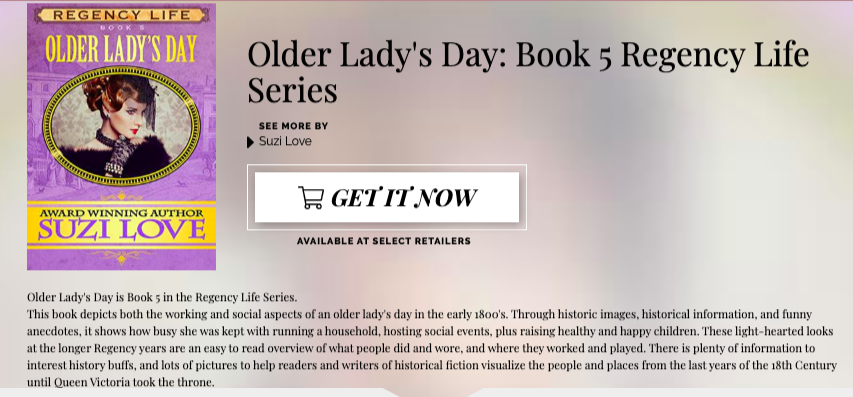
Older Lady’s Day Regency Life Series Book 5. An easy to read overview of what an older lady did, wore, and how she lived in the early 19th Century. Information for history buffs and pictures for readers and writers of historical fiction.
The older lady’s day usually started with her toilette in her bedroom, where her maid helped her dress for the day and styled her hair. After that, she would join her family downstairs for breakfast unless she preferred a tray with either tea or hot chocolate in her bedroom as she prepared for her busy day. Her day would be made up of speaking with the housekeeper and the cook about the week’s menus, assuring that the servants were all available that day and no one was ill, and checking the list of foods needed.
She would also enquire if the laundry was up to date and that they had enough good linen to make up all the beds before extended family members and guests arrived. If she was in the country and hosting a weekend house party, she would assign rooms to the guests on her lists and query that all was in readiness for their arrival.