1823 Hackney Cab, London, U.K. This small cabriolet was built by coach builder, David Davies, and licensed for public convenience. Name ‘hackney’ derived from village of Hackney, Middlesex, famous for horse drawn carriages. French word cabriolet was shortened to cab, hence ‘Hackney Cab’. In 1813, there were 1100 hackney coaches for hire in London. Designs changed constantly and in 1834 Joseph Hansom registered his design for a cabriolet named ‘Hansom Cab’.
Craftsmen created containers of precious metals, leather, and silks and decorated them with jewels and engraving. Jane Austen and her contemporaries would have used writing boxes, linen boxes when travelling, boxes to hold their food and drink supplies while traveling by carriage, and decorative boxes to keep letters, ribbons, gloves, hairpins etc. Boxes, Cases, and Necessaires By Suzi Love, History Notes Book 11. books2read.com/suziloveBoxesCases.
1808 Richard Trevithick’s Steam Circus, Bloomsbury, London, U.K. Site where Trevithick ran his locomotive ‘Catch Me Who Can’. Trevithick wanted to prove that traveling by train was faster than on horseback. Locomotive ran at top speed of 19 km per hour and people paid a shilling to sit in an attached car and be pulled around. Via Wikimedia Commons commons.wikimedia.org (PD-ART) This was the start of the railway expansions across England in Jane Austen’s time.
Craftsmen created containers of precious metals, leather, and silks and decorated them with jewels and engraving. Jane Austen and her contemporaries would have used writing boxes, linen boxes when travelling, boxes to hold their food and drink supplies while traveling by carriage, and decorative boxes to keep letters, ribbons, gloves, hairpins etc. Boxes, Cases, and Necessaires By Suzi Love, History Notes Book 11. books2read.com/suziloveBoxesCases.
1826 Sights Jane Austen Saw Around Regency England. 1826 From Regency Life Around England. The sights that Jane Austen and her friends and family would have seen around England. via 1826 The English Spy By Robert Cruikshank via Google Books (PD-150)
1826 Royal Wells At Cheltenham, England. Regency life around England. via 1826 The English Spy By Robert Cruikshank via Google Books (PD-150)
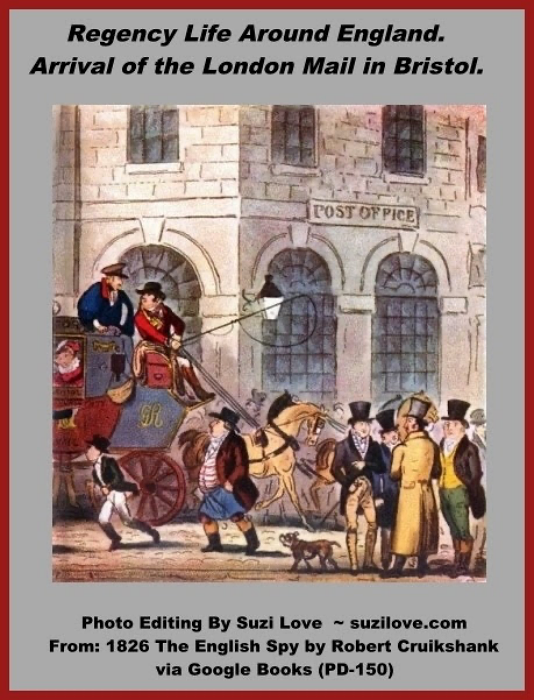
1826 Arrival of the London Mail in Bristol. Regency life around England. via 1826 The English Spy By Robert Cruikshank via Google Books (PD-150)
1826 Procession from Gloucester to Berkeley. Regency life around England. via 1826 The English Spy By Robert Cruikshank via Google Books (PD-150)
The Promenade At Cowes, England. Regency life around England. via 1826 The English Spy By Robert Cruikshank via Google Books (PD-150)
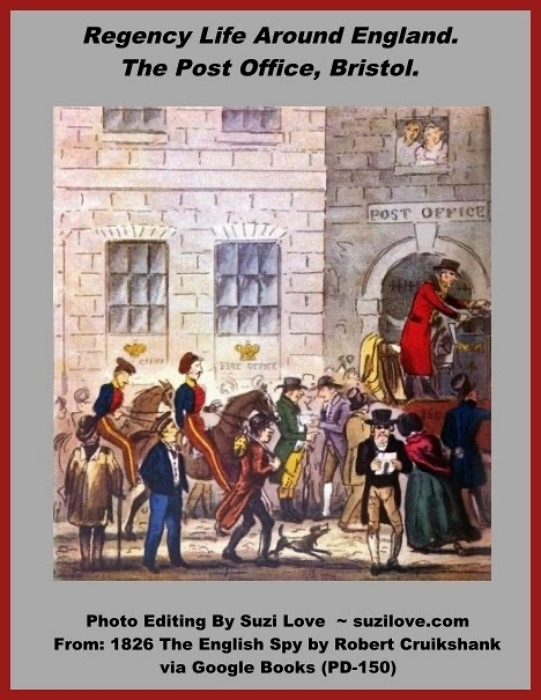
1826 The Post Office, Bristol. Regency life around England. via 1826 The English Spy By Robert Cruikshank via Google Books (PD-150)
1826 Point Street, Portsmouth, England. Regency life around England. via 1826 The English Spy By Robert Cruikshank via Google Books (PD-150)
1826 Gate House, Highgate, England. Regency life around England. via 1826 The English Spy By Robert Cruikshank via Google Books (PD-150)
1826 Oakland cottages were a well-known place to stay at Cheltenham Spa, England. Regency life around England. via 1826 The English Spy By Robert Cruikshank via Google Books (PD-150)
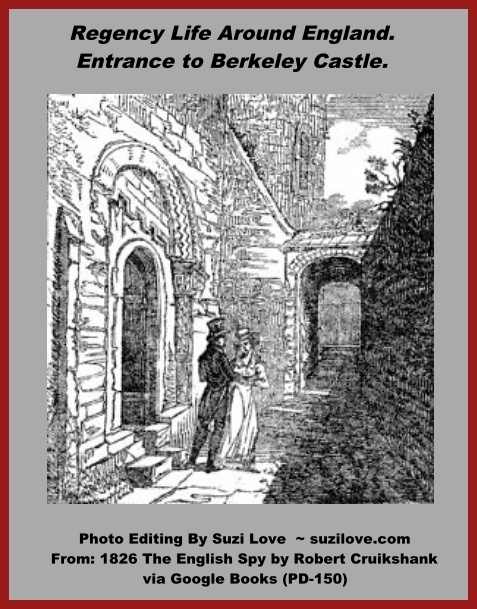
1826 Entrance to Berkeley Castle, England. Regency life around England. via 1826 The English Spy By Robert Cruikshank via Google Books (PD-150)
1820 ca. Writing Box, English. Rosewood and brass inlaid writing box by William Dobson, The Strand, London. Makers label, gilded candle holders, ink wells. via antiques-atlas.com. Portable boxes for writing materials existed for many centuries but in the last decades of the 18th century socio-economic circumstances in England necessitated the wide use of a portable desk in the form of a box which could be used on a table or on one’s lap. Hence “Lap Desk”.
1811 Typical Regency Era Man’s Overcoat or Driving Coat. Fashion Plate via Journal des Dames et des Modes, or Costume Parisien. Overcoats were called many names: Greatcoat, Carrick or Garrick Coat, Coachman’s or Driving Or Box Coat. With many shoulder capes, or pelerines, to keep rain and snow off the body.
From the finish of the 18th century until 1820, men’s fashions in European and European-influenced countries moved away from the formal wear of brocades, lace, wigs and powder to more informal and relaxed styles. Focus was on undress rather than formal dress. Typical menswear in the early 1800s included a tailcoat, a vest or waistcoat, either breeches, pants, or the newer trousers, stockings, shoes or boots, all worn with an overcoat and hat. This basic ensemble was accessorized with some form of neckcloth or cravat, gloves, walking stick, cane or riding crop, handkerchief, fobs, watch and perhaps a quizzing glass or eye glass.
Skirted coats were replaced with short-fronted, or cutaway, tailcoats worn over fitted waistcoats and plain, white linen shirts. Knee breeches were gradually replaced by tight-fitting pantaloons and later trousers, decorative shoes with buckles were replaced with a variety of boot styles, and fussy and ruffled neckwear gave way to intricately tied, white linen neck cloths. A Regency Era, or early 1800s, gentleman was outfitted in more practical fabrics, such as wool, cotton and buckskin rather than the fussy brocades and silks of the late 1700s.
1827 ca. Gentleman’s Dressing Box, London. Mahogany box with brass carrying handles, lid opens to velvet and leather interior with twelve engraved silver topped bottles, all with an engraving of an oak tree. Top tray lifts out to another tray of tools.
1827 ca. Gentleman’s Dressing Box, London. Mahogany box with brass carrying handles, lid opens to velvet and leather interior with twelve engraved silver topped bottles, all with an engraving of an oak tree. Top tray lifts out to another tray. via Antique Tea Caddies, U.K. 1827 ca. Mahogany Gentleman's Dressing Box With Silver Topped Bottles, London. #Regency #Antiques #London. books2read.com/suziloveBoxesCases Share on XHN_11_D2D_Craftsmen created containers of precious metals, leather, silks, and decorated them with jewels to make exquisite and expensive items as well as practical carrying cases. books2read.com/suziloveBoxesCases
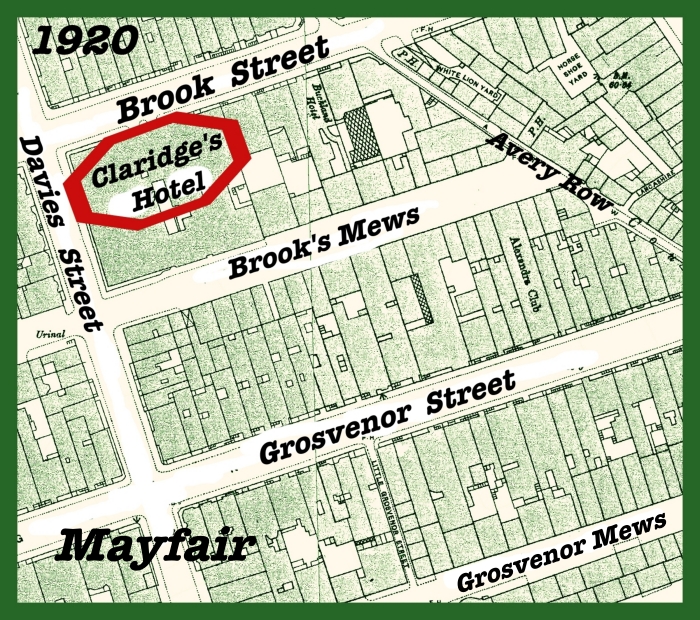
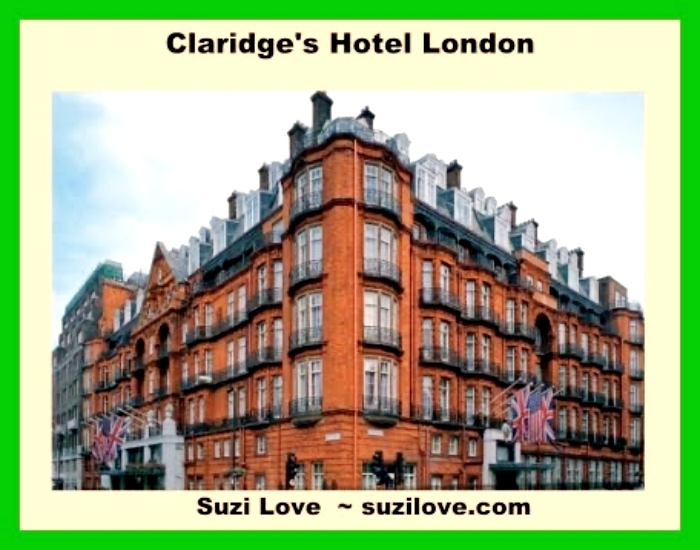
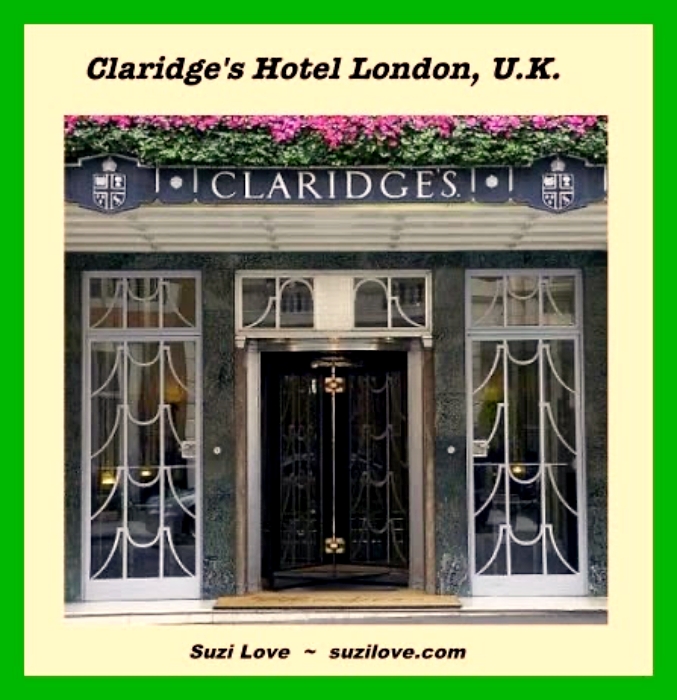
Claridge’s Hotel – London’s Historic Places Claridge’s was founded in 1812, during the Regency Era, as Mivart’s Hotel at 51 Brook Street, Mayfair, London, UK.
Lord William Beauclerk leased the terrace house from the Grosvenor Estate with permission to turn it into a hotel run by James Edward Mivart, the anglicized name for French chef Jacques Mivart. By 1838, the hotel grew to buy five consecutive houses along Brook Street, knocking down the walls to create one large hotel and Mivart prospered by introducing English county families to subtle French cooking to replace their traditional stodgy fare. Mivart designed the hotel for guests who wished to stay longer, so apartments were let by the month to foreign royalty and nobility who enjoyed the ambiance of the well-run hotel yet had the privacy of their own suites. The Prince Regent, who succeeded to the throne as King George IV in 1820, had a suite of rooms permanently reserved for him so he could discreetly carry on his playboy lifestyle.
In 1827, The Morning Post noted that Mivart’s was the fashionable rendezvous for the high Corps Diplomatique. In 1854, the hotel was sold to Mr and Mrs Claridge who ran a separate hotel at 49 Brook Street. They combined the two operations to trade as “Mivart’s at Claridge’s” until, after Mivart’s death, the hotel changed its name to Claridge’s in 1856, adding “late Mivart’s” underneath.
In 1860, Queen Victoria and Prince Albert visited the Empress Eugènie of France, who had made Claridge’s her winter quarters, and Queen Victoria was so impressed that she wrote to her uncle, Leopold I, King of the Belgians, in glowing terms of Claridge’s. The hotel became so connected to royalty it was called an “extension to Buckingham Palace”.including the Grand Duke Alexander of Russia and King William III of the Netherlands, until by 1853, The Times decided London had just three first-class hotels- Mivart’s, The Clarendon in Bond Street and Thomas’s in Berkeley Square.
In 1881, William Claridge’s failing health forced them to sell to a consortium, but the hotel consisted of several private houses and couldn’t be upgraded to compete with purpose built hotels cropping up all over London. The Savoy for example, built in 1889, offered lifts to all floors, electricity, en suite bathrooms and the best chef in Europe, Auguste Escoffier. So in 1894, Richard D’ Oyly Carte, founder of the rival Savoy Hotel, purchased Claridge’s and commissioned CW Stephens, designer of Harrods, to rebuild the hotel from the ground up. The new Claridge’s opened in November 1898.
1897 Claridge’s Hotel, Mayfair, London, U.K. A perspective view of the new building showing the front entrance in Brook Street and the return front in Davies Street. Drawn by C. W. Stephens, architect.
After World War I, Claridge’s flourished due to demand from aristocrats who no longer maintained a London house and Carte’s son, Rupert D’ Oyly Carte, added a new extension. During World War II, Peter II of Yugoslavia and his wife spent their exile at Claridge’s until on 17th June 1945, suite 212 was ceded by the UK to Yugoslavia for a single day to allow their heir, Crown Prince Alexander, to be born on Yugoslav soil.
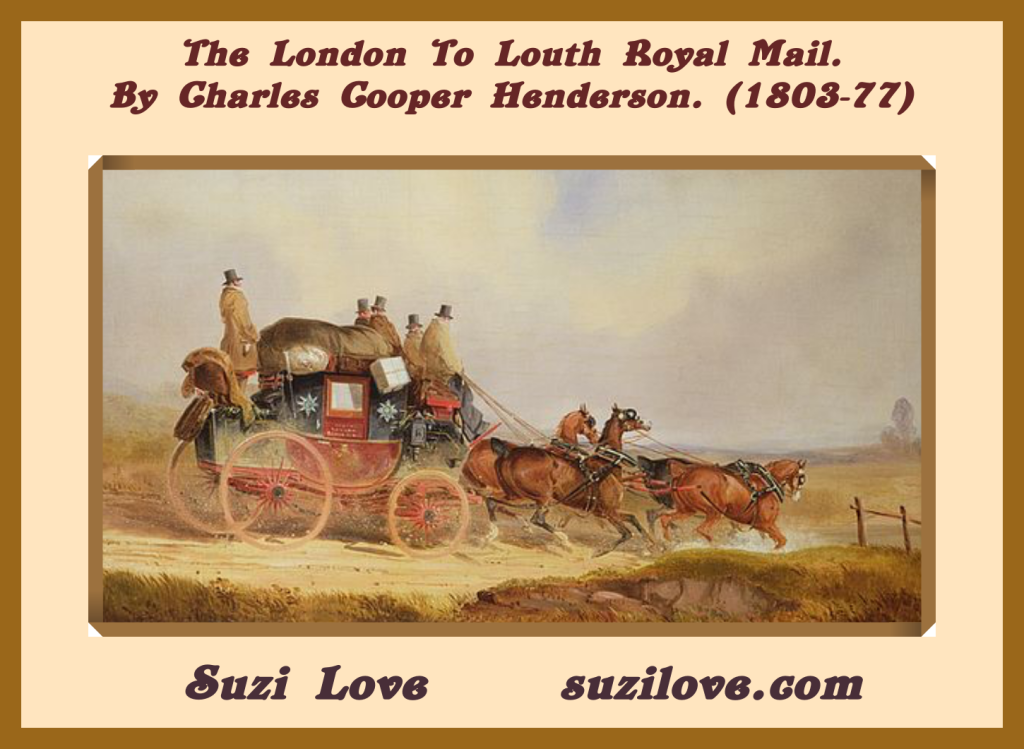
The London To Louth Royal Mail, England, U.K. Print by Charles Cooper Henderson. (1803-1877)
How did Jane Austen and her family? Did they go by stagecoach? The dreadful condition of British roads caused great apprehension to all classes of travelers. Making a journey anywhere in the country was a big undertaking and often a gentleman composed his last will and testament before his departure. Traveling in vehicles was only possible during the day or on the nights with very bright moonlight with few vehicles attempting road travel in winter and any travel on a Sunday was frowned upon. books2read.com/SuziLoveTravel
Description of Stage Coach Travel in England. via 1815 Journal Tour of Great Britain. “The gentlemen coachmen, with half-a dozen great coats about them, immense capes, a large nosegay at the button-hole, high mounted on an elevated seat, with squared elbows, a prodigious whip, beautiful horses, four in hand, drive in a file to Salthill, a place about twenty miles from London, and return, stopping in the way at the several public-houses and gin-shops where stage-coachmen are in the habit of stopping for a dram, and for parcels and passengers on the top of the others as many as seventeen persons. These carriages are not suspended, but rest on steel springs, of a flattened oval shape, less easy than the old mode of leathern braces on springs. Some of these stage coaches carry their baggage below the level of the axletree.”