1860 ca. Gilt Chatelaine With Etui. Hanging chatelaine with seven carbochons, gilt tools inside etui, or small container, of scissors, bodkin, knife, stiletto, pencil case, combination tweezers and ear spoon and ivory aid memoire, or notepad. via Needle’s Work Antiques. needleworkantiques.com
Definition Chatelaine: The word Chatelaine is French and means the keeper of the keys. Chatelaine” derives from the Latin word for castle. In Medieval times, the chatelaine was in charge of the day-to-day running of the castle. Women in charge of households dangled long chains from their waists to keep essentials within easy reach e.g. keys, notebook and pen, watch, sewing items, vinaigrette or perfume, or magnifying glass. Early chatelaine were simple essentials. Later chatelaine were decorative and expensive.books2read.com/SuziLoveChatelaines
D2D_RetailerBuyLink_HN_9. Chatelaines and Chains History Notes Book 9 By Suzi Love. #regency Women in charge of houses wore long chains holding important household items around their waist e.g. keys, pen, notebook, sewing. books2read.com/SuziLoveChatelaines
1811-1820 Regency Era Overview. The British Regency was the period from 1811-1820. King George III was deemed mad and unfit to rule so his son became his proxy, the Prince Regent, or Prinny to his close friends. The Prince Regent was often a figure of ridicule in Jane Austen’s times and featured regularly in caricatures, or cartoons, as a fat man who overindulged in everything and spent an exorbitant amount of money.
As a period in Britain’s official history, the Regency lasted less than ten years, although scholars apply the term Regency to a much longer period. It began in 1811, when George Ill was declared mad and the Prince of Wales was appointed Regent. It ended in 1820 when the King finally died and the Regent was crowned George IV. However, the Regency was a period in Britain’s history that had an effect on the social and cultural life for four decades, from the start of the French Revolution in 1789 to the passing of Britain’s Great Reform Act in 1832.
The decision to make George IV the Regent took a lot of political debate. After nearly two and a half months of political wrangling, the British government agreed to grant the title of Prince Regent on George. The Act of Parliament was finally passed by a commission in the House of Lords on February 5th 1811 and the Prince was formally sworn in as Regent at Carlton House the next day. He continued to rule as Regent until 1820 when, on his father’s death, he assumed the title George IV and reigned until his own death in 1830.
During the Regency, royalty and upper class ladies and lords, or the Beau Monde, lived elegant and extravagant lives that also allowed excesses and depravity. Britain was united behind exceptional heroes in long wars against France, but internally divided by class distinction and political agitation. The foundations of a modem industrial nation were laid by engineers, inventors and scientists. while Romantic poets and visionary artists dreamt of escape to earlier times and more ideal worlds. From: Queen’s Gallery, London, U.K. For more on this, take a look at my book Regency Overview. https://books2read.com/suziloveROver
Historic images, historical information, and funny anecdotes give an overview of life in the early 1800s. Information for history readers and writers of the Regency Years, for Jane Austen fans and all history buffs. Pictures help visualize the people and places of the long Regency period. https://books2read.com/suziloveROver Regency Overview Regency Life Series Book 1 by Suzi Love.
The Regency Life Series By Suzi Love depicts the ups and downs of life in the early 1800’s, or Jane Austen’s years, or the Regency Era. Fun pictures, historical information, and funny anecdotes show how people fill their days, where they go and with whom they spend their time. These light-hearted looks at the longer Regency years are an easy to read overview of what people did and wore, and where they worked and played. Plenty of information for history buffs and lots of pictures help readers and writers of historical fiction visualize the last years of the 18th Century until Queen Victoria took the throne.
Regency Era Overview: Images, information and funny anecdotes give an overview of life in Jane Austen’s times or early 1800s. #Regency #JaneAusten #BritishHistory
1809 Pink Dress From A Cashmere Shawl, French. Carrying pale green shawl, long white gloves and hair in ringlets. Fashion Plate via Journal des Dames et des Modes, or Costume Parisien. These sort of cashmere shawls were a much-prized fashion accessory for all ladies who could afford them. Jane Austen and her family and friends would have been extremely fortunate to either buy one or have one gifted to them.
Definition Cashmere Shawl: Extremely fine, soft, handwoven shawl. Two-ply yarn in warp, single yarn in filling. May be embroidered, with pattern appearing on both sides, or woven in one or more colors. French shawl is woven in multicolored designs on jacquard loom with designs showing only on one side. Presumably originating in Kashmir region of India and Pakistan.
1809 Pink dress from cashmere shawl, French_cp Fashion Women 1805-1809 History Notes Book 26 What did Jane Austen and friends wear? https://books2read.com/SuziLoveFashionWomen1805-1809
1809 White Dress, French. Large striped shawl with pointed back and white hat tied with pink ribbon. Fashion Plate via Journal des Dames et des Modes, or Costume Parisien. I can picture Jane Austen and her female friends and family wearing a white Empire style dress and warm shawl, or cape, like this for shopping or paying visits. The essential cap is tied under the chin and trimmed with lace and ribbon.
Fashion Women 1805-1809 History Notes Book 26 What did Jane Austen and friends wear? https://books2read.com/SuziLoveFashionWomen1805-1809
1809 October A fine cambric or Indian muslin high-gown, with long sleeves and falling collar, ornamented at the feet and around the neck with appliquéd lace or needle work. Deep amber broach or gold filigree buckle, confining the dress at the throat and waist, with bracelets to match. Gold chain and opera glass. The woodland hat of fine plaited straw or chip, with ostrich feather falling on one side. A French cloak of bright purple sarsnet or velvet, lined with amber or rose, and trimmed entirely round with black lace and beading. Parasol, with deep amber awning. Shoes and gloves of buff kid. Fashion Plate via Rudolph Ackermann’s ‘The Repository of Arts’.
Fashion Women 1805-1809 History Notes Book 26 What did Jane Austen and friends wear? https://books2read.com/SuziLoveFashionWomen1805-1809
1808 April Trio of Two Men and a Woman in Full and Half Dress in the Directoire and Empire period, or the Regency Era, or the times of Jane Austen. Two varieties of men’s pants, one knee breeches and stockings and one long pants worn inside high boots. One wearing a Bicorn hat and the other holding a top hat and both with yellow gloves. Woman wearing a pink pelisse, or coat, over a white walking gown with a train and holding a parasol. via Le Beau Monde, or Literary and Fashionable Magazine, London, U.K.
Fashion Women 1805-1809 History Notes Book 26 What did Jane Austen and friends wear? https://books2read.com/SuziLoveFashionWomen1805-1809
1818 Deep Green Redingote, French. Merino wool coat or walking dress. High white neck frill, black velvet dress decoration and velvet bonnet shaped like a shell, green shoes and white gloves. Fashion Plate via Journal des Dames et des Modes, or Costume Parisien. The type of outfit young Regency Era ladies, such as Jane Austen and her family and the Bridgerton women would have worn if they were out shopping on Bond Street, walking in a park, or taking a carriage ride through Hyde Park.
Definition Redingote Or Pelisse Or Walking Dress Or Coat: French word developed from English words, riding coat. Long fitted outdoor coat worn over other garments for warmth. Often left open at the front to show off the dress underneath. Sometimes cut away in front. Originally made with several capes and trimmed with large buttons. French fashion plates call these coats Redingotes and they are designed for women, men and children. English fashion plates call them a Pelisse, a walking dress, Promenade dress, or Carriage dress.
1810-1812 ca. Embroidery on Dress, Probably Spanish. Made of Embroidered cloth with Pina, or pineapple motifs. In Jane Austen’s times, pineapples were very much a luxury item. It became popular to sew items in pineapple shapes or to embroider pineapples onto articles. via Metropolitan Museum New York City, U.S.A. metmuseum.org
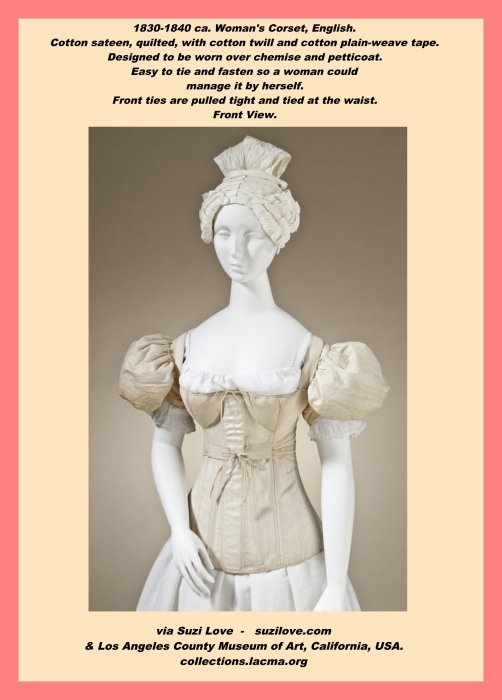
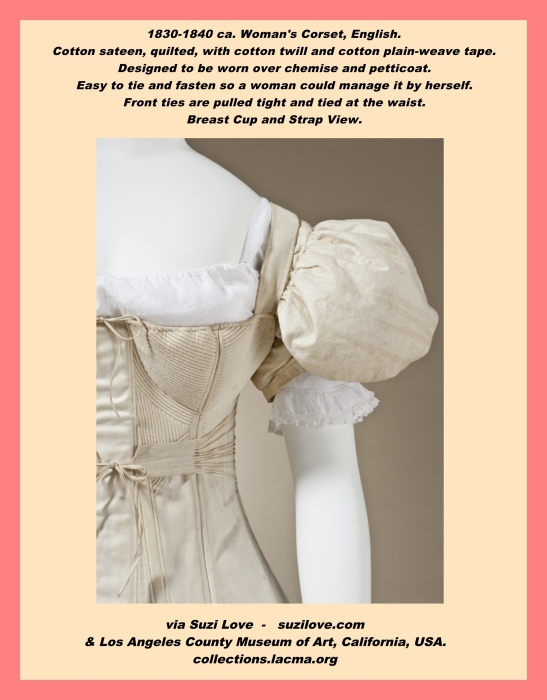
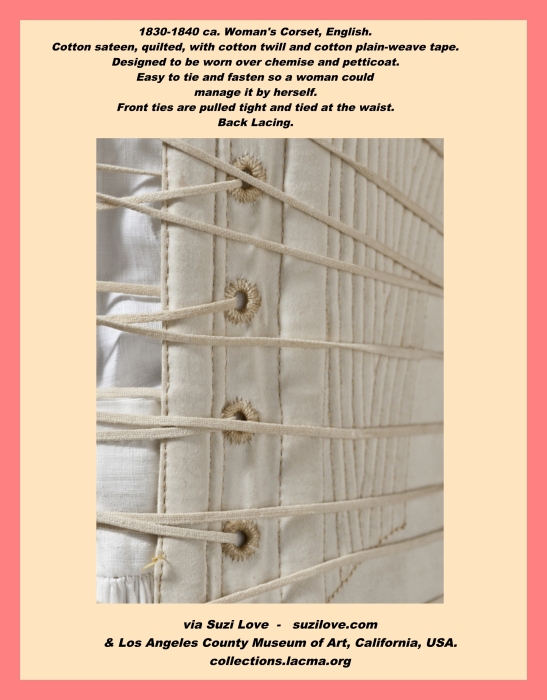
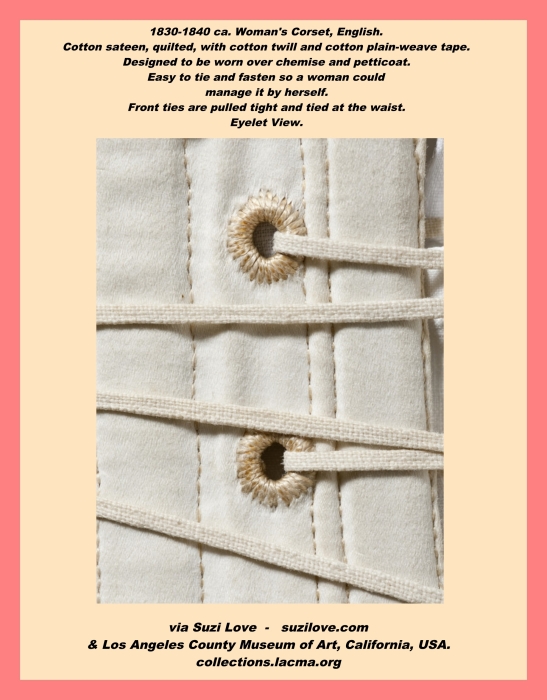
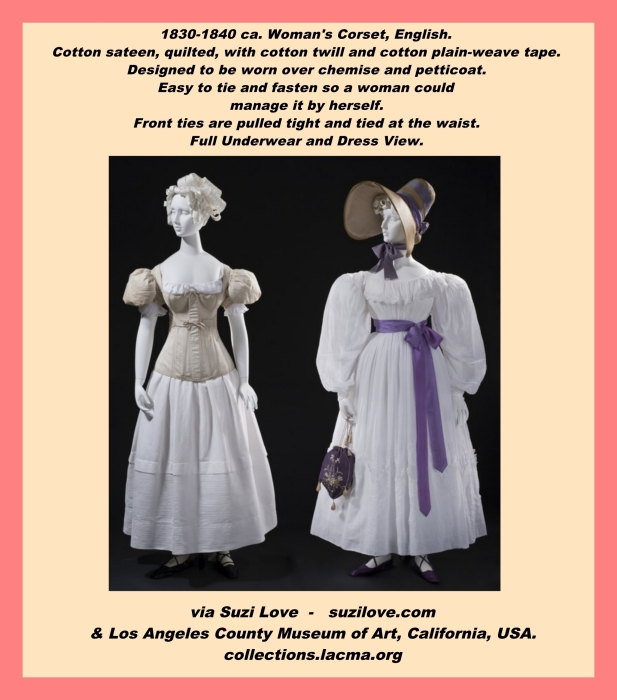
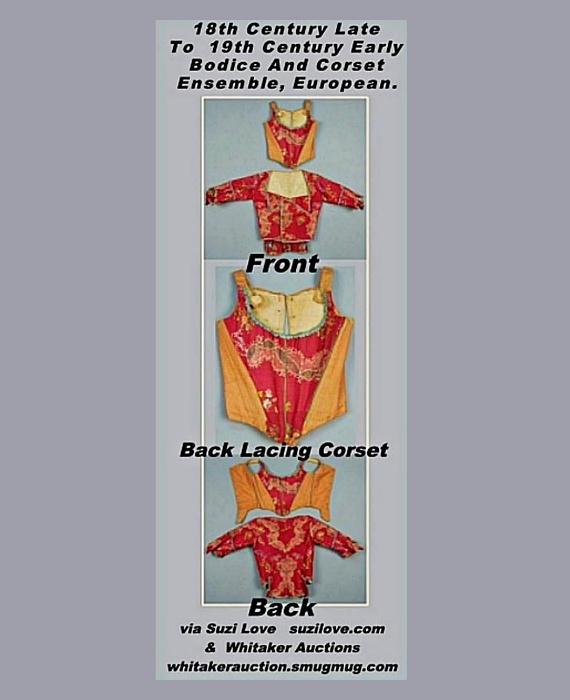
Box Set combining Corset books 14-21 to give a complete picture of the progression of corset styles from 1700 through to the 1900s, including Jane Austen’s lifetime. https://books2read.com/SuziLoveCorsetBook22
This Box Set combines corset books 14-21 to give a complete picture of the progression of corset styles from 1700 through to the 1900s, including Jane Austen’s lifetime and the Bridgerton years. These books show how body wraps, stays, and corsets were worn through the centuries to create a variety of fashionable silhouettes through various historical eras. Corsets flattened breasts and accentuated rounded hips or pushed up breasts and showed off the bust line depending on the fashions of the time and the desired silhouette.