What sort of carriages were used in the early 1800s, or Regency Era, or during Jane Austen’s lifetime?



What sort of carriages were used in the early 1800s, or Regency Era, or during Jane Austen’s lifetime?

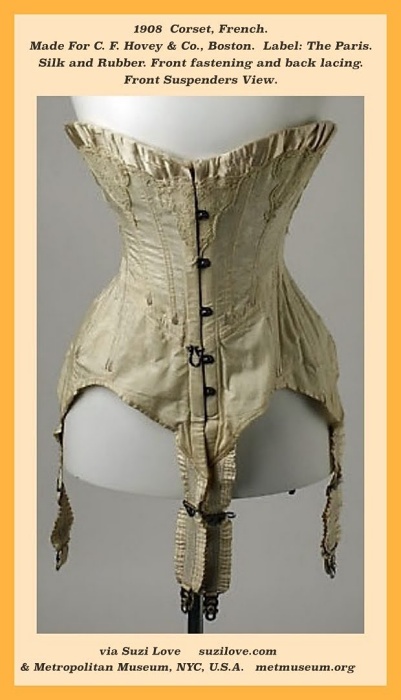
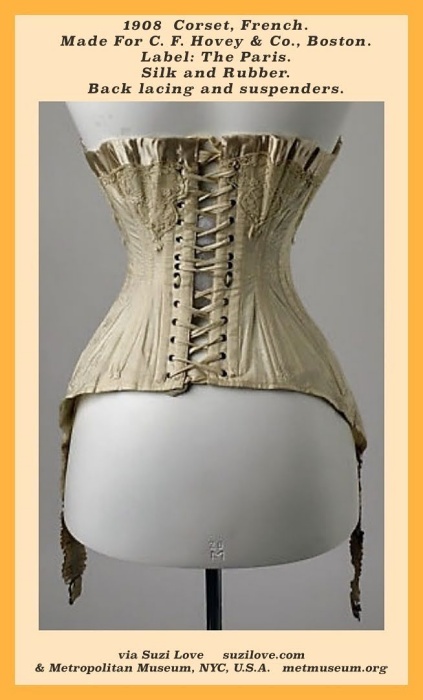
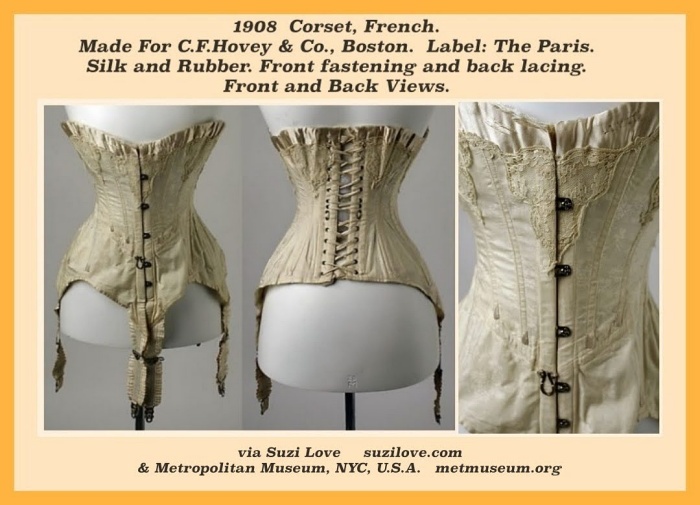
1908 Silk and Rubber Corset, French. Front fastening, front suspenders, and back lacing. Made For C. F. Hovey & Co., Boston. Label: The Paris. Marking: label “7.50, Made in France, Véritable Baleine, Brévété S.G.D.G., Best Whalebone THE PARIS, Made in France, expressly or C.F. Hovey and Co., Boston.” stamped on bone lining of corset]; “Corset de Paris” paper label via Metropolitan Museum, NYC, USA Credit Line: Gift of Mrs. Earl Rowe, 1951 Accession Number: C.I.51.15.25a, b




An overview of women’s fashions in the first twenty years of the 19th century. What was fashionable for women in Jane Austen’s times, or the early 1800s. Wars were being fought around the globe so women’s fashion adopted a military look in support of soldiers. In Britain, the Prince Regent ruled instead of his father, King George III, so fashions, like the lifestyle, became more extravagant and accessories went from pretty to opulent.
Reader Or Writer of Regency Era? Love Jane Austen and Bridgerton fashions? What was fashionable for women in Jane Austen’s times, or 1800s, or Regency Era. High-waisted dresses were extravagantly accessorized and hats, shoes, parasols and bags were added. Set includes History Notes Books 12, 25, 26, 27 and 28. https://books2read.com/SuziLoveFashionWomenBoxSet
Ladies clothing in the early 1800’s featured a high waist line called an Empire Line, or Empire style dress, with a waist line just under the natural bust line and much higher than the natural waist. The high-waisted, or short-bodied, Regency styles shifted focus away from the natural waist and so left the natural waist unconstricted, in direct contrast to previous and future styles. Britain took these simple European styles and progressively made them more elaborate by adding more and more complicated embroidery onto white fabrics to create the white on white look popular for many years.
The empire look of fine muslin dresses left women more exposed than in the Georgian Era when fabrics had been thicker and styles bulkier. Women, especially in England, preserved their modesty by adding lace, frills, flounces, ruches, and fabric plaits to dresses to adequately cover any parts that might inadvertently be exposed. Outer layers, such as Spencers, Redingotes or Pelisses or coats, and shawls, were also added for warmth and to brighten outfits. This Empire fashion was totally dependent on a supply of fine, translucent cotton muslin – at first imported from India, then later, less exclusive imitations often woven and printed or embroidered in Britain. Fabrics were soft and lightweight and muslins and other cotton fabrics from India and other Asian countries were in high demand.


1790-1800 ca. Men’s Riding Boots. Black leather with wide tan leather tops,
small heel and slightly rounded toes. via Los Angeles County Museum of Art, California, USA.
collections.lacma.org


1840s Woman’s Shoes or Slippers, Probably United States. Square toes, silk satin, sueded leather, linen, and kid leather. via Los Angeles County Museum of Art, California, USA. collections.lacma.org Shoes in the early 1800s were flat or low heeled and occasionally decorated with a bow or floral embellishments. From the 1820s onwards, square toes became fashionable.

19th Century Early Women’s Cotton Caps. Worn as morning caps, night caps, or under other hats. With lappets, hanging ties, or tails, which were also called ‘follow me lads’, or ‘flirtation ribbons’. via Museum of Fine Arts, Boston, U.S.A. mfa.org. via Museum of Fine Arts, Boston, U.S.A. mfa.org
Definition Caps: Worn as morning caps, night caps, or under other hats. Jane Austen and her family and female friends would have worn caps like these, sometimes during the morning at home, to bed to keep their long hair from becoming knotted, or under a bonnet to hold a hairstyle in place.
Caps sometimes had hanging ties, or tails, were also called ‘follow me lads’, or ‘flirtation ribbons’.
Definition Lappets: Two long strips of material, often lace, hanging from top of head down back or over shoulders. Sometimes extensions of a headdress and a requirement for court dress.


19th Century First Half Woman’s Embroidered Cap, French. In the 19th Century, women wore some sort of headwear during the day and the evening. Finely decorated cotton caps were worn during the morning with informal or At-Home, dress and at night with nightwear. These caps had fine embroidery, ruffles, lace edgings on the streamers, embroidered, pointed edges of the ruffles, ties, and streamers, known as ‘follow me lads’ or ‘flirtation ribbons’.
19th Century First Half Woman’s Embroidered Cap, French. Cotton mull with cotton embroidery, linen bobbin lace insertion, silk ribbon, round gathered crown with spoked wheel design in center surrounded by long leafed wreath, outside this a wreath of carnations, same carnations around forehead band and neck band, design embroidered with white linen thread, white taffeta ribbon run through the embroidered net casing and tied in center back. via Museum of Fine Arts, Boston, U.S.A. mfa.org

1810–1850 ca. Corset, American or European. Front lacing, extra wide straps for under a
square neckline dress. via Metropolitan Museum, N.Y.C., U.S.A. metmuseum.org

Surviving stays, or corsets as they became to be called in the nineteenth century, show that both longline and shorter corsets were worn and that they were made of cotton, silk and sateen. A lot of these corsets were front fastening, plus many were laced at both the front and the back so our aristocratic fictional heroines could indeed dress and undress themselves without the assistance of a maid.
Corsets 1810-1830 History Notes Book 17 This book shows how corsets changed to fit well under clothing, give maximum support and comfort. Corsets pushed up breasts and showed off the bust line beneath a square-cut and low-cut neckline as in the early 1800s, or Regency years. Jane Austen and her female and friends wore these corsets. https://books2read.com/SuziLoveCorsetBook17


1800 ca. Brown Striped Trousers, American or European. Button front waistband, small drop down flap, or fall, pockets, and with extra fullness in the back for ease of movement. via Metropolitan Museum, N.Y.C., U.S.A. The style of men’s pants that replaced breeches as the fashionable pants item for men in Jane Austen’ times.


