Fan of Regency London in the times of Jane Austen and Bridgertons? Regency Overview Book 1 Regency Life Series #JaneAusten #RegencyEra #Bridgerton #Nonfiction #amwriting https://books2read.com/ROver
Travel and Luggage By Suzi Love History Notes Book 10. How did people travel in Bridgerton’s and Jane Austen’s times? What did they take with them to make their long journeys easier? Travel by road, ship, canal, or railway all took a long time and had dangers so people learned to prepare. And then, in the nineteenth century, road improvements, inventions, and scientific developments made travel more pleasurable. books2read.com/SuziLoveTravel
Are you a reader or writer of Regency Romance? Love Jane Austen’s books? Want to know more about the mourning, riding, underclothing and other Regency Era women’s fashions in Regency romances? What was fashionable for women in Jane Austen’s times? Mourning, riding, daytime, evening clothing, plus underclothing, corsets and accessories. This book looks at what was fashionable for women in Jane Austen’s times, or the early 1800s, or the Regency Era in Britain. Wars were being fought around the globe so women’s fashion adopted a military look in support of soldiers. Fashions, like the lifestyle, became progressively more extravagant and accessories went from colorful to over-the-top. https://books2read.com/SuziLoveFashion1810-1814
1820 July 6th View of London Bridge and Custom House with Margate steam yachts, London, U.K. Hand colored By artists and Engravers, P. and D. Colnaghi and Co Ltd and Co (publishers) and R. Havell and Son. via Royal Museums Greenwich. collections.rmg.co.uk
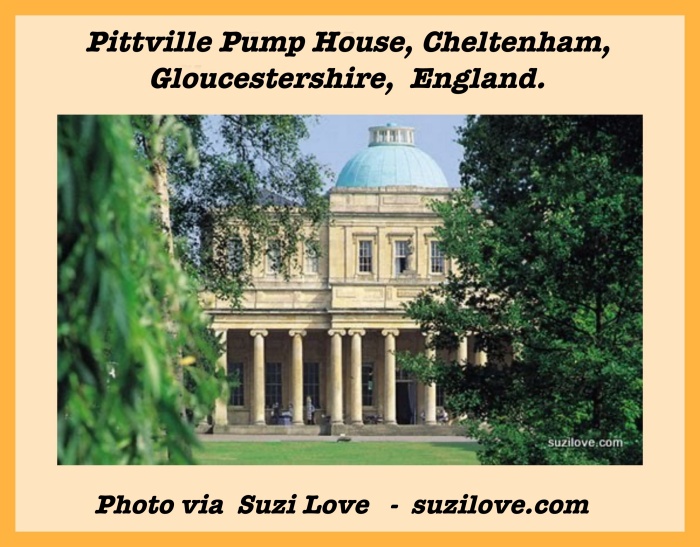
Cheltenham Spa, England: Pittville Pump Room: Cheltenham is a famous spa town within easy reach of the Cotswolds in in the county of Gloucestershire, England, and was a popular Georgian and Regency spa town where one could rest and recuperate. It became famous as a Spa town following the discovery of mineral springs in 1716, and claims to be the most complete Regency town in Britain. The Pittville Pump Room is an elegant Grade 1 listed Regency building and perhaps the most famous example of Regency architecture in Cheltenham, despite the town being filled Regency buildings. The Pittville Pump Room was the last and largest of the spa buildings to be built in Cheltenham.
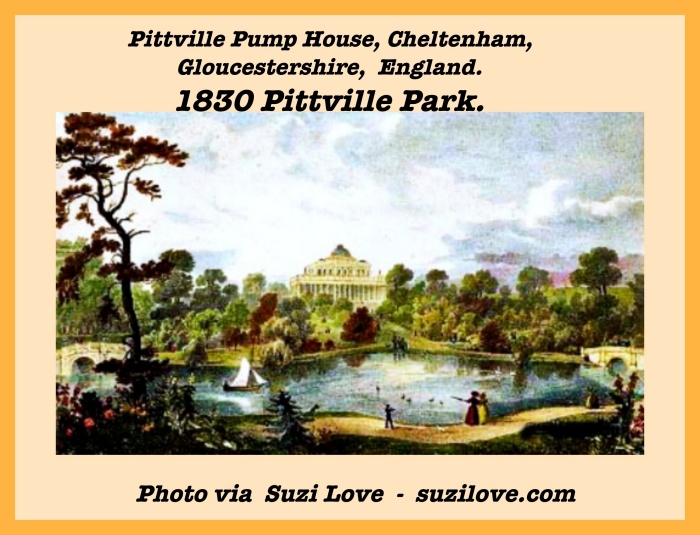
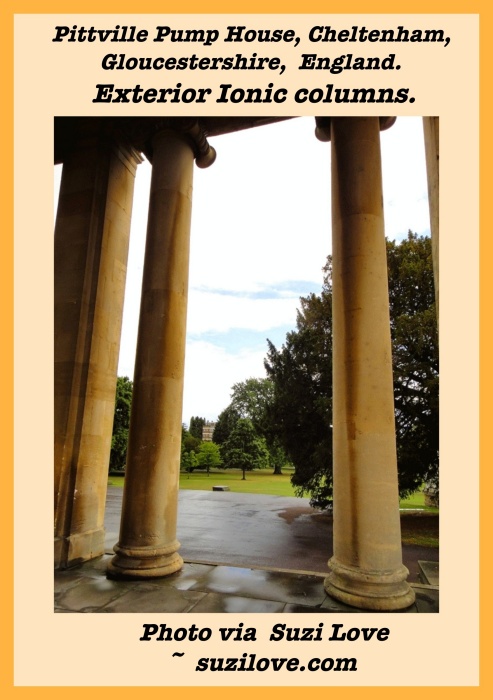
Location: The Pump Room stands at one end of Pittville Park, about two miles from Cheltenham’s town centre, and is a monument to more than 100 years of fame which Cheltenham enjoyed as a Spa town. The building is set in beautiful parkland and is surrounded on three sides by a grand colonnade of ionic columns opening into the impressive hall with its domed ceiling and original crystal chandeliers. The park has extensive open lawns surrounded by trees and ornate bridges and pathways lead around the lakes where swans and ducks swim.
Cheltenham Tour Map. Pittville Pump House, Cheltenham, Gloucestershire, England.
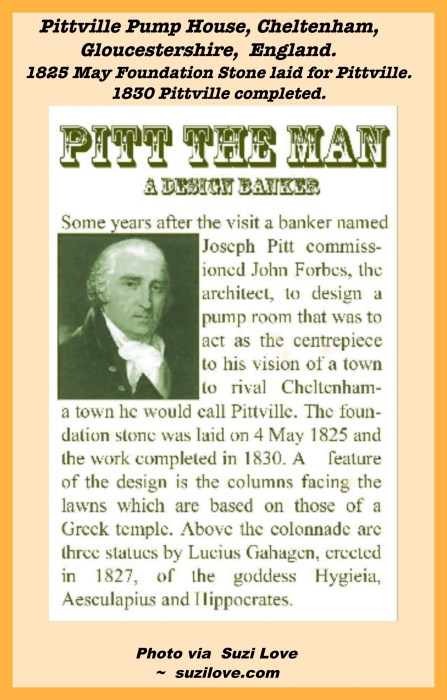
History: The waters were first discovered in around 1715 on a site now occupied by Cheltenham Ladies’ College. In 1788 George III and Queen Charlotte came to take the waters and it was their visit that set the seal on Cheltenham’s future. After a visit to Cheltenham, a banker named Joseph Pitt commissioned the architect John Forbes to design a pump room that was to act as the centrepiece to his vision of a town to rival Cheltenham – a town he would call Pittville.
The foundation stone was laid on 4 May 1825 and the work completed in 1830. The laying of the foundation was celebrated by the ringing of the bells, firing of cannons, as well as a Masonic Procession which set out from the Masonic Hall in Portland Street. In the evening banquets were held at two of the town’s hotels and grand fireworks display was to be seen at Pittville. The building took five years to complete. Following disagreements between Forbes and the builder, a second architect, John Clement Mead from London, was employed to finish the interior. He designed the elaborate stoves which heated the building. The original official opening on 6th July, 1830 was postponed until 20th July, 1830 because of the death of George IV. A grand public breakfast and ball marked the occasion.
1830 Pittville Park. Pittville Pump House, Cheltenham, Gloucestershire, England. 1831 Pittville Park. Pittville Pump House, Cheltenham, Gloucestershire, England. 1834 View Of Pump House Outside Cheltenham. Pittville Pump House, Cheltenham, Gloucestershire, England. Pittville Pump House, Cheltenham, Gloucestershire, England. Pittville Pump House, Cheltenham, Gloucestershire, England. Poster: Pittville Pump Room latest and grandest water spas built in Cheltenham.1820s Early Joseph Pitt, Banker.
Commissioned architect John Forbes to design a pump room
as centrepiece to his vision of a town to rival Cheltenham,
a town he would call Pittville.1825 May Foundation Stone laid for Pittville.
1830 Pittville completed.Pittville Pump House, Cheltenham, Gloucestershire, England.
Building the Pump Room: The total cost of the project was over £40,000, and incredible price for that time. Like many bankers of his time, Pitt ran into financial difficulties, the building went out of favour and was sold in 1890 to the Borough of Cheltenham for £5,400, a fraction of the original cost. The building is decorated in Ionic style and the great hail reflects the genius of John Forbes with the spa opening on the north side and the gallery and dome surmounting the hall.
The grand building is 92 feet long by 43 feet, surrounded by a colonnade 13 feet wide the roof of which are supported by fluted Ionic columns 22 feet high. Along the facade stand three figures representing Aesculapius, Hygeia and Hippocrates, originally made by Lucius Gahagan of Bath. In its design, the building combines elements of both Greek and Roman architecture. It was modelled on the temple on Illisus in Athens, the engravings of which appeared in Stuart and Revett’s Antiquities of Athens (1762).
The inspiration for the dome probably came from the Panthenon in Rome. A large ballroom was situated on the ground floor where even today visitors can attend music concerts, dances and other events. With a capacity of 400 and remarkable acoustics, it is Cheltenham’s finest concert venue. The spa with an oval pump room to the rear of the building are still there for the visitors to enjoy, available from a marbled pump and counter. A reading room, library and billiard room occupied the first floor.
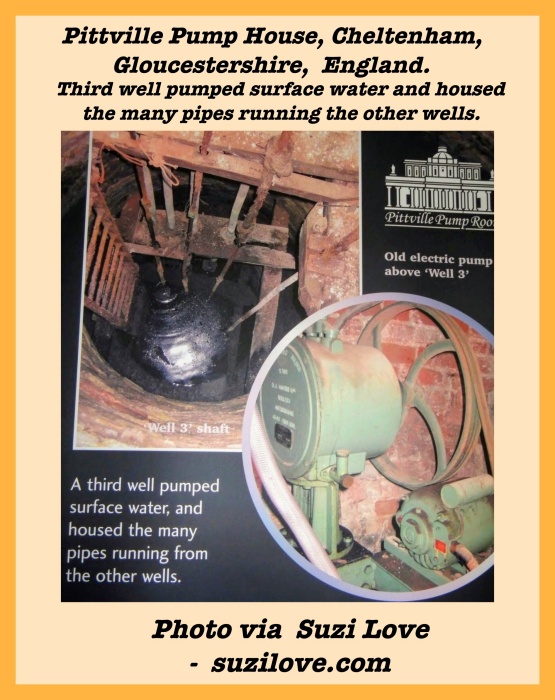
Third well pumped surface water and housed
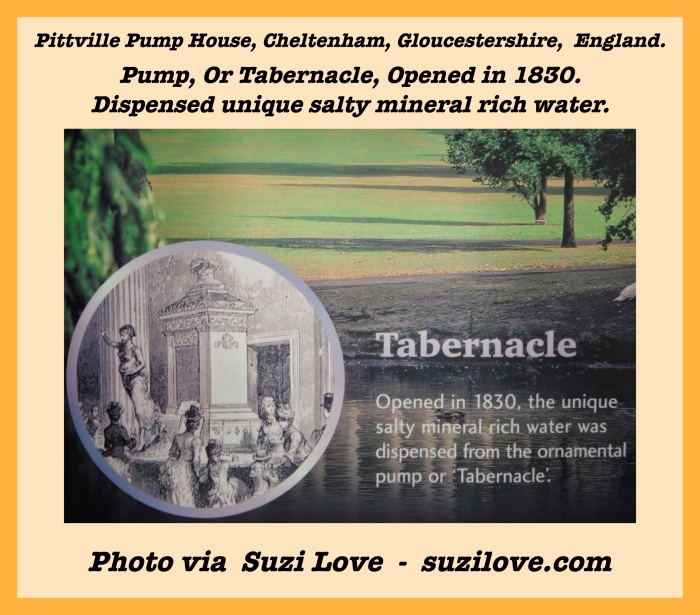
the many pipes running the other wells. Pittville Pump House, Cheltenham, Gloucestershire, England. Pump, Or Tabernacle, Opened in 1830.
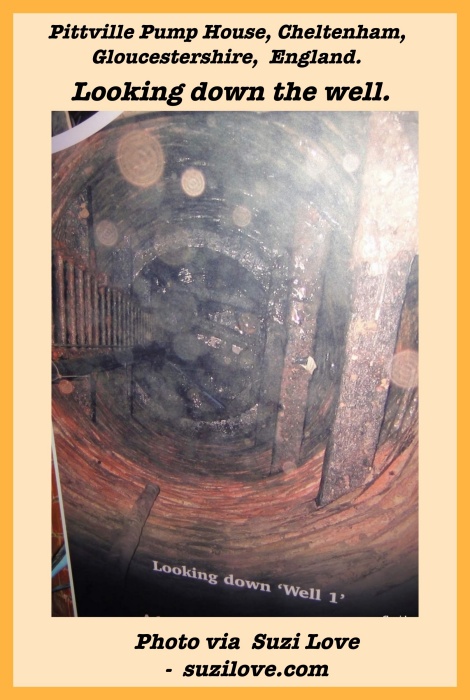
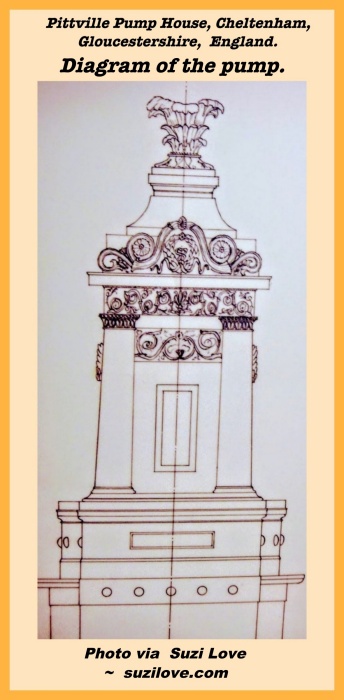
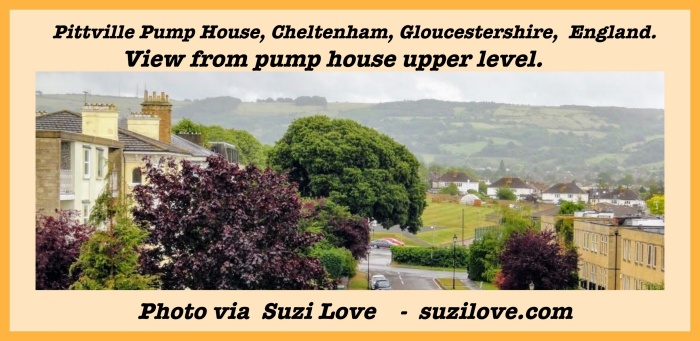
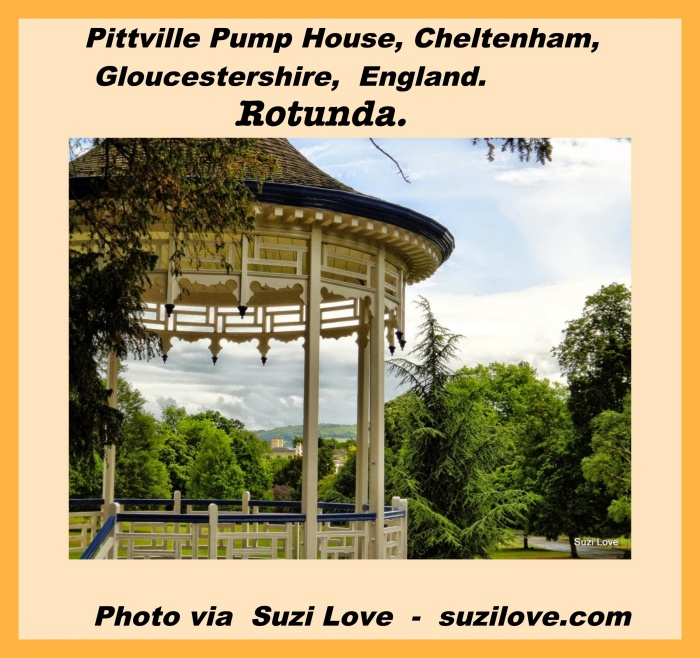
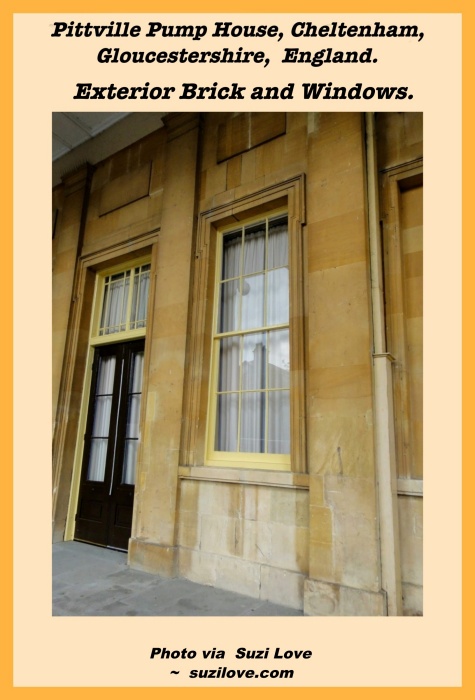
Dispensed unique salty mineral rich water. Pittville Pump House, Cheltenham, Gloucestershire, England. Looking down the well. Pittville Pump House, Cheltenham, Gloucestershire, England. Two wells with side tunnels supplied spa water. Pittville Pump House, Cheltenham, Gloucestershire, England. Diagram of the pump.Pittville Pump House, Cheltenham, Gloucestershire, England. View from pump house upper level.Side View. Pittville Pump House, Cheltenham, Gloucestershire, England. Rotunda. Pittville Pump House, Cheltenham, Gloucestershire, England. Rotunda and exterior of building. Rotunda. Pittville Pump House, Cheltenham, Gloucestershire, England. Ionic columns surrounding the Pump House. Pittville Pump House, Cheltenham, Gloucestershire, England. Exterior with Ionic columns. Pittville Pump House, Cheltenham, Gloucestershire, England. Exterior Brick and Windows. Pittville Pump House, Cheltenham, Gloucestershire, England.
Fashion History: “Cheltenham will be the summer village of all that is fashionable and all that is dignified; the residence of the royal ” family being a thing quite new so far from the metropolis . Already we hear of nothing but Cheltenham modes — the Cheltenham cap — the Cheltenham bonnets — the Cheltenham buttons — the Cheltenham buckles , in short all the fashions are completely Cheltenhamized throughout Great Britain.” via 1826 Griffith’s New Historical Description of Cheltenham and Its Vicinity.
Second World War: The Pump Room housed British and American army personnel, when dry rot was allowed to creep through the structure unchecked, and only after the war was the full extent of the damage revealed. Plaster, brickwork, timber: nearly everything had been affected. The dome was only held in position by a shell of plaster; the timber had been eaten away by the fungus.
The Duke of Wellington: Public subscriptions carne to the rescue, which were accompanied by Public Works grants and Historic Building Council contributions. A total of £43,250 was raised and by 1960 the building was partially restored to its former glory and reopened in 1960 by the Duke of Wellington. The old card room had been replaced by a new foyer, cloakrooms and second staircase, and heating and new lighting were in stalled.
Recent History: In 2003, the old Victorian wells were leaking and allowing ground water to dilute the natural mineral water so Pittville Pump Room no longer qualified as a spa and the well was shut down. The spa was then repaired and reopened so visitors can taste the only alkaline spa water in the country. The Pump Room’s old maple-strip floor was replaced with a stunning English oak floor, better flooring found for the ball room, and old pipes replaced. Nowadays the Pittville Pump Room is in use most days of the year for private and public functions and is one of Cheltenham’s most popular wedding venues. The venue is also used frequently by orchestras, choirs and chamber groups because it has stunning acoustics.
What sort of carriages were used in the early 1800s, or Regency Era, or during Jane Austen’s lifetime?
Carriage Line Drawing. Photo Editing by Suzi Love ~ suzilove.com via Pearson Scott Foresman donation to Wikimedia Commons.RL_1_D2D_Regency Overview RetailerLinks
https://books2read.com/suziloveROver
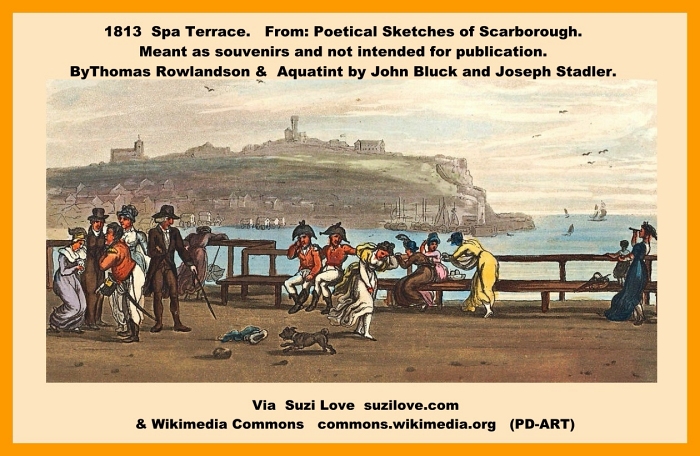
1813 Spa Terrace. From: Poetical Sketches of Scarborough. Meant as souvenirs and not intended for publication. By Thomas Rowlandson & Aquatint by John Bluck and Joseph Stadler. Via Wikimedia Commons commons.wikimedia.org (PD-ART) Spa towns were very fashionable retreats from London’s pollution for people in Jane Austen’s times.
19th Century Writing Set, French. Old Paris porcelain pot with ormolu fittings, set on a pen tray that is papier mache and hand painted in Chinoiserie, Or Japonaise, Style. The type of writing sets that households would have in Jane Austen’s times for writing letters and keeping track of estate matters. Chinese and Japanese styles of household goods were very fashionable during the English Regency and Victorian years. via Ruby Lane Antiques. rubylane.com
HN_13_D2D_WritingTools Book 13 What did the lady of the house use to pen notes? What sat on the desk of the man of the house when managing his accounts? #History #Nonfiction #travel books2read.com/SuziLoveWritingTools
By 1700’s, a metal jeweled ornament hung from pockets, attached to belts, or by hooks into skirt waistbands
During 1800’s, women wore large collections of tools hung from chains
Young girls sewed and did needlework and needed to carry sewing notions eg scissors, thimbles
Worn by women of all classes, from workers to nobility
Varied depending on class and finances.
Made of silver, brass, steel, leather, or fabric
During 19th century, fashionable dresses often had no waist and nowhere to hang chatelaines
Chatelaines became decorative brooches
Often given as a wedding present from a husband to bride
Later became fashion accessories
D2D_RetailerBuyLink_HN_9. Chatelaines and Chains History Notes Book 9 By Suzi Love. #regency Women in charge of houses wore long chains holding important household items around their waist e.g. keys, pen, notebook, sewing. books2read.com/SuziLoveChatelaines
19th Century Brass Travelling Inkwell and Quill Holder, Turkey. Carried by scribes as they travelled from one settlement to another and carried these held in their belts. Would have come from Turkey. The type of inkwell that travellers in Jane Austen’s times might have carried for writing letters when away from home. Many of these exotic and decorative items were brought to England by gentlemen doing their Grand Tour through Europe and Asia.via Ruby Lane Antiques.
19th Century Brass Travelling Inkwell and Quill Holder. Carried by scribes as they travelled from one settlement to another and carried these in their belts. Would have come from Turkey. via suzilove.com and Ruby Lane Antiques. rubylane.com
HN_13_D2D_WritingTools Book 13 What did the lady of the house use to pen notes? What sat on the desk of the man of the house when managing his accounts? #History #Nonfiction #travel books2read.com/SuziLoveWritingTools