This book depicts the often-frivolous life and fashions of a young lady in the early 1800’s, but also gives a glimpse into the more serious occupations a young lady may undertake. Through historic images, historical information, and funny anecdotes, it shows how a young lady fills her day, where she is permitted to go, and who she is allowed spend time with. These light-hearted looks at the longer Regency years are an easy to read overview of what people did and wore, and where they worked and played. There is plenty of information to interest history buffs, and lots of pictures to help readers and writers of historical fiction visualize the people and places from the last years of the 18th Century until Queen Victoria took the throne. Young Lady’s Day Regency Life Series Book 4 by Suzi Love. https://books2read.com/suziloveYLD
Young Lady’s Day Regency Life Series Book 4 by Suzi Love. #regency #nonfiction
An early 1800’s glimpse into both the frivolous and more serious occupations filling a young lady’s day. Historic images and historical information show her fashions and frolics.
https://books2read.com/suziloveYLD
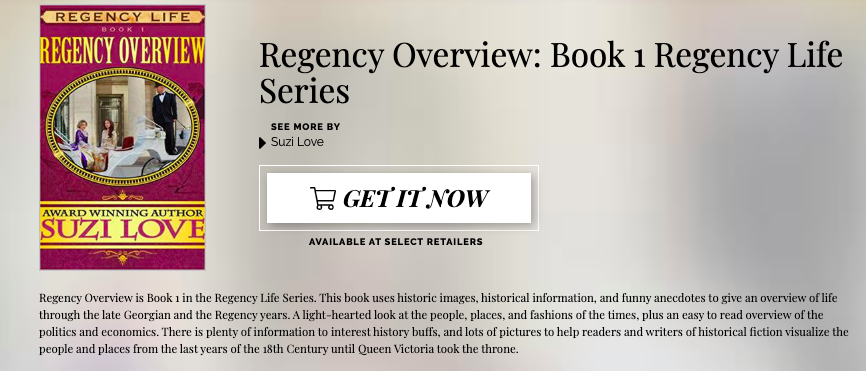
Regency Era Overview: Images, information, funny anecdotes give overview of Jane Austen’s and Bridgerton’s times. #Bridgerton #RegencyEra #JaneAusten #BritishHistory https://books2read.com/suziloveROver
19th Century Tantalus, or Drink Holder, With Hand-Painted Glasses and Bottles, as would have been used in the homes of Jane Austen and the Bridgertons. via 1st Dibs Auctions 1stdibs.com
Tantalus: A small wooden cabinet containing drink decanters. The box has a lock and key to keep unauthorised people from drinking the contents e.g. servants and younger sons, yet still allowing the decanters of drinks to be on show. The word, Tantalus, is a reference to the unsatisfied temptations of the Greek mythological character Tantalus. Patented in the UK in 1881 by George Betjemann, a cabinet maker from the Netherlands, whose workshop was on Pentonville Road, London from the 1830s.This type of small drinks cabinet would have been used in most households during the Bridgerton family’s and Jane Austen’s times, unless the householders were teetotalers. via 1st Dibs Auctions 1stdibs.com
Covent Garden is within the London boroughs of Westminster and Camden, and the parliamentary constituencies of Cities of London and Westminster and Holborn and St Pancras. The district is divided by the main thoroughfare of Long Acre, north of which is given over to independent shops centred on Neal’s Yard and Seven Dials, while the south contains the central square with its street performers and most of the elegant buildings, theatres and entertainment facilities, including the Theatre Royal, Drury Lane, and the London Transport Museum.
In 1552, the land was seized by Henry VIII and granted to the Earls of Bedford. The 4th Earl commissioned Inigo Jones to build fine houses to attract wealthy tenants. It was the first modern square in London, with Italian arcades and a flat, open space or piazza with low railings. This layout was copied in other new estates in London.
1555 John Russell, 1st Earl Of Bedford. By a follower of John Bettes. Given land of Covent Garden by Herny VIII after the dissolution of the Monasteries.1650 The piazza of Covent Garden about 1650, as engraved by Wenceslaus Hollar. Courtesy University of Toronto.1721-1789 ca. St. Paul’s Church, Covent Garden, London, U.K. From between two arches of the plaza. Watercolor with grey wash. By Thomas Sandy. Via British Museum, London, UK. britishmuseum.org1800s Early Covent Garden Market, London, U.K.
In 1654, an open-air fruit and vegetable market grew on the south side of the fashionable square but over time the market and the surrounding area fell into disrepute. Taverns, theatres, coffee-houses and brothels opened up, the gentry moved away, and rakes, wits and playwrights moved in.
By the 18th century Covent Garden had become a well-known red-light district, attracting notable prostitutes such as Betty Careless and Jane Douglas. Descriptions of the prostitutes and where to find them were provided by Harris’s List of Covent Garden Ladies, the “essential guide and accessory for any serious gentleman of pleasure”.
Covent Garden’s market was always disorderly, the buildings in bad shape, and overcrowded with stalls, donkeys, carts, and peddlers. The small number of passageways into the piazza were small and with bottle necks of carts moving goods and market sellers fighting for right of way. The markets supplied fruits and vegetables, mostly homegrown but with imported goods increasing. Many sellers missed paying tolls for selling in the piazza or refused to pay them so the owner, the Earl of Bedford, took many people to court for not paying tolls. He realized the markets were in such poor condition that he couldn’t charge sellers until he improved them. In 1830, a new market hall was built with sections dividing the kind of goods sold which did improve things, but the markets remained chaotic. By 1890, people were again complaining about the narrow streets and congestion.
Covent Garden’s flower girls attracted attention by shouting:
“Two bundles a penny, primroses!”
“Sweet violets, penny a bunch!”
In 1851, Henry Mayhew wrote London Labour and the London Poor describing two types of flower girl. The young girls, or waifs, sold flowers to feed the family. The other type of flower girl stayed out late, doubled as prostitutes, and had bad reputations.
In 1913, Herbrand Russell, 11th Duke of Bedford agreed to sell the Covent Garden Estate for £2 million to the MP and land speculator Harry Mallaby-Deeley, who sold his option in 1918 to the Beecham family for £250,000.
1809 View Of the New Covent Garden Theatre, London. From Hart Street, showing the King’s entrance. Watercolor drawn by James Winston. via British Museum. 1811 Bird’s Eye View of Covent Garden Market, London, UK. Main fruit, flower and vegetable market in London in early 19th century. Began here in 1656 with few temporary stalls in back garden of home of Earl of Bedford. Charles II granted market lease and in 1678 bought by Adam Piggot and others who built permanent stalls. By 1811, smelly, dirty, and overcrowded. Engraver J. Bluck. After Augustus Charles Pugin and Thomas Rowlandson published by Ackermann. Via British Museum, London, UK. britishmuseum.org
1827 Covent Garden Market, Westminster, London, U.K. By Frederick James Havell.
In 1830, Charles Fowler’s neo-classical building was erected to cover the market and as the market grew, the prostitutes moved on. The Floral Hall and Charter Market were added and the Jubilee Market in 1904.
1835 Covent Garden Watch House, London, UK. Next to the church of St. Paul’s Church, Covent Garden. Two story white building with ‘Watch House’ painted on its upper floor is shown with a lively street scene in the foreground. via Museum of London.
1852 J.M.W. Turner’s birthplace in Maiden Lane, Covent Garden. Brick terraced house at night with a figure in top hat walking past and two figures with a candlelight in the doorway_Watercolour with body color over graphite. Drawn by John Wykeham Archer.
In 1913,Herbrand Russell, 11th Duke of Bedford agreed to sell the Covent Garden Estate for £2 million to the MP and land speculator Harry Mallaby-Deeley, who sold his option in 1918 to the Beecham family for £250,000. By the end of the 1960s, traffic had become congested until in 1974 the market relocated to the New Covent Garden Market about three miles (5 km) south-west at Nine Elms. In 1980, the central building re-opened as a shopping centre and then became a tourist location with cafes, pubs, small shops, a craft market called the Apple Market, and another market in the Jubilee Hall.
Historic images, historical information, and funny anecdotes give an overview of life in the early 1800s. Information for history readers and writers of the Regency Years, for Jane Austen fans and all history buffs. Pictures help visualize the people and places of the long Regency period. https://books2read.com/suziloveROver Regency Overview Regency Life Series Book 1 by Suzi Love.
The Regency Life Series By Suzi Love depicts the ups and downs of life in the early 1800’s, or Jane Austen’s years, or the Regency Era. Fun pictures, historical information, and funny anecdotes show how people fill their days, where they go and with whom they spend their time. These light-hearted looks at the longer Regency years are an easy to read overview of what people did and wore, and where they worked and played. Plenty of information for history buffs and lots of pictures help readers and writers of historical fiction visualize the last years of the 18th Century until Queen Victoria took the throne.
Regency Era Overview: Images, information and funny anecdotes give an overview of life in Jane Austen’s times or early 1800s. #Regency #JaneAusten #BritishHistory
1826 The Dinner Party. Social Life. From 1826 The English Spy By Robert Cruikshank. via Google Books (PD-180).
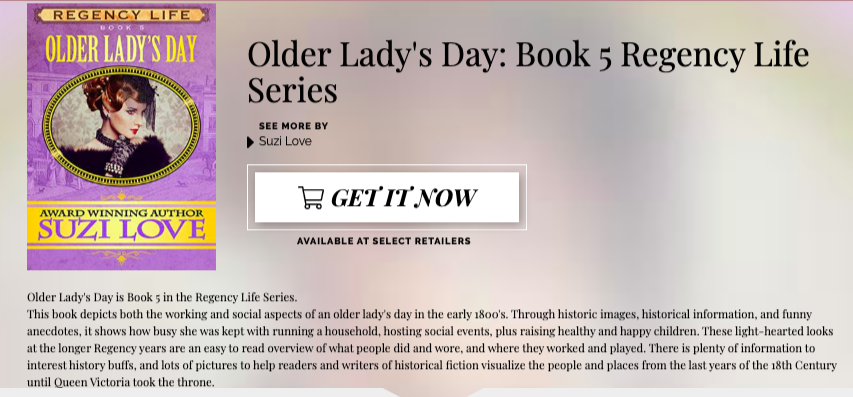
An older lady usually controlled the servants and the serving of meals. For more about this, take a look at Older Lady’s Day Regency Life Series Book 5 by Suzi Love. Overview of what an older lady did, wore, and how she lived in the early 19th Century. Information for history buffs and pictures for readers and writers of historical fiction. books2read.com/suziloveOLD
1826 Cartoon: A squeeze at Carlton Palace in Bridgerton and Jane Austen times. From Regency Social Life. #JaneAusten #Bridgerton #Cartoon #England https://books2read.com/suziloveYGD
1562-1575 ca. Wine Cooler With a Pageant Battle with Elephants, Italian. Maiolica, or tin-glazed earthenware, from the workshop of the Fontana family. 1553-1580. Coolers were set near the table on a credenza or sideboard, visible to diners and within easy reach of servants. They are designed to be viewed from any side, but especially from above when empty. When not in use, coolers remained in place to convey the owner’s refined taste and, due to the relatively inexpensive medium, personal modesty. via Metropolitan Museum New York City, U.S.A. metmuseum.org
19th Century Late Mechanical Tantalus, French. Ormolu, Bronze, Crystal, and Gilt with a lock and key to open. Earlier versions of this type of small drinks cabinet would have been used in most households during Jane Austen’s times, unless the householders were teetotalers. via 1st Dibs Auctions 1stdibs.com
Tantalus: A small wooden cabinet containing drink decanters. The box has a lock and key to keep unauthorised people from drinking the contents e.g. servants and younger sons, yet still allowing the decanters of drinks to be on show. The word, Tantalus, is a reference to the unsatisfied temptations of the Greek mythological character Tantalus. Patented in the UK in 1881 by George Betjemann, a cabinet maker from the Netherlands, whose workshop was on Pentonville Road, London from the 1830s.