19th Century Early Woman’s Plain Weave Linen Chemise, Or Shift, American. Shift with scoop neck with drawstring, three-quarter length sleeves with drawstrings and lighter-weight linen ruffles. Lexington, Massachusetts, United States. Probably worn by Abigail Robbins (1759-1850) and Inherited by Ellen A. Stone; Gift to MFA, 1899. via Museum of Fine Arts, Boston, U.S.A. Type worn By the Bridgerton Ladies and Jane Austen.
Chemise Or Shift: Sleeveless, mid-calf length garment of white cotton or muslin was worn next to the skin under stays or corset. Called ‘Shift’ from early Georgian (1700-1750) until Late Georgian (1750-1790) to replace ‘Smock’. By 1800, name replaced by ‘Chemise’.
19th Century Early Type of Linen Chemise, or Shift, Worn By the Bridgerton Ladies and Jane Austen. #Bridgerton #Underclothing #JaneAusten #RegencyFashion https://books2read.com/SuziLoveFashionWomen1815-1819
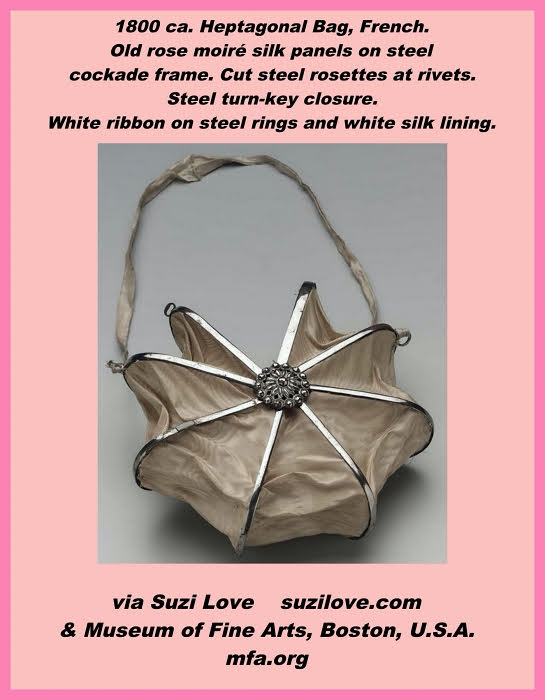
1800 ca. Heptagonal Bag, French. Old rose moiré silk panels on steel cockade frame. Cut steel rosettes at rivets. Steel turn-key closure. White ribbon on steel rings. White silk lining. Credit: The Elizabeth Day McCormick Collection via Museum of Fine Arts, Boston, U.S.A. mfa.org
Reticule Or Bag: As the silhouette of dresses became more form fitting and fabrics lighter and more transparent, pockets could no longer be hidden in the folds of skirts or underwear. Something else was needed to hold a lady’s essentials. Small purses, like men’s money pouches, were used by women to carry money for gambling, sewing necessities, and women’s daily requirements such as combs. A bag or purse, often with a drawstring to pull closed and usually made of cloth or covered cardboard and often decorated with beading or embroidery was called a reticule, or ridicule. They came in a variety of shapes, sizes, and materials. Jane Austen and her contemporaries would have purchased or hand made reticules, or bags, for each other for gifts and carried them with them whenever they went out.
1800 ca. Heptagonal Bag, French. Old rose moiré silk panels on steel cockade frame. Cut steel rosettes at rivets. Steel turn-key closure. White ribbon on steel rings. White silk lining. Credit: The Elizabeth Day McCormick Collection via Museum of Fine Arts, Boston, U.S.A. mfa.org
1800 ca. Heptagonal Bag Of Old Rose Moiré Silk Panels With A Steel Turn-Key Closure. #JaneAusten #France #Reticule books2read.com/suziloveReticules
1806 Waiting For the St. Cloud Coach, Place de la Concorde, Paris. Illustrations by Francis Courboin. via Les Modes de Paris. (PD-Art) This couple is depicted waiting for the coach, which was a passenger vehicle drawn by four horses. The woman is wearing a fashionable hat or “capote” that covers her face. Her dress maintains the empire waist and has very long sleeves that also have a ‘mancheron’ or a gathered sleeve at the shoulders. The man is wearing a ‘habit du gagé’ or a coat with tails, buttoned at the waist. His hat is a ‘haut-de-forme’ or what is commonly known in English as a top hat. He wears tight, short pants tucked into large, riding boots, as was the fashion for men. Illustrations by François Courboin from Octave Uzanne‘s Les Modes de Paris. Variations du goût et de l’esthétique de la femme, 1797-1897, L. Henry May, Paris, 1898, or from the English translation of the same work: Fashion in Paris : the various phases of feminine taste and aesthetics from 1797 to 1897, William Heinemann, London, 1898. Modes de Paris VIa Brown University Library .
1790-1810 ca. Linen and Metal Corset, American Or European. Front Lacing. #Corset #RegencyEra #GeorgianEra #JaneAusten. https://books2read.com/SuziLoveCorsetBook16
1808 Two ladies in high-waisted dresses, French. White dress with blue paisley shawl, blue shoes and red and white bonnet, blue dress with elaborate yellow trims, yellow shoes and bonnet to match.Fashion Plate via Journal des Dames et des Modes, or Costume Parisien.
These are the types of general morning dress worn by Jane Austen and contemporaries in England, as French fashion plates were obsessively copied despite the two countries being at war for many years. English fashion magazines frequently published plates copied from French fashion magazines and both French and English magazines published the same design for both single women’s fashion and for two ladies together.
Ladies clothing in the early 1800’s featured a high waist line called an Empire Line, or Empire style dress, with a waist line just under the natural bust line and much higher than the natural waist. The high-waisted, or short-bodied, Regency styles shifted focus away from the natural waist and so left the natural waist unconstricted, in direct contrast to previous and future styles. Britain took these simple European styles and progressively made them more elaborate by adding complicated embroidery and colorful accessories.
1808 Two Ladies in Jane Austen style high-waisted dresses, white and blue. #RegencyFashion #JaneAusten #HistoricalFashion https://books2read.com/SuziLoveFashionWomen1805-1809
Fashion Women 1805-1809 History Notes Book 26
What did Jane Austen and friends wear? This book looks at early 1800s fashions, which were elegant and pretty with high waists and fabrics that were almost transparent. These Empire style gowns, named after Napoleon’s first Empress, became popular throughout Europe, and were then copied around the world. Colorful outwear was added to make an ensemble more attractive and warmer.
https://books2read.com/SuziLoveFashionWomen1805-1809
1809 Blue Redingote, French. Back view of walking coat with military style trim, upstanding collar, white hat, black shoes and a handkerchief. Fashion Plate via Journal des Dames et des Modes, or Costume Parisien.
Redingotes or Pelisses were needed to cover the flimsy dresses made of lightweight fabrics of the Regency years to provide warmth and some protection from windy conditions when gowns might lift and cause modesty issues. Jane Austen and her contemporaries often walked to places and so would have needed the warmth of a Pelisse or coat in the cold British winters.
In Europe, a Redingote was a coat or robe like garment worn both indoors and out, indoors left open to reveal a dress while the outdoor version was made of heavier materials and of darker colors than the type worn indoors. The name comes from the term ‘riding coat.’
1809 Blue Redingote, French. Back view of walking coat with military style trim, white hat and holding a handkerchief. Fashion Women 1805-1809 History Notes Book 26 What did Jane Austen and friends wear? https://books2read.com/SuziLoveFashionWomen1805-1809
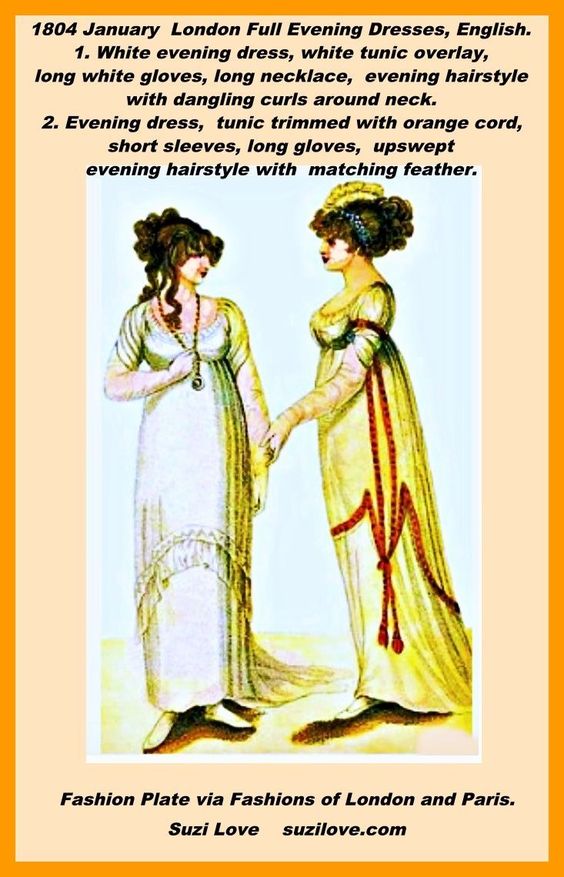
1804 January London Full Evening Dresses, English. White evening dress has a white tunic overlay and worn with long white gloves, a long necklace, and with an evening hairstyle that leaves dangling curls around her neck. Other evening dress has a tunic trimmed with orange cord, short sleeves, and worn with long gloves, and upswept evening hairstyle with a matching feather. Fashion Plate via Fashions of London and Paris. https://books2read.com/SuziLoveFashionWomen1801-1804
1804 January Two Ladies Wearing London Full Evening Dresses in Jane Austen style. #Regencyfashion #JaneAusten #historicalFashion https://books2read.com/SuziLoveFashionWomen1801-1804
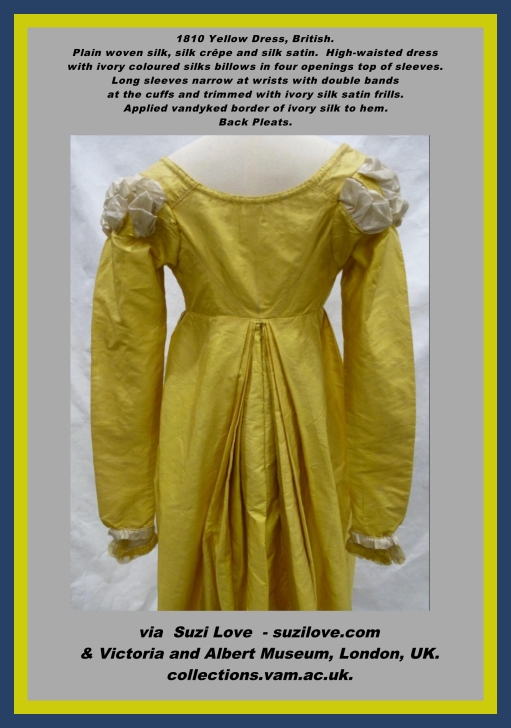
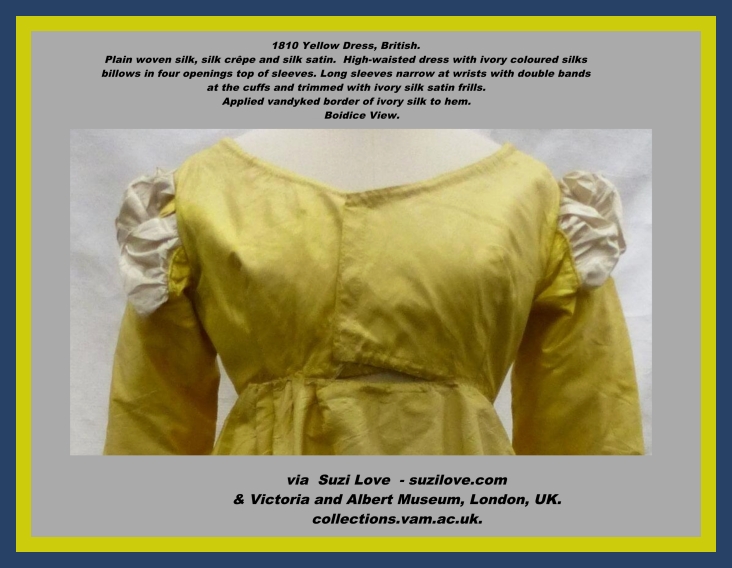
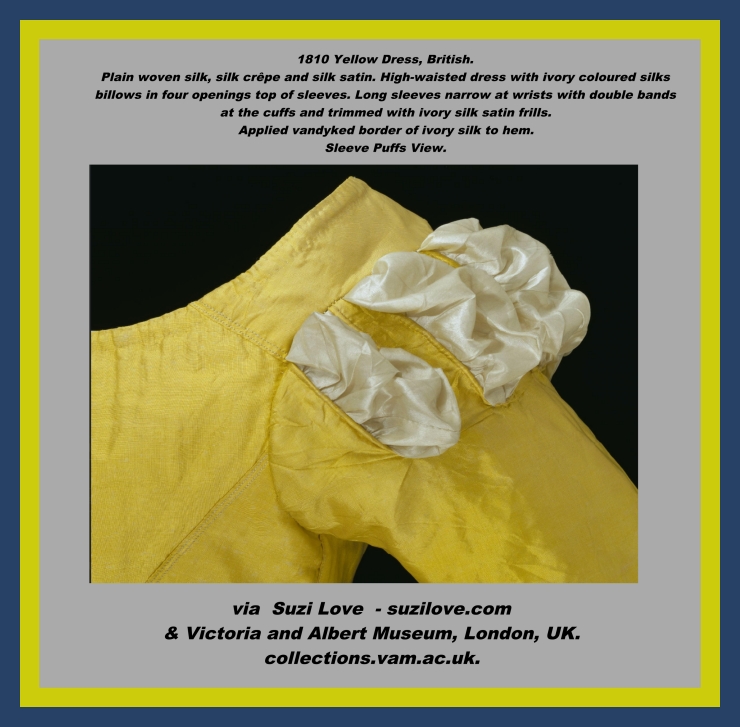
1810 Yellow Dress, British. Plain woven silk, silk crêpe and silk satin. High-waisted dress of yellow silk, ivory colored silks billow out of four openings at sleeve tops. The puffed trimmings are inspired by the fashionable slashing of garments in the Renaissance period when the top fabric was cut to reveal a colored lining or garment worn underneath. A long rectangular strip of ivory silk on inside of sleeve head and excess gathered into pudds through openings. The 19th-century version of slashing is much more controlled by cut, stitching and piped edges, rather than the raw cuts in fabric seen in the 16th century.
Long sleeves narrow at wrists with double bands at cuffs and trimmed with ivory silk satin frills, yellow silk crêpe, cream ribbon and cording. Trimming around lower hem of skirt of applied vandyked border of ivory silk. Length center back neckline to hem of train length: 158cm Front length shoulder to hem length: 139cm
1810_YellowSilkDressBritish_Plain wovensilk, silk crêpe and silk satin. High-waisted dress with shoulder decoration and contrasting hem trim_HemView_vam.ac.ukHN_27_D2D_fashwomen1810-1814
https://books2read.com/SuziLoveFashion1810-1814
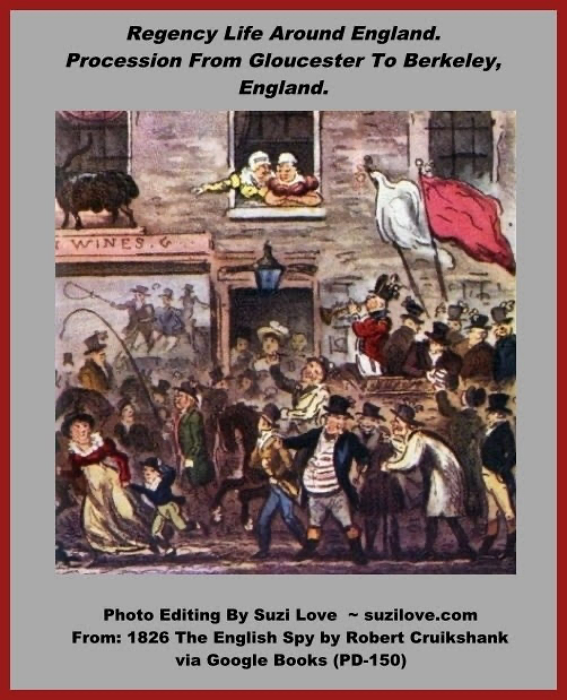
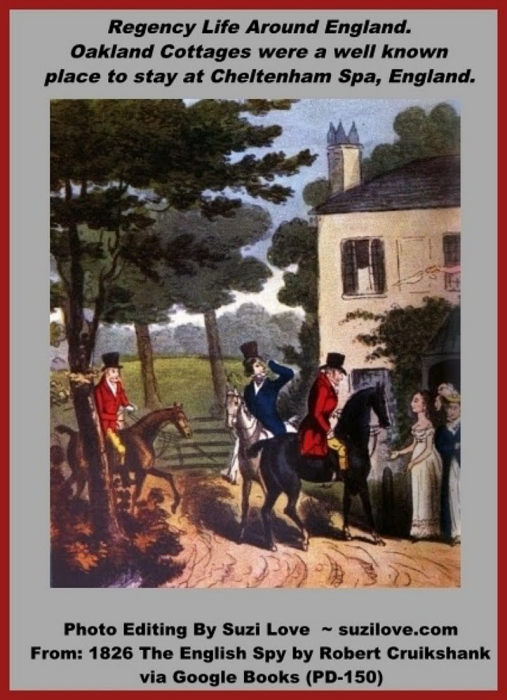
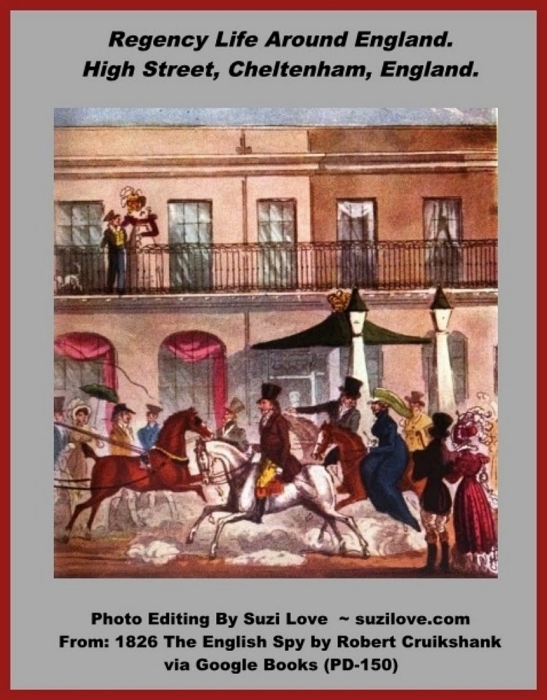
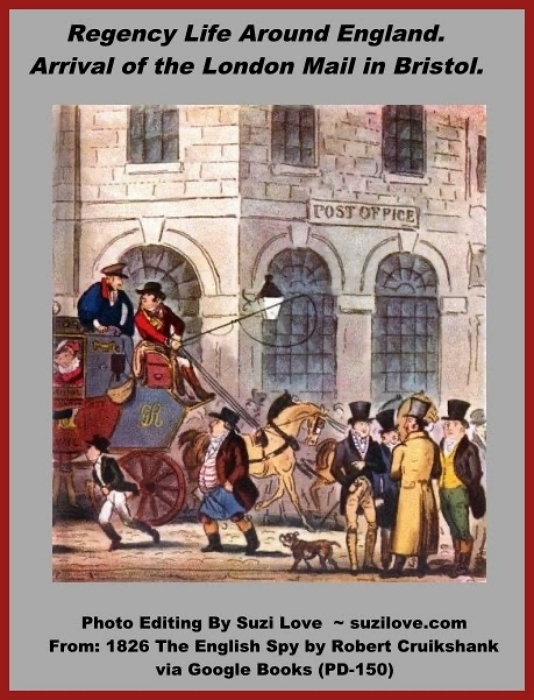
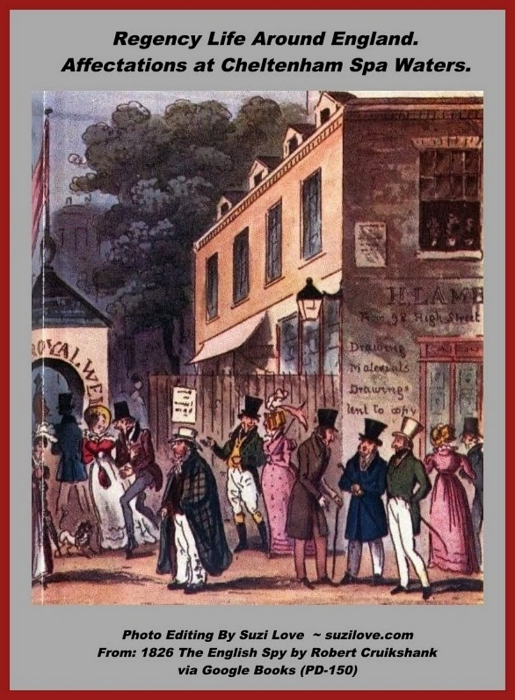
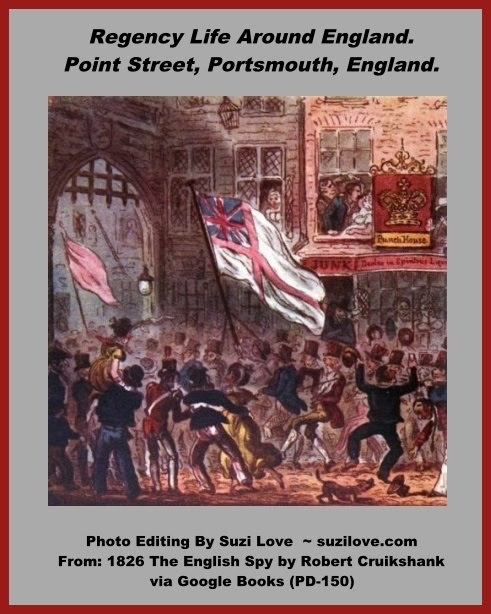
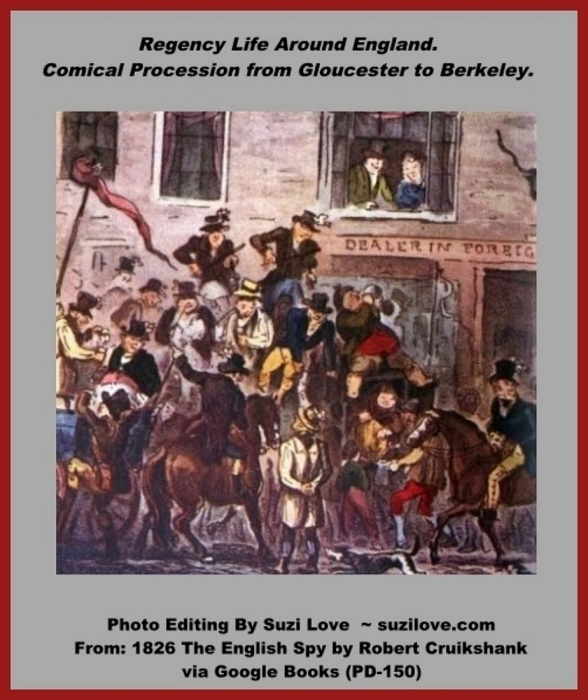
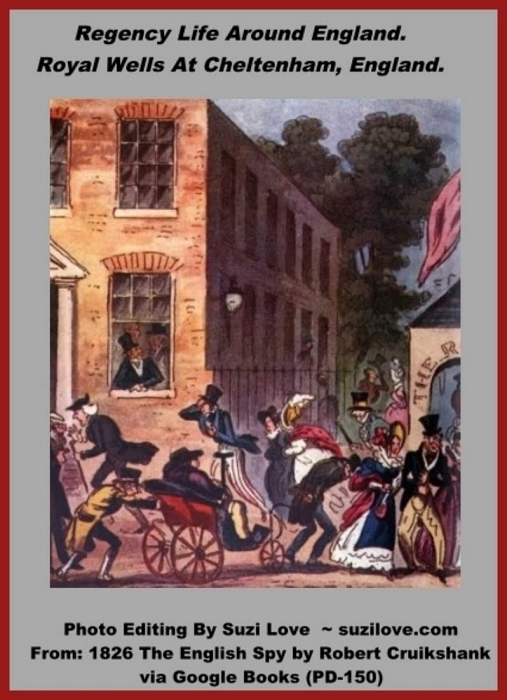
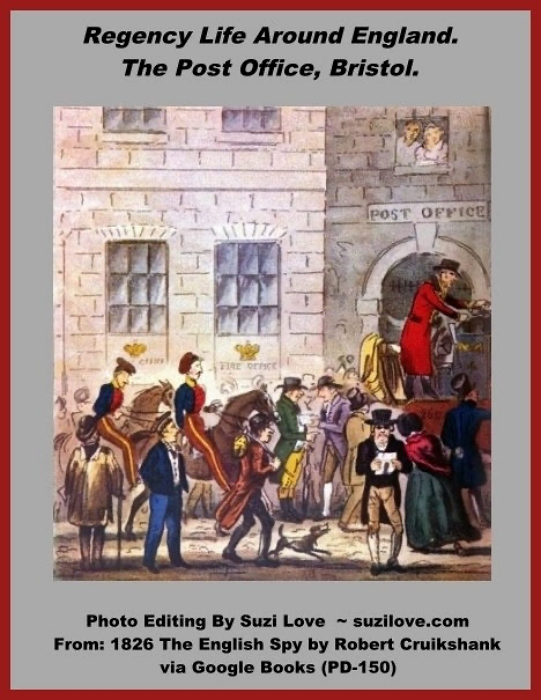
1826 Sights the Bridgertons and Jane Austen Saw Around Regency England. The sights that the families and friends would have seen around while traveling around England. via 1826 The English Spy By Robert Cruikshank via Google Books (PD-150)
1800 White Walking Dress, English. Worn with a full length bronze wrap and matching turban. Engraved Plate via Rudolph Ackermann’s ‘The Repository’ of Arts.
The Empire dress which evolved in the late 1790s began as a chemise shift gathered under the breasts and at the neck. Named after the First Empire in France, by 1800 Empire dresses had a very low décolleté, or neckline and a short narrow backed bodice attached to a separate skirt. Skirts started directly under the bust and flowed into the classical relaxed wide styles of Greece and Rome. This style of dress is associated with Jane Austen and her contemporaries as a simple cotton high-waisted dress was worn most days and accessorized according to the importance of the occasion.
1800 White Walking Dress, English. Worn with a full length bronze wrap and matching turban. Engraved Plate via Rudolph Ackermann’s ‘The Repository’ of Arts.
1800 Jane Austen style White Walking Dress, English. Worn with a full length bronze wrap and matching turban. #RegencyEra #JaneAusten #HistoricalFashion books2read.com/SuziLoveFashionWomen1800