19th Century Mid Dance Card or Aide de Memoire. Jeweled and enameled gold dance card with concealed timepiece. Lid with a blue enamel with rose-cut diamonds floral wreath, opening to compartment with watch dial, pencil, and notebook. via Sotheby’s Auctions. sothebys.com
1805-1810 ca. India Muslin Dress, English. Slight train, embroidered panel down centre between two lines of drawn-thread work, embroidery of cotton in chikan stitch and knots in scrolls and plume design. Elbow length sleeves with two insertions of embroidery in leaf pattern. via Manchester Art Gallery
Definition Empire Style: Named after the First Empire in France, by 1800 Empire dresses had a very low décolleté, or neckline and a short narrow backed bodice attached to a separate skirt. Skirts started directly under the bust and flowed into the classical relaxed wide styles of Greece and Rome. This style of dress is associated with Jane Austen and her contemporaries as a simple cotton high-waisted dress was worn most days and accessorized according to the importance of the occasion.
1816-1817 ca. Man’s Linen Shirt, American. High collar, ruffles down front opening, fullness from gathered shoulders and sleeves for unrestricted movement. Beautifully created and monogrammed by Elizabeth Wild Hitchings for her husband, Benjamin Hitchings, a sea captain. Wives or servants regularly hand stitched shirts from 1800s-1840s, before sewing machines, but handiwork rarely recorded.
From The Creator: This shirt was created, from the linen fiber to the finished garment, by the donor’s great-grandmother, Elizabeth Wild Hitchings, for her husband Benjamin Hitchings, a sea captain, in 1816. It was common practice for a wife or servant to hand stitch family members’ shirts prior to the mid-19th century, but rarely was such handiwork recorded, making this case rare and intriguing. In addition, its elegant stitching makes it a perfect example of the familial care taken in sewing prior to the common possession and use of the sewing machine. via Metropolitan Museum, N.Y.C., U.S.A. metmuseum.org
1811 January Walking Dress in the English style worn by Jane Austen and her female relations and friends. Pelisse of scarlet Merino cloth, buttoned down front and up arm with small gold buttons, collar and cuffs of purple velvet, empire tippet pointed in back, Scarlet bonnet turned up with velvet, veil through front, scarlet cloth boots trimmed with velvet. Fashion Plate via John Belle’s La Belle Assemblée or, Bell’s Court and Fashionable Magazine, London.Jane Austen and her contemporaries wore long coats like these to keep warm when out and about, visiting, shopping etc. The thin muslin dresses worn in the early 1800s were little protection against European winters.
Definition Merino Wool: Finest quality wool, originating in Spain. During Napoleonic wars, Merino sheep exported to Britain and other parts of Europe. Napoleon supported Merino growth in France. In 1808, after French invaded Spain, King George purchased additional 2000 Merinos for royal flock but Britain too wet for thriving industry. Other countries i.e. Australia, began producing fine quality Merino.
Definition Velvet: Historically made with silk pile on silk backing, or cheaper backing e.g. linen. Velvets were also made from cotton or wool. Today, silk velvet is usually rayon pile on silk backing so you only see the rayon and not the silk.
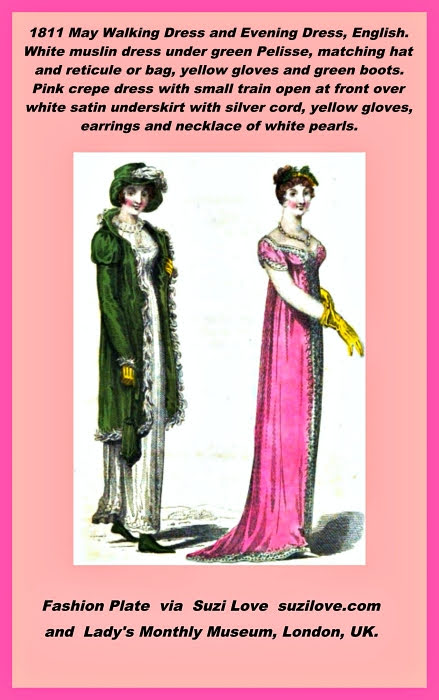
1811 May Walking Dress and Evening Dress, English. White muslin dress under green Pelisse, matching hat and reticule or bag, yellow gloves and green boots. Pink crepe dress with small train open at front over white satin underskirt with silver cord, yellow gloves, earrings and necklace of white pearls. Fashion Plate via The Lady’s Monthly Museum, London, UK.
Definition Walking Dress: Worn out shopping, walking in a city park or the country estate. Presentable and warm, more fashionable than Morning Dress but not overly accessorized.
Definition Evening Dress: Minute distinctions between ball, dinner, evening and opera gowns meant different quality of fabrics and designs.
“l declare after all there is no enjoyment like reading! How much sooner one tires of anything than of a book! When I have a house of my own, I shall be miserable if I have not an excellent library.” Jane Austen ~ Pride and Prejudice (1813 )
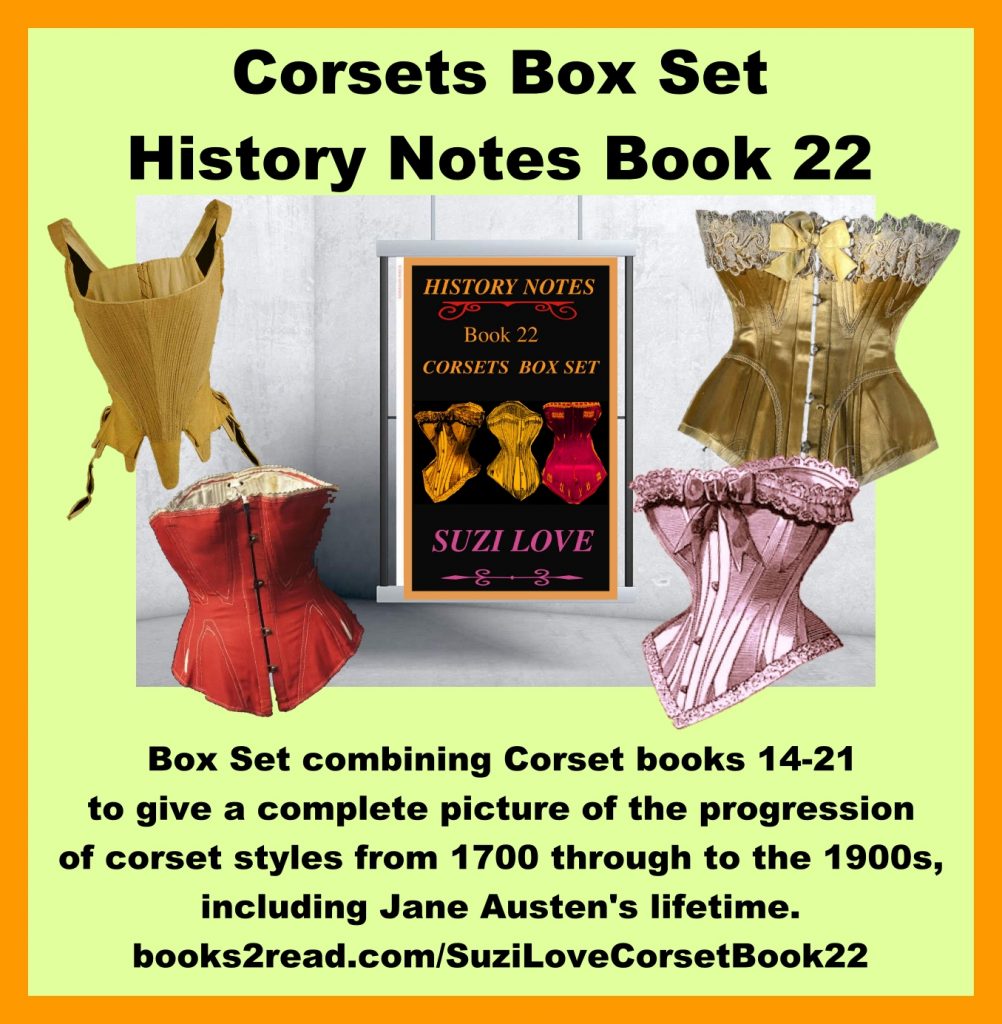
Fascinated with historical fashion? Treat yourself to a nonfiction Box Set on corsets, including Bridgerton and Jane Austen years. Corsets Box Set History Notes Book 22. This Box Set combines corset books 14-21 to give a complete picture of the progression of corset styles from 1700 through to the 1900s, including Jane Austen’s lifetime. These books show how body wraps, stays, and corsets were worn through the centuries to create a variety of fashionable silhouettes through various historical eras. Corsets flattened breasts and accentuated rounded hips or pushed up breasts and showed off the bust line depending on the fashions of the time and the desired silhouette. https://books2read.com/SuziLoveCorsetBook22
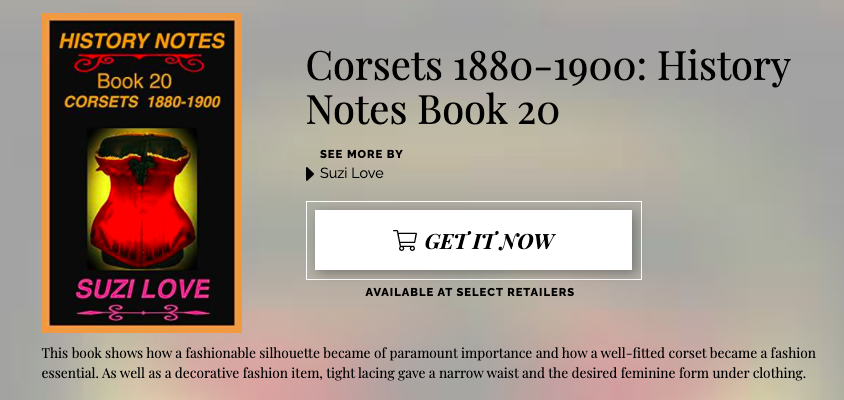
Corsets 1880-1900 History Notes Book 20. This book shows how a fashionable silhouette became of paramount importance and how a well-fitted corset became a fashion essential. As well as a decorative fashion item, tight lacing gave a narrow waist and the desired feminine form under clothing. https://books2read.com/SuziLoveCorsetBook20
1826 January Promenade Dress, English. Green walking dress with wide lace hem, zigzag white collar edge, white buttons on front vertical, large fur muff with pink lining, large hat with pink ribbons and black bows on crown. Fashion Plate via Rudolph Ackermann’s ‘The Repository of Arts’, London, U.K.
Definition: Promenade Dress, Walking Dress, Pelisse Or Redingote. Woman’s long, fitted overdress or coat often worn open in front to show off the dress underneath. Sometimes cut away in front. Originally made with several capes and trimmed with large buttons. French word developed from English words, riding coat. reefer. Single- or double-breasted, fitted, tailored, over-all coat usually made from sturdy fabric. In England, this sort of coat was generally called a pelisse, walking dress, carriage dress or promenade dress. In France, these coats were called a Redingote.