“There was a moment when I changed from an amateur to a professional. I assumed the burden of a profession, which is to write even when you don’t want to, don’t much like what you’re writing, and aren’t writing particularly well. “Agatha Christie



“There was a moment when I changed from an amateur to a professional. I assumed the burden of a profession, which is to write even when you don’t want to, don’t much like what you’re writing, and aren’t writing particularly well. “Agatha Christie
Are you ‘Following’ me on Book Bub?? If you do, you’ll be the first to know about my new releases.

What was fashionable for purses in past centuries? Call them what you like: purses, bags, handbags, reticules, ridicules, clutches, or pocket replacements. They all did the same job and they changed greatly with the prevailing fashions of time. books2read.com/suziloveReticules
What was fashionable in women’s jackets in the Regency Era? Call them what you like: Spencers, short jackets, or Regency jackets. They provided modesty and warmth and they changed greatly with the prevailing fashions of the time. Take a look at the jackets being worn by women in the early 1800s. books2read.com/suziloveSpencers
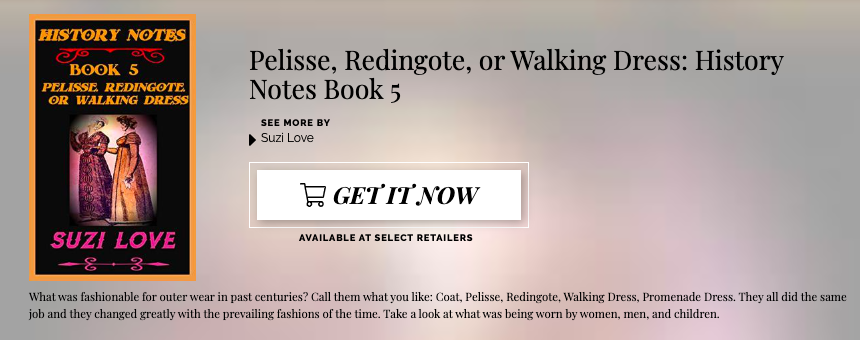
What sort of coats did women wear during the Regency years? them what you like: Coat, Pelisse, Redingote, Walking Dress, Promenade Dress. Take a look at what was being worn by women, men, and children. books2read.com/suzilovePelisse


What was fashionable outdoor wear for Jane Austen and contemporaries? Reticules, Spencers, and Pelisses, or Walking Dresses, Or Redingotes. History Notes Books 3, 4, and 5 By Suzi Love.
What sort of coats did women wear during the Regency years? them what you like: Coat, Pelisse, Redingote, Walking Dress, Promenade Dress. Take a look at what was being worn by women, men, and children. books2read.com/suzilovePelisse


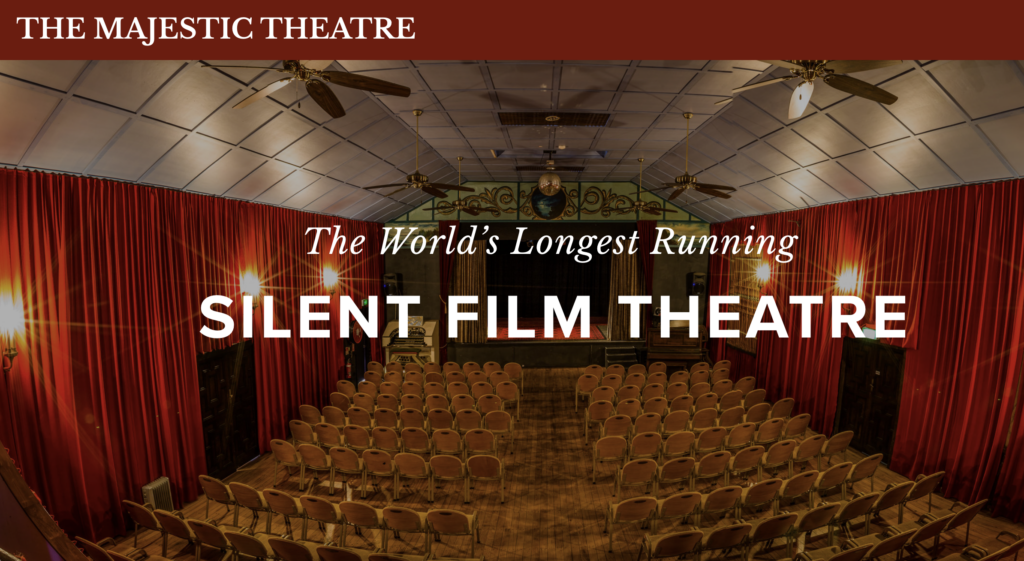
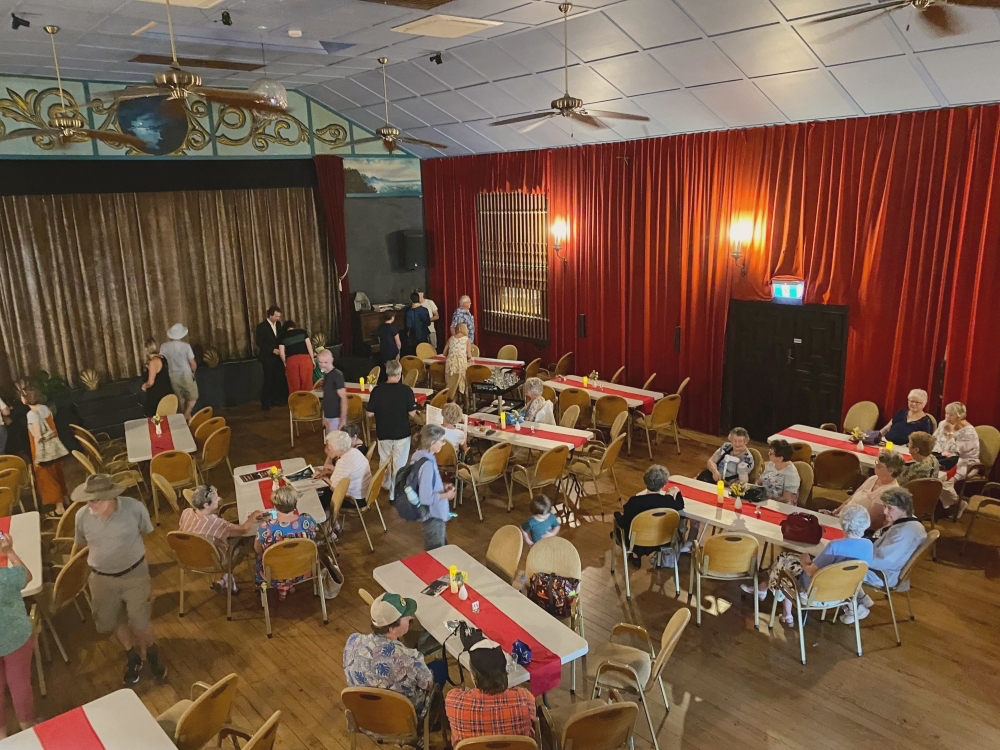
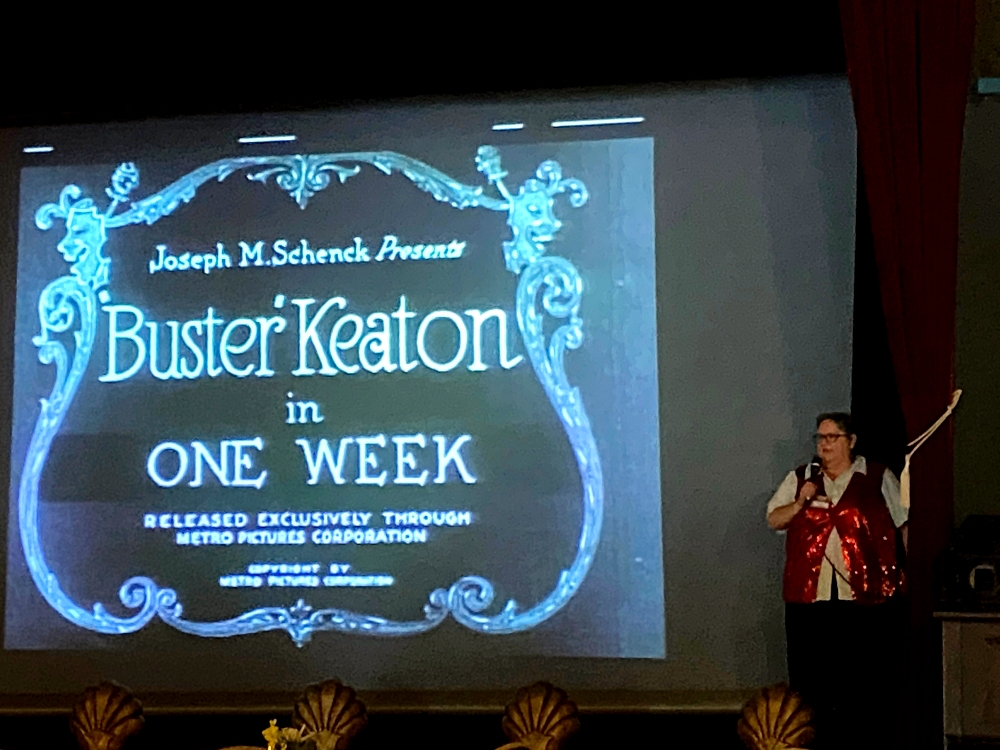
The Majestic Silent Theatre in Pomona, Sunshine Coast, Queensland, Australia was far from silent when movie goers were treated to two short movies, One Week and Haunted House, by the hilarious Buster Keaton who was famous for doing all his own stunts. The Theatre was originally built as a social hall with attached shops in 1921 and is the oldest authentic silent movie theatre in the world and the longest continuously operating movie theatre in Australia.
The hall was designed to serve several functions: to show silent movies, for vaudeville productions, and to act as a social centre for the town. Over time it served as a venue for dances, balls, concerts, and wedding functions, roller skating, boxing, and church services. Constructed of unseasoned milled hardwood, the hall was about 12 metres wide by 18 metres long, with seating for 198 people and included a sprung dance floor of ¾ inch crow’s ash timber and was raised on stumps to avoid flooding. On the left hand side was the Majestic Café, which also served as general store and the right hand side’s shop accommodated at various times a dentist, radio shop, and a mechanic. https://www.themajestictheatre.com.au
The theatre’s busiest period was during World War II, when a Tank Attack (anti-tank gun) Regiment was stationed near Pomona. The troops had priority for seats and local civilians were irate when they could not get in. Often people would watch from outside, standing in the middle of the road, which was the State’s main north to south highway. The theatre remained popular after the war, and throughout the 1940s to the 1960s films were shown on Wednesday and Friday evenings and Saturday afternoon, with a cartoon and two movies for four shillings and sixpence.
The electrical 1937 Compton organ is the only one in a Queensland theatre and comes from the Regal Cinema in South Shields, Chester England. The pipe chamber contains 1930s electrical organ switches from the Theatre Royal in Halifax. Three ranks of Christie pipes in the chamber were originally from a theatre in Dunedin, New Zealand, and were owned by a church in Sydney before they were acquired by West in 1985. Other ranks of pipes have been obtained, with the hope of eventually having 12 ranks. West did not just collect pipe organ parts – the timber organ grill that separates the organ room from the auditorium is made of Oregon pine, and comes from the Roxy Theatre in Parramatta. It took six and a half years to restore the organ and was launched on 6th July 2019. Stage drapes, furnishings and equipment were salvaged from the Regent, Wintergarden, Her Majesty’s theatres in Brisbane, and the Wintergarden in Ipswich.
Joseph Frank “Buster” Keaton (October 4, 1895 – February 1, 1966) was an American actor, comedian, and director best known for his silent film work, in which his trademark was physical comedy accompanied by a stoic, deadpan expression that earned him the nickname “The Great Stone Face”.Critic Roger Ebert wrote of Keaton’s “extraordinary period from 1920 to 1929” when he “worked without interruption” as having made him “the greatest actor-director in the history of the movies”. In 1996, Entertainment Weekly recognized Keaton as the seventh-greatest film director, writing that “More than Chaplin, Keaton understood movies: He knew they consisted of a four-sided frame in which resided a malleable reality off which his persona could bounce. A vaudeville child star, Keaton grew up to be a tinkerer, an athlete, a visual mathematician; his films offer belly laughs of mind-boggling physical invention and a spacey determination that nears philosophical grandeur.” In 1999, the American Film Institute ranked him as the 21st-greatest male star of classic Hollywood cinema.
‘One Week’ is the story of a newly-wed couple given a kit house as a wedding present and Buster Keaton and his long-suffering wife try to erect the house by following numbers on the boxes, except that a rejected suitor tries to foil their attempts. ‘Haunted House’ has Keaton as a bank teller whose manager and his gang are trying to pull off a bank heist and hide in an old house that has been booby-trapped to make it appear haunted. Both these short and silent features have the audience laughing uproariously. The movies may be silent but the audience isn’t.









The first wedding rings can be traced back to the Ancient Egyptians when they exchanged rings made from braided reeds and hemp. The tradition of exchanging rings dates back 3,000 years. The first diamond wedding ring was recorded in the will of a widow who died in 1417. The ancient Egyptians believed in the vena amoris, literally the “vein of love” that runs directly from the heart to the fourth finger on the left hand. For the Ancient Greeks, the engagement ring was symbolized with a plain gold band worn on the left hand and at the marriage the same band was shifted to the right hand.
An engagement ring is given at a proposal or when a couple decides to get married whereas a wedding ring is exchanged at the wedding ceremony and represents the official bond of marriage and the binding pledge between spouses. Wedding rings symbolise eternal love and commitment within a relationship and are worn to show the world they are married. During the wedding service, the couple will say their vows to each other while exchanging rings.
Is a wedding ring biblical? : The use of wedding ring is not commanded in the Bible, and there is no indication that it was ever practised in the New Testament. The use of finger ring in the Bible was as a symbol of authority.
Betrothal ring: An old Roman custom confirming that the marriage contract would be carried out. It was the first part of a dowry given, and meant the woman was no longer for sale as the first part of the monetary settlement had been paid. The first betrothal, or engagement, rings were given because there was often a long time between betrothals and weddings. These were usually simple bands of gold, silver, or iron as on royalty or very wealthy people could afford gemstones and diamonds. In 1477, Archduke Maximillian of Austria commissioned the very first diamond engagement ring for his betrothed, Mary of Burgundy, and many of the European aristocracy and nobility followed his lead.
Wedding ring: Many primitive peoples who believed in magic used a rope around the waist or the hand and feet, and later a ring, to symbolise that the bride was captured and spoken for, and also to ward off any evil spirits hovering around the bride and ensure marital bliss.
The ring hand: A symbol of the humiliating tradition of the man as the master – the right hand of the family – and the woman being the slave . The right hand stood for power and authority while the left hand expressed submission and serfdom.
The ring finger : Ancient Greek and Roman anatomists believed a vein, the vena amoris or the “vein of love”, or a nerve led from the heart to the third finger, the healing finger , so they romantically linked this finger to the heart. Now we know that this is not true and there is no vein that runs from our ring fingers to our hearts. There are also some more practical reasons the third finger continues to be used. It’s the most prominent for displaying a ring and it cannot be extended to its full length on its own and usually remains slightly bent, preventing the ring slipping off.
The Wedding Ring: Also goes on the left ring finger because it is the only finger with a vein that connects to the heart although some countries, such as India, Germany, Spain, Norway, and Russia traditionally wear their wedding rings on their right hand.
Viking Wedding Rings: These were mostly made of silver and bronze and rarely of gold with the designs inspired by Norse Gods, geometric shapes, runes, and animal totems
Gimmel Rings: In the 16th and 17th centuries, European husbands gave their bride a gimmel ring with two interlocking bands. The bride and groom both wore one after their engagement and during the wedding ceremony the rings were joined and the wife wore the ring.
World Wars: During the first World War, many men on the front began wearing wedding rings as a remembrance of their wives and families at home. That custom carried through to World War Two so in the 1950s wedding rings for men became common practice.
Tri-Gold Rings: Gold is the traditional ring metal but some people prefer a mix of colors. Yellow gold represents fidelity, rose gold romantic love, and white gold friendship, so a tri-gold ring symbolizes your shared past, present, and future path. ding ring to symbolize all three, as well as your shared past, present, and future path.
Black Wedding Rings: Some couples choose black wedding bands because they represent everlasting commitment and the color can also mean power, strength and sophistication.
Anniversary or Push Ring: Given on the birth of a first child or an anniversary, usually an important one such as the first, five-year or 10-year anniversary.