1820 ca. Metamorphic Mahogany Writing Table, English. via suzilove.com and 1st Dibs Auctions 1stdibs.com



1820 ca. Metamorphic Mahogany Writing Table, English. via suzilove.com and 1st Dibs Auctions 1stdibs.com

19th Century. Seven Piece Desk Set, French. Empire Style Desk Set, Napoleon III Era, French Empire Revival style, Baccarat crystal, glass, gilt, bronze ormolu writer’s desk set, including ink well and roller. The type of writing set that most households would have in Jane Austen’s and Bridgerton’s times for writing letters and keeping track of estate matters. via Ruby Lane Antiques ~ rubylane.com
19th Century Seven Piece French Empire Desk Set, Napoleon III Era, With Baccarat Crystal. #Bridgerton #Writing #RegencyEra #JaneAusten books2read.com/SuziLoveWritingTools Share on X19th Century Writing Set, French. Old Paris porcelain pot with ormolu fittings, set on a pen tray that is papier mache and hand painted in Chinoiserie, Or Japonaise, Style. The type of writing sets that households would have in Jane Austen’s times for writing letters and keeping track of estate matters. Chinese and Japanese styles of household goods were very fashionable during the English Regency and Victorian years. via Ruby Lane Antiques. rubylane.com

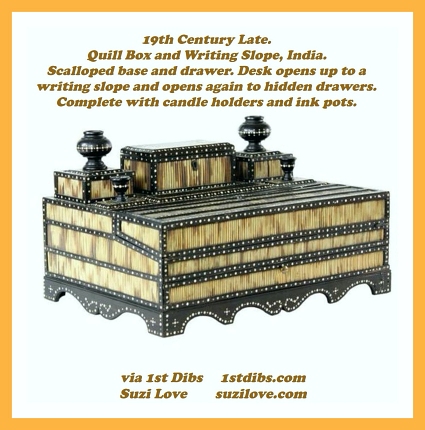
19th Century Late. Quill Box and Writing Slope, India. Scalloped base and drawer. Desk opens up to a writing slope and opens again to hidden drawers. Complete with candle holders and ink pots. The type of inkstand that households woulds have in Jane Austen’s times for writing letters and keeping track of estate matters. Many of these exotic and decorative items were brought to England by gentlemen doing their Grand Tour through Europe and Asia. via 1st Dibs Auctions ~ 1stdibs.com
19th Century Brass Travelling Inkwell and Quill Holder, Turkey. Carried by scribes as they travelled from one settlement to another and carried these held in their belts. Would have come from Turkey. The type of inkwell that travellers in Jane Austen’s times might have carried for writing letters when away from home. Many of these exotic and decorative items were brought to England by gentlemen doing their Grand Tour through Europe and Asia.via Ruby Lane Antiques.

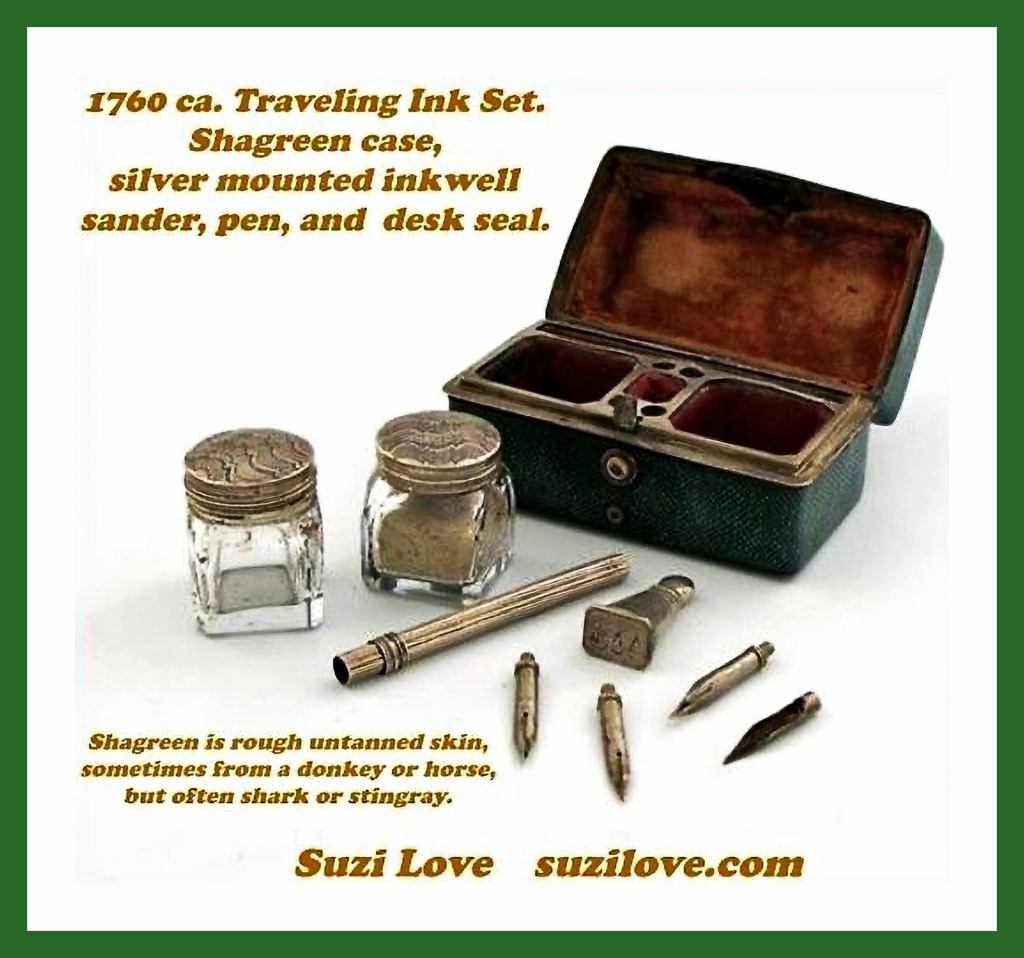
1760 ca. Traveling Ink Set. Rectangular Shagreen case with hinged cover which opens to reveal an unmarked silver mounted inkwell and sander, a pen, and a desk seal.
Definition Shagreen: Type of rough untanned skin, sometimes made from a donkey or a horse, but often from a shark or a stingray.


1890 ca. Ivory, Enamel, and Gold Carnet de Bal, or Dance Card. Formerly in the collection of lady Mairi Bury. Ribs are of ivory, numbered front to back from 1 to 24, either end decorated with polychrome enamel with a lotus flower motif, attached by chain to a ring. Maker’s marks, fitted case, Payne and Sons. via Sotheby’s Auctions. sothebys.com

1745-1750 ca. Necessaire, or small decorative box, with watch, probably German. Fitted with sewing and writing implements as well as a watch, this unmarked nécessaire shows delightful chinoiserie decoration in the Rococo style, echoing the work of the influential Munich designer François Cuvilliés (1695–1768). via Metropolitan Museum New York City, U.S.A. metmuseum.org
Small toiletry, writing, or sewing containers were called Necessaire or Etui: Tiny boxes or containers were carried in large castles or sprawling manor houses so a lady or gentleman had their essentials with them all day. They were also important when traveling by coach, trains, or ships where space was always limited. A necessaire or Etui was easily carried in a bag, reticule, or pocket so essentials were on hand for personal grooming, to repair a ripped hem, replace a button, to embroider, or to write a note or letter.

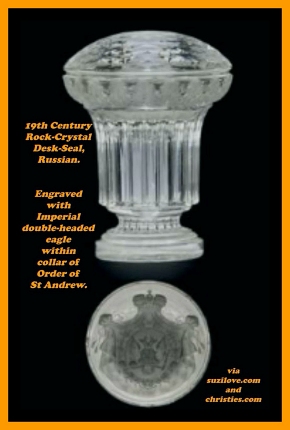
19th Century Rock-Crystal Desk-Seal, Russian. Fluted handle with domed top carved with oak leaves, matrix engraved with Imperial double-headed eagle within collar of Order of St Andrew, on ermine mantle and surmounted by the Imperial crown. via Christie’s Auction Rooms. christies.com. The type of seals that would have been on desks in Jane Austen’s times for sealing and identifying letters.