19th Century Food For The Upper Classes In Bridgerton and Jane Austen Times.
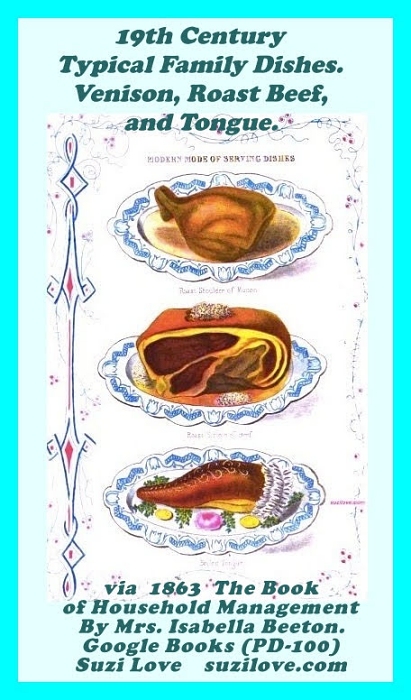
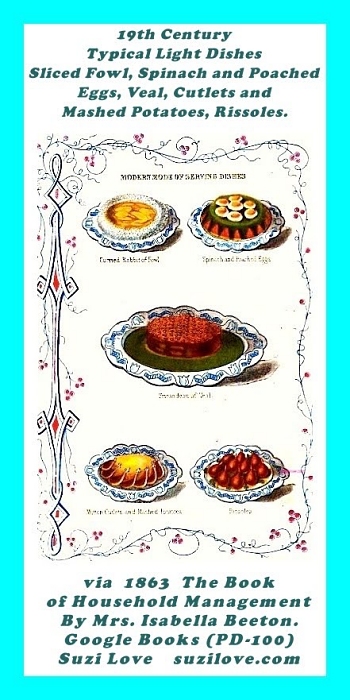
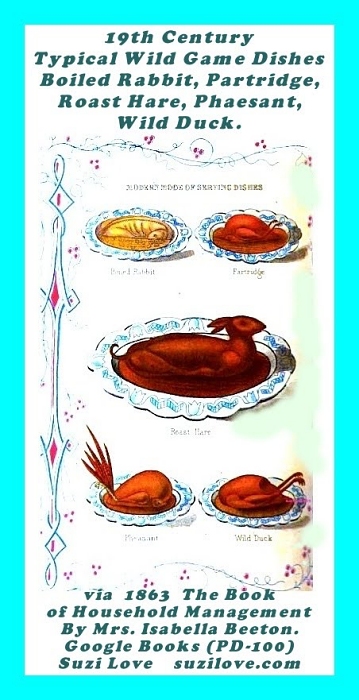
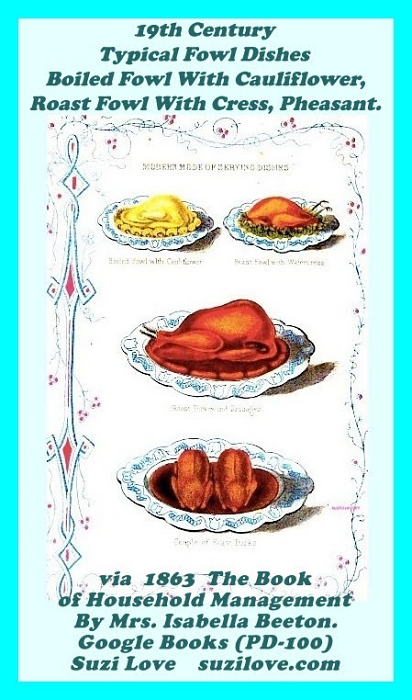
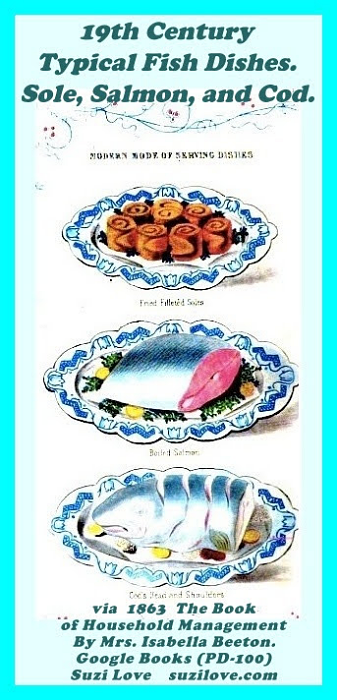
Typical Meals Served for the upper classes in the Georgian and Regency Eras. For the Upper classes in the 18th and through to the end of the 19th century, meals were elaborate affairs. and served by well-trained staff anticipated their every need. Women prided themselves on hosting dinners for 50-60 people which often consisted of numerous courses, and all served with the best wines and followed, for the men at least, by expensive port.
An older lady usually controlled the servants and the serving of meals. For more about this, take a look at Older Lady’s Day Regency Life Series Book 5 by Suzi Love. Overview of what an older lady did, wore, and how she lived in the early 19th Century. Information for history buffs and pictures for readers and writers of historical fiction. books2read.com/suziloveOLD
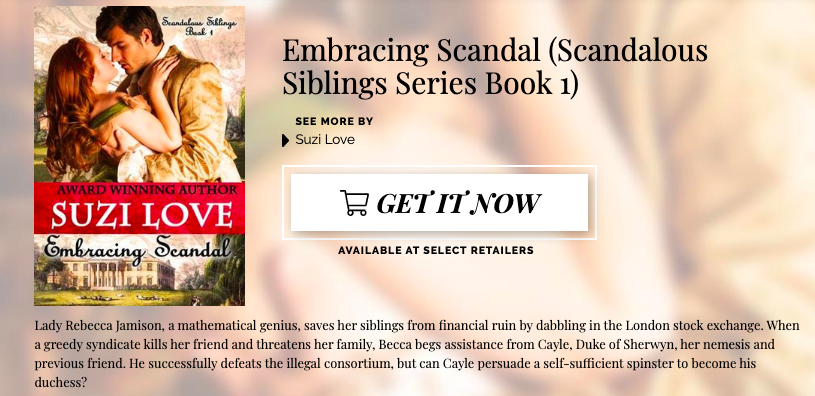
Richard St. Martin, the Earl of Winchester, explains his requirements for a placid bride while Lady Laura Jamison scoffs at his naivete. Scenting Scandal By Suzi Love Book 2 Scandalous Siblings Series. books2read.com/suziloveSS
EXCERPT
The Earl of Winchester, reiterated, “Your male relations understand my stance on marriage. I abhor marriages based on notions of romantic ideology, and I believe love matches create more unhappiness than joy. My convictions exclude me as a suitable suitor for you and make me the safest choice of escort, especially compared to the fortune hunters and rakes I’ve seen sniffing around your skirts recently.” Under her intense scrutiny, he shifted his feet. “For a woman as passionate and exciting as you, I’d prove very poor husband material.”
He realized how his words might be interpreted when Lady Laura said, “Are you complementing me for my passion? Or lamenting that I’m not the milk-pudding-miss you profess to require as your bride?”
He stiffened. “My countess will not be as bland as you imagine. She’ll be admired by everyone, including me of course, for her competency in running several large households.”
“Of course.” She rolled her eyes. “Because sewing and pianoforte and menu-planning and…reciting the bible…. are vital for any woman’s sanity. Mind you, your countess will need some distraction during the long boring months waiting to deliver your heir. And, of course, a possible spare or two. Stitching handkerchiefs may be the most excitement she experiences if her marriage to you is as boring as it sounds. I don’t believe you’re stupid enough to settle for a young girl who completely lacks wit.” Her gaze met his, confronting and demanding. “A chit with whom you’ve nothing in common, malleable enough to bend to your will and willing to be held at an emotional distance.”
He stared straight ahead, unable to meet her eyes. Laura, and this damnable conversation, would strip his long-held convictions regarding marriage from his bones.“It’s the way of our world, Laura. Men of rank list their requirements and choose the wife who best meets their needs. My countess needs to have enough spine to act as my hostess, yet be biddable and undemonstrative.”
“Poor, poor girl. Selected like a horse from Tattersall’s to carry on your breeding program, and then ignored for the remainder of her marriage. No doubt you’ll desert her in favor of your latest mistress.”
“You’ve no right to scoff at my rationale. Not after you’ve terrified every bachelor in London by scribbling notes about them in your little books. Only giving the poor sods a tick of approval if they have a pleasing aroma. You’re selecting your husband the same way I intend finding my wife. By examining their credentials. Your scientific theorizing degrades their worth as men far more than my plans for my countess. At least I’m choosing her for her … ah…gentler traits.”
When she scowled, he clasped a hand to his chest in a dramatic fashion and gave her a wide-eyed look. “Consider your lack of traditional female skills arts as providential. Instead of wasting your time testing me as a potential husband, you can treat me as an older and wiser financial advisor, as well as a loyal sentinel.”
She frowned. “Once again, I can’t decide if I should be insulted or relieved.”
1800s Typical Puddings and Pastries.These are the sort of puddings and pastries Jane Austen’s family would have eaten on a regular basis during the early 1800s, or Regency Era. Open Apple Tart, Galette, Apricot Fritters, Pancakes and Apricot Jam, Charlotte Russe, Macaroni Cheese, Cherry Tart, Mince Pies, Almond Puddings, Tartlets, Compote Of Fruit, Fruit Pudding, Fruit Tart, Christmas Plum Pudding, Milk Pudding and Roly Poly Jam Pudding. From: 1850s- 1860s Mrs. Beeton’s Books of Household Management. via Google Books (PD-150). 1800s Typical Puddings and Pastries Served In Households Like Jane Austen’s. https://books2read.com/suziloveOLD
1880’s Corset, French, silk satin, steel busk, and bone. Women used corsets to get closer to an ‘ideal physical form’. Until the beginning of the 20th century, women’s waists were tightened by corsets. via Kyoto Institute, Japan.
Corsets 1880-1900 History Notes Book 20 This book shows how a fashionable silhouette became of paramount importance and how a well-fitted corset became a fashion essential. As well as a decorative fashion item, tight lacing gave a narrow waist and the desired feminine form under clothing. https://books2read.com/SuziLoveCorsetBook20
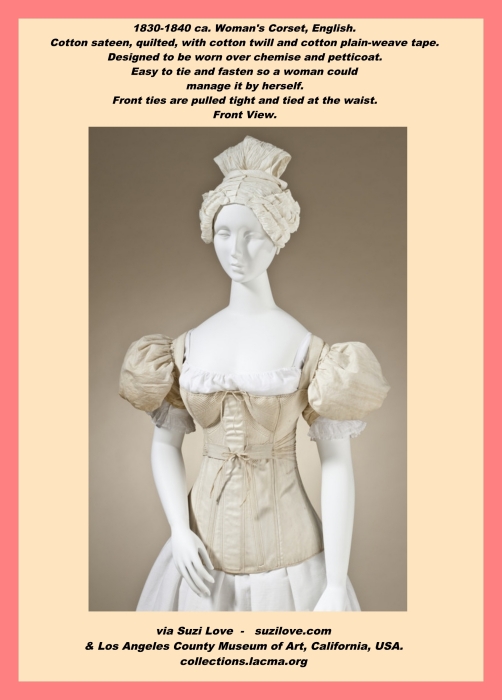
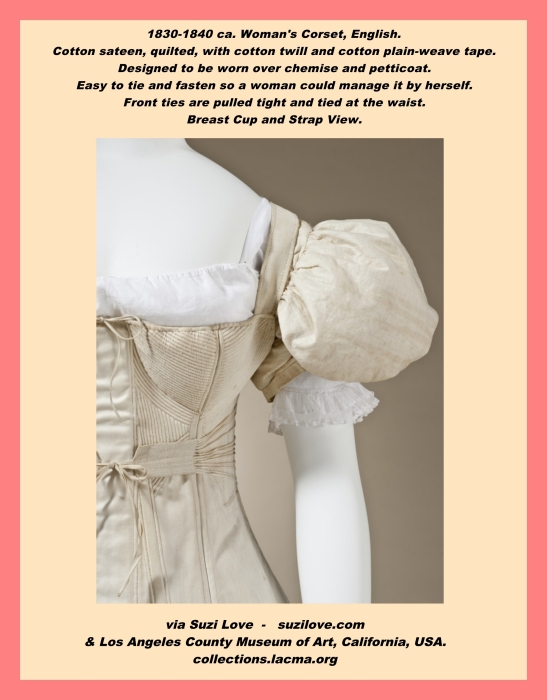
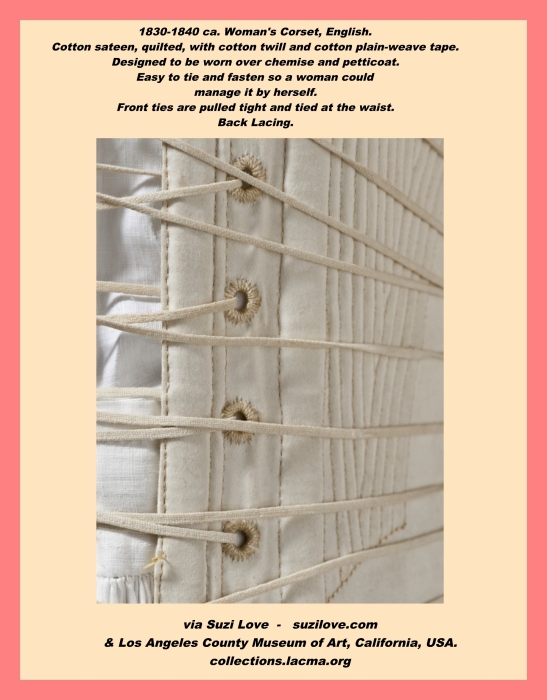
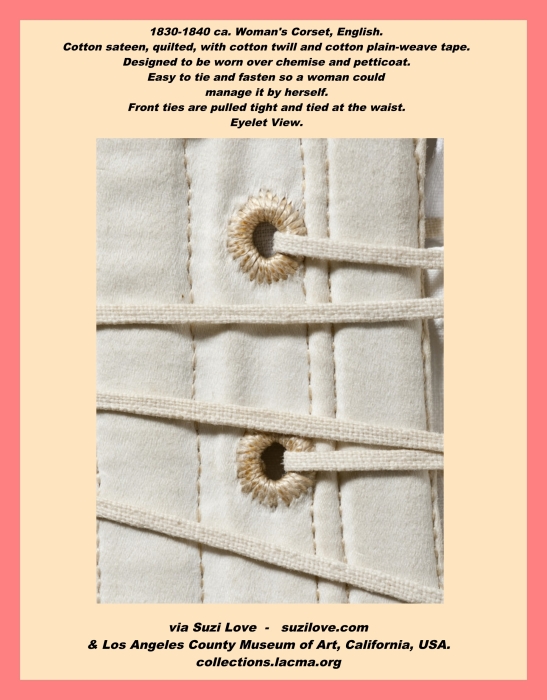
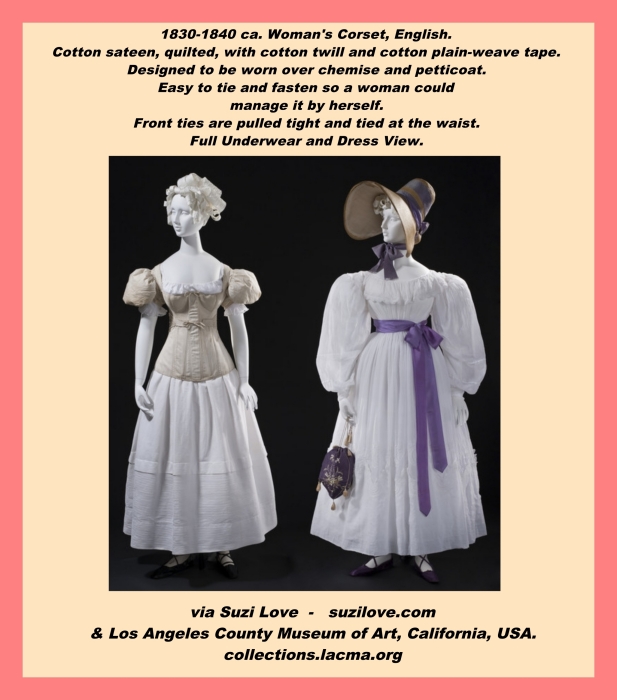
1830-1840 ca. Woman’s Corset, English. Cotton sateen, quilted, with cotton twill and cotton plain-weave tape. Designed to be worn over a chemise and petticoat. This corset is designed to be easy to tie and fasten so a woman could manage it by herself. The front ties are pulled tight and tied at the waist. Center back length: 15 7/8 in. (40.32 cm) via Los Angeles County Museum of Art, California, USA. via Los Angeles County Museum of Art. via Los Angeles County Museum of Art, California, USA.
. 1830-1840 ca. Woman’s Corset, English. Cotton sateen, quilted, with cotton twill and cotton plain-weave tape. Designed to be worn over a chemise and a petticoat. This corset is designed to be easy to tie and fasten so a woman could manage it by herself. The front ties are pulled tight and tied at the waist. Center back length: 15 7/8 in. (40.32 cm) via Los Angeles County Museum of Art, California, USA. HN_18_D2D_Corsets 1830-1850. https://books2read.com/SuziLoveCorsetBook18
Richard, Earl of Winchester, has no time for their family friend and mad scientist, Lady Laura Jamison, yet when he’s with her, passion and desire explodes. Scenting Scandal By Suzi Love Book 2 Scandalous Siblings Series. books2read.com/suziloveSS
Richard had schooled himself into playing the role of mentor with such brilliance, Laura’s brothers and sisters would applaud his aptitude for match-making. He’d find Laura’s perfect husband as quickly as possible. And at those long and interminable dinners, he’d prove his own unsuitability by arguing until their fellow diners rolled their eyes and closed their ears to another of their battles of wit. When their companions’ eyes glazed over and they turned to more interesting conversation, he’d be free to let his eyes roam and his senses feast on Laura as she raved about the wonders of evolutionary science.
It was more likely that he’d need to dig his fingers into the elegant carvings on his chair to stop himself leaping across the table like a lunatic and shocking everyone at the sixty-seat table. He’d been in control of himself and his minor kingdom since he’d turned eighteen. So, for pity’s sake, why did being within thirty yards of Laura turn him into a wet-behind-the ears randy youth?
After her olfactory tests had proved he wasn’t her ideal mate, he should feel relieved, not affronted. And rather than reveling in a bachelor’s escape from the clutches of another would-be countess, Laura’s rejection had prompted him to childishly extol his own virtues. For an earl who also held minor titles and controlled several estates, being categorized as ‘Examined and Disregarded’ was as abnormal as it was lowering.
“Laura,” he said, dodging lace frills. “Picture my brutalized face if Michael and Jonathon caught me, the one man able to resist your charms and ignore your demands, composing appalling odes to the length of your lashes like your other fawning fops.”
“Is that why Sherwyn needed to coerce you into acting as my keeper?”
Ah yes, trust Laura to demand to know the reason he complied with his cousin’s wishes. “I was the only able-bodied male available for the time required.”
1860–1870 ca. Pink Silk Bag, Or Reticule, Italian. Two layers of contrasting pink silk with tassels and a drawstring. via Metropolitan Museum New York City, U.S.A. metmuseum.org
Definition Ridicule, Reticule, Indispensable, or Handbag: From the late 1700s, pockets could no longer be sewn into gowns, as skirts fell from just under the bust and were full and flowing. Instead, women began carrying small bags, known at first as ridicules and later as reticules, to keep necessary items on their person e.g. handkerchiefs, coins, vinaigrettes, calling cards, glasses etc. http://books2read.com/suziloveReticules
The term ‘ridicule’ derived from the Latin ‘ridiculum’ and first used in France during the 17th century and meant subjecting something or someone to mockery. As women’s tiny bags were mocked, or ridiculed, for being a useless fashion accessory carried outside when they were first used in the late 1700s, it’s likely this is how the name ‘ridicule’ started. The later term ‘reticule’ derived from the Latin reticulum, meaning ‘netted bag’ and was applied when bags became larger and often made from netting. In the late 1700s and early 1800s, they were also known as indispensables as they carried all the personal items a lady needed upon her person every day. They were easily made by ladies, easy to carry and became an indispensable fashion accessory.
In the early nineteenth century, reticules started to look like future handbags as they were often made from rigid card or molded mâché or card into a variety of shapes. Early bags were circular and with a drawstring but as women wanted their reticules to look individual they could be made with two halves and a hinged metal closure or with concertina sides. Materials varied from silk, cotton and string and shapes were round, hexagonal or lozenge shapes with shell shaped bags becoming very popular during the Regency and Romantic Eras.
1800s magazines were written for well bred women who could read, so they gave plenty of ideas for how ladies could make and embellish reticules for their own use and as pretty gifts. Needlework was highly encouraged as a pastime for a lady so bags were frequently embroidered or decorated with beading. By the 1820s, reticules became more like our modern handbags using soft leather gathered at the top or hard leather with a rigid fastener and metal chain for carrying.
1860–1870 ca. Pink Silk Bag, Or Reticule, Italian. Two layers of contrasting pink silk with tassels and a drawstring. via Suzi Love suzilove.com andMetropolitan Museum New York City, U.S.A. metmuseum.org
HN _3_D2D_RetailerBuyLink_HN_3
Lady Rebecca Jamison ticked off numbers on the fingers of one revolting brown glove. “First, I’m not a thief. Second, I’m not a courtesan needing coin. Third, I’ve never been your mistress.” She looked down at her maid’s drab clothes, shuddered. “And if the women you’re taking to your bed dress this shabbily, I suggest you raise your standards.”
The Duke of Sherwyn drew several shuddering breaths. “Correct, on all counts. Now, appease my burning curiosity. What deception did you employ to hoodwink my servant?”
One shoulder lifted in the semblance of a shrug. “Oh, that! A child’s ploy. I laid coins on the fourth step and paid a street urchin to knock on your door and then run. When your gatekeeper bent to retrieve the coins, I slipped around the door and inside.”
Incredulity, then infuriation, surrendered to mirth. The simplicity of her ruse, alongside her detached style of recounting her deception, startled him into a snort of amusement.
“Huh! My ever-vigilant butler diverted by the sight of a few pennies.”
“Oh, no, not mere pennies. Gleaming new gold coins. Rest easy. Your servant’s momentary distraction cost me a high price.”
He lifted his hand to hide his smirk. Since he’d become Sherwyn, Jenner’s behavior vacillated between extreme formality due a duke or nose-lifting disdain owed to the family’s black sheep. This chink in Jenner’s polished armor pleased him.
He dipped his head, and said, “I bow to your finesse as a trickster. Now for my next pressing question. Why are you here?”
“I need your assistance.”
He grinned. “Ah, so once again your white knight is being asked to draw an imaginary sword and defend your ladyship’s honor.”
She groaned. “If only things were still as uncomplicated as in our childhood games.”
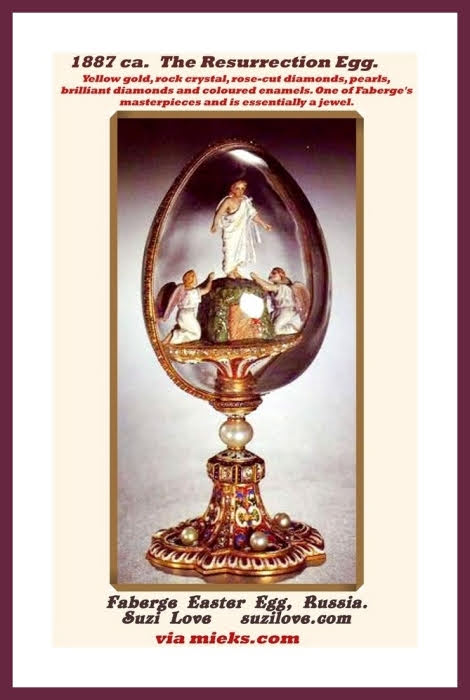
1887 Resurrection Imperial Faberge Egg. Yellow gold, rock crystal, rose-cut-diamonds, pearls, brilliant diamonds and various colored enamels. One of Faberge’s masterpieces and is essentially a jewel.
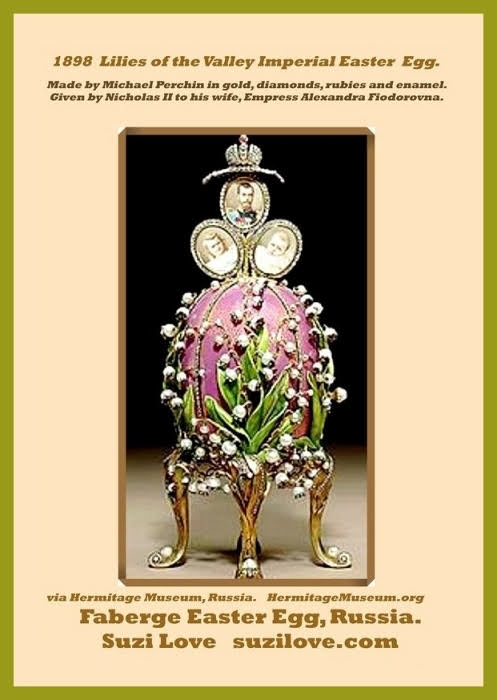
1898 Lilies Of The Valley Imperial Faberge Easter Egg, Russia. An imperial Easter egg presented by Nicholas II to his wife, Empress Alexandra Fiodorovna, for Easter 1898. Gold, diamonds, rubies and pink guilloché enamel with lily-of-the-valley flowers (pearls/diamonds) and contains a hidden portrait. From The Fabergé firm, St Petersburg made by Michael Perchin. Height is 20 cm opened. Via Collection of the Fund ‘The Link of Times’.
The name Faberge is associated with the Russian Imperial family for whom most of the world’s most famous eggs were created. In 1870, Faberge inherited his father’s jewelry business and quickly became known for his brilliant designs. A display of his work and the gold medal he was awarded in Moscow’s Pan-Russian Exhibition of 1882 brought him to the attention of the Russian nobility.
In 1885, Faberge was commissioned by Tsar Alexander III of Russia to create an Easter egg for his wife, the Empress Maria Fedorovna. This became known as The Hen Egg, the first Imperial Faberge Egg, and is made of gold. The Empress was so happy with the gift that Alexander appointed Fabergé a ‘Goldsmith by Special Appointment to the Imperial Crown’ and the following year commissioned another egg. From then on, Faberge was given complete freedom with future Imperial designs which become even more elaborate every year. A famous Fabergé egg is one of sixty eight jeweled eggs made by Fabergé and his assistants for the Russian Tzars and private collectors between 1885 and 1917.
After the Russian Revolution, the House of Faberge was nationalized by the Bolsheviks and the Faberge family fled to Switzerland where Peter Carl Faberge died in 1920. Several of the Faberge Imperial eggs are still missing.