
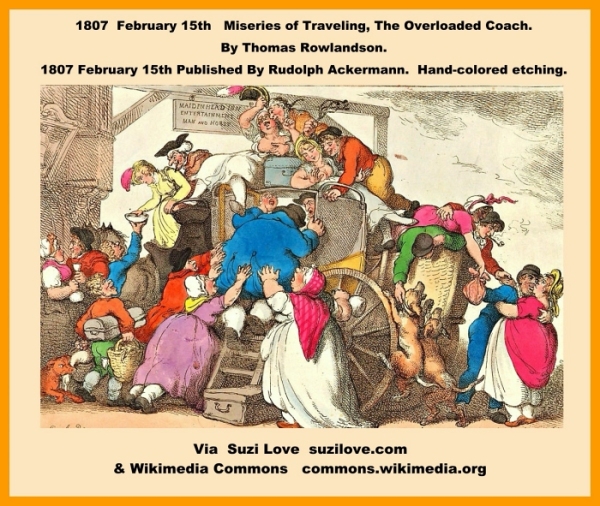
1807 February 15th ‘Miseries of Travelling’ in Jane Austen’s times. The Overloaded Coach Series By Thomas Rowlandson. Publisher Rudolph Ackermann, London (active 1794–1829). Hand colored etching.


1795 ca. Ormolu Mounted and Brass Inlaid Mahogany Traveling Desk, Russian. #GeorgianEra #Russia #History #Antiques books2read.com/SuziLoveWritingTools
Continue reading →1807 February 15th ‘Miseries of Travelling’ in Jane Austen’s times. The Overloaded Coach Series By Thomas Rowlandson. Publisher Rudolph Ackermann, London (active 1794–1829). Hand colored etching.
1810 January 1st. West India Docks, London. By Thomas Rowlandson and Augustus Charles Pugin. Printed in 1810 By Rudolph Ackermann in Microcosm Of London, or London In Miniature. Volume 1. Aquatint showing warehouses at quayside and several West Indiamen moored alongside. Warehouses held thousands of tons of cargo, including sugar, rum, molasses, coffee, spices and hardwood. Docks were constructed by powerful group of businessmen led by Robert Milligan, wealthy merchant and ship-owner outraged at losses suffered due to theft and delay at riverside wharves. via National Maritime Museum, Greenwich, London, U.K. ~ collections.rmg.co.uk


Regency Life Series: Images, information, funny anecdotes give overview of Jane Austen’s and Bridgerton times. #bridgerton #RegencyEra #JaneAusten #BritishHistory https://books2read.com/suziloveROver
Continue reading →What did ladies do and wear in Jane Austen’s time, or early 1800s? #Regency #History #nonfiction Books 4 and 5 Regency Life Series. Young Lady’s Day and Older Lady’s Day in Books 4 and 5 in the Regency Life Series.
These books depict the often-frivolous life and fashions of ladies in the early 1800’s, or during the lifetime of Jane Austen, but also gives a glimpse into the more serious occupations ladies may undertake. Through historic images, historical information, and funny anecdotes, they show how a lady fills her day, where she is permitted to go, and who she spends time with. These light-hearted looks at the longer Regency years are an easy to read overview of what people did and wore, and where they worked and played. There is plenty of information to interest history buffs, and lots of pictures to help readers and writers of historical fiction visualize the people and places from the last years of the 18th Century until Queen Victoria took the throne. Young Lady’s Day ~ Older Lady’s Day

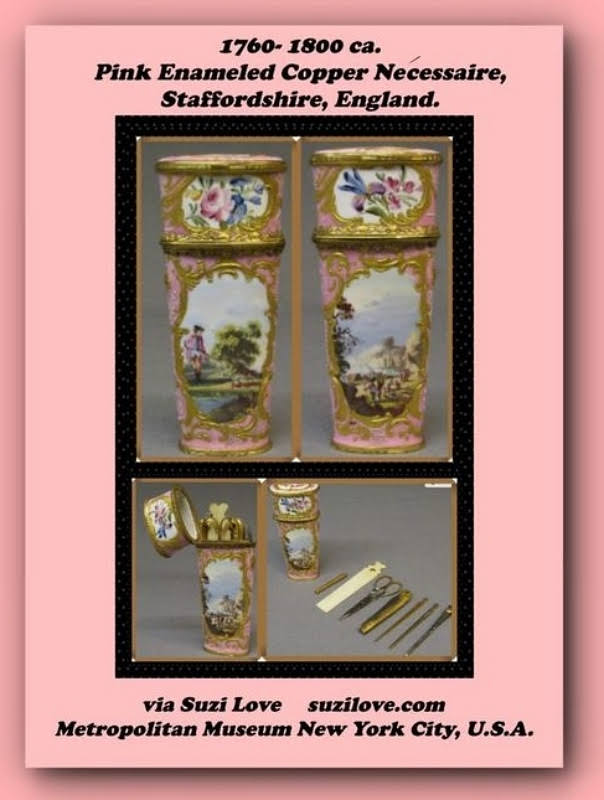
1760-1800 ca. Pink Enamel and Copper Necessaire Or Etui, Staffordshire, England. Dimensions: 3 3/4 x 1 5/8 in. (9.5 x 4.1 cm) Credit: Pierpont Morgan, 1917 via Metropolitan Museum, N.Y.C., U.S.A. metmuseum.org
Definition Necessaire Or Etui: Small toiletry, writing, or sewing containers were called Necessaire or Etui: Tiny boxes or containers were carried in large castles or sprawling manor houses so a lady or gentleman had their essentials with them all day. They were also important when traveling by coach, trains, or on ships where space was always limited. A necessaire or Etui was easily carried in a bag, reticule, or pocket so essentials were on hand for personal grooming, to repair a ripped hem, replace a button, to embroider, or to write a note or letter.

Travel and Luggage By Suzi Love History Notes Book 10. How did people travel in Jane Austen’s times. In past centuries? What did they take with them to make their long journeys easier? Travel by road, ship, canal, or railway all took a long time and had dangers so people learned to prepare. And then, in the nineteenth century, road improvements, inventions, and scientific developments made travel more pleasurable. books2read.com/SuziLoveTravel

1863 Traveler’s Chest, French. Sewing Tools, Ruby Perfume, Aide de Memoire or Notebook, etc. Inside lid with theatre curtains. via Ruby Lane Antiques. rubylane.com

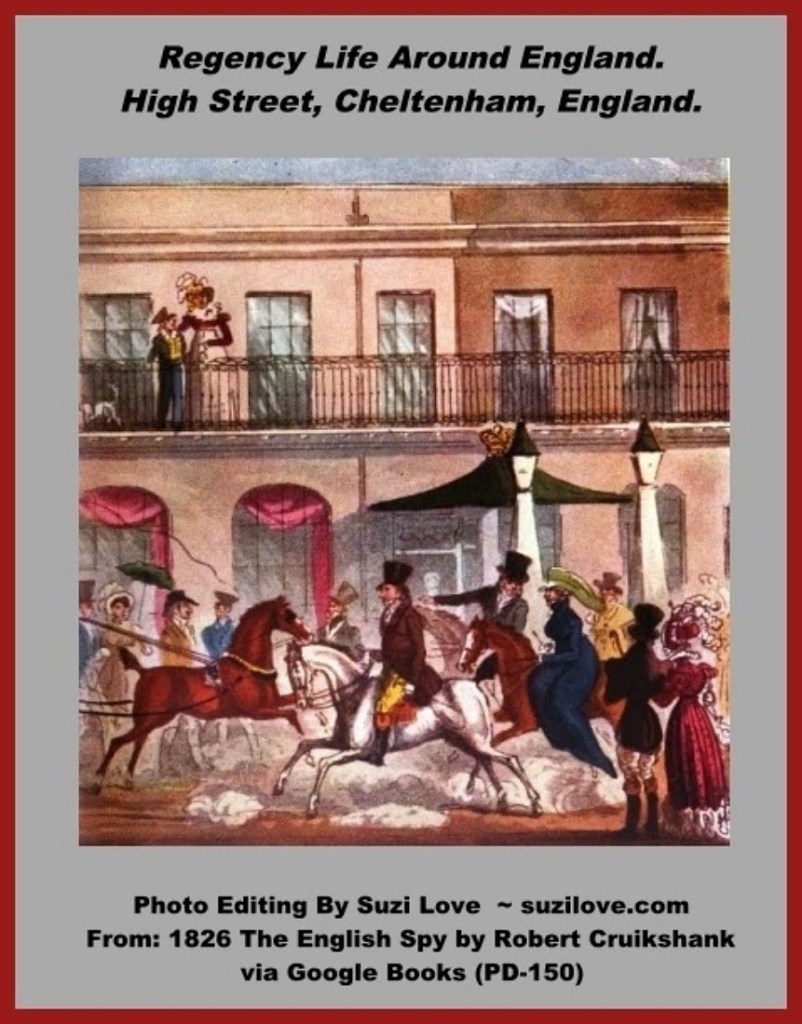
1826 Cheltenham Spa, England. From Regency Life Around England In Jane Austen’s Times. From The English Spy By Robert Cruikshank. via Google Books (PD-180)





1817 February Pelisse, or Redingote, English. Carriage dress of white poplin with a deep blond flounce. Blue levantine pelisse or walking dress, or Redingote in France, shorter than the dress and edged with floss silk. Coburg cap of black velvet turns up on one side in front and is lined and edged with blue satin. The head-dress worn with it has a profusion of white ostrich feathers. Ruff is of plain blond, edged with narrow white satin ribbon, and a pink Indian scarf over the shoulders. An ermine muff, gloves and slippers of blue kid, complete the elegant dress. Fashion Plate via John Belle’s La Belle Assemblée or, Bell’s Court and Fashionable Magazine, London.
Definition Coat or Redingote Or Pelisse: Long fitted outdoor coat worn over other garments for warmth. French word developed from English words, riding coat.

