How did Jane Austen and her family? Did they go by stagecoach? The dreadful condition of British roads caused great apprehension to all classes of travelers. Making a journey anywhere in the country was a big undertaking and often a gentleman composed his last will and testament before his departure. Traveling in vehicles was only possible during the day or on the nights with very bright moonlight with few vehicles attempting road travel in winter and any travel on a Sunday was frowned upon.
Description of Stage Coach Travel in England. via 1815 Journal Tour of Great Britain. “The gentlemen coachmen, with half-a dozen great coats about them, immense capes, a large nosegay at the button-hole, high mounted on an elevated seat, with squared elbows, a prodigious whip, beautiful horses, four in hand, drive in a file to Salthill, a place about twenty miles from London, and return, stopping in the way at the several public-houses and gin-shops where stage-coachmen are in the habit of stopping for a dram, and for parcels and passengers on the top of the others as many as seventeen persons. These carriages are not suspended, but rest on steel springs, of a flattened oval shape, less easy than the old mode of leathern braces on springs. Some of these stage coaches carry their baggage below the level of the axletree.”
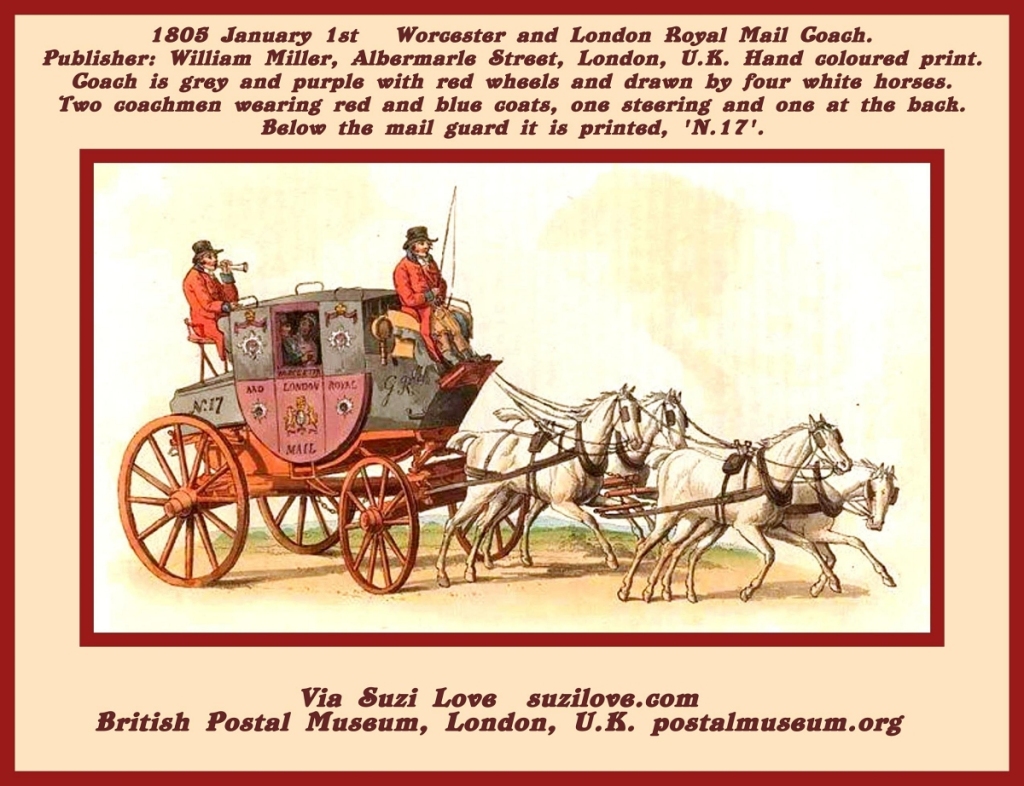
Coach Carriage Line Drawing. Photo Editing by Suzi Love ~ suzilove.com via Pearson Scott Foresman donation to Wikimedia Commons.1805 January 1st Worcester and London Royal Mail Coach. Publisher: William Miller, Albermarle Street, London, U.K. Hand colored print. Coach is grey and purple with red wheels and drawn by four white horses. Below the mail guard it is printed, ‘N.17’. Via Suzi Love suzilove.com British Postal Museum, London, U.K. postalmuseum.org
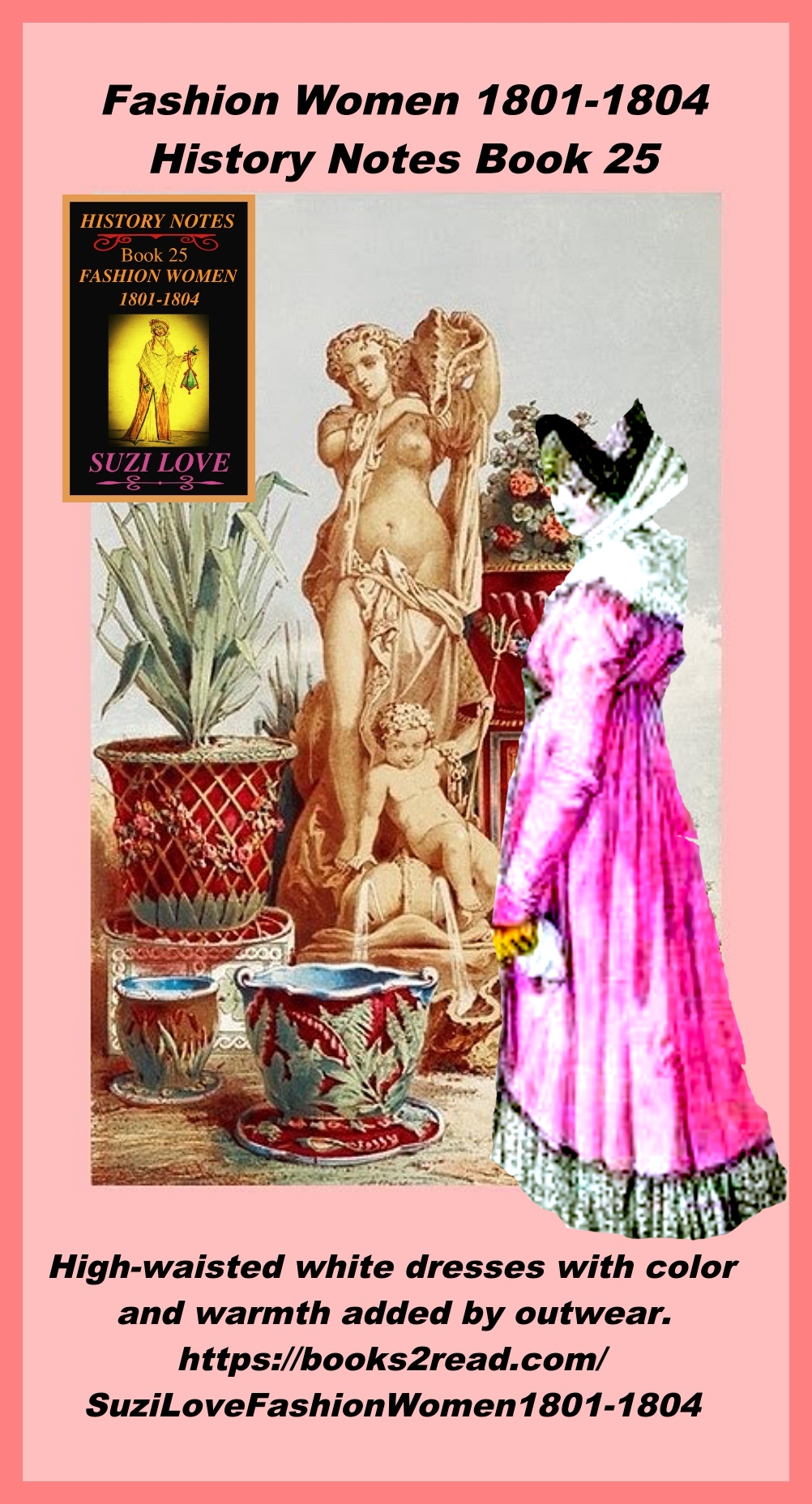
Fan of the Bridgerton Series? Jane Austen Lover? Writer Or Reader Of Regency Era? What did they wear in early 1800s? Women’s clothing changed dramatically in early 1800s. New silhouette copied simplistic styles of Greeks and Romans. High-waisted white dresses and flowing skirts with color and warmth added by outerwear and accessories. Fashion Women 1801-1804 History Notes Book 25 https://books2read.com/SuziLoveFashionWomen1801-1804
Definition Empire Style Dress: High-waisted white gowns defined women’s fashion during the Regency Era. ‘Empire’ is the name given to the period when Napoleon Bonaparte built his French Empire. High-waisted, loose gowns were adopted by the aristocracy as a symbol of turning away from the elaborate clothing worn in the 1700s. This sort of high-waisted dress would have been worn by Jane Austen and her contemporaries in England.
Definition Shawls: The shawl started off in India as a fine wool garment for men that could be worn as a scarf, turban or as a mantle: the word comes from the Persian shäl. Originally imported from the East, European Kashmir shawls were made first in Norwich and Edinburgh in Britain in the late 18th century. Shawls were an essential item in the early 1800s to cover the thin gowns women wore. They were made of muslin, gauze, silk, wool, and velvet, though cashmere shawls were the softest and most prized.
1800 Young Dandy’s Morning Outfit, French. Brown, doublebreated, cutaway coat, striped trousers tucked into high black boots with tassels, gloves, small jaunty hat and a walking stick. Fashion Plate via Journal des Dames et des Modes, or Costume Parisien.
Dandy: The author of The Hermit in London, a series of sketches published in 1819—1820 observed: ‘A distinguished Exquisite is padded all over to-day; and all the other foplings are, on the morrow, mere walking pin-cushions. A fat prince, or a fat dandy, requires confinement in his limbs; and all his subjects are immediately restrained within the same limits. One day, the back is to be as broad as an Irish chairman’s, and the shoulders to be bolstered up to imitate a hod-man; and the next, the shoulders are to be flat, and a man is to be pinched in and laced up until he resembles an earwig. All these are Master Snip’s maneuvers, who continues to make his bill equally long, whether the spencer or the box-coat be in vogue.
1810 ca. Muslin, or Cotton, Bodiced Petticoat With Sleeves, British.The sort of petticoat Jane Austen wore beneath her dresses, for both modesty and warmth. via Killerton House. National Trust, U.K. nationaltrustcollections.org.uk
In Jane Austen’s years of the early nineteenth century, women often wore light-weight dresses under which was worn a range of underclothing to stop gowns appearing transparent and sticking to a lady’s body. To preserve modesty, underclothing included a chemise next to the skin, then a corset, and then petticoats to give shape to a dress and to keep it away from her body.
Wedding ring customs that originated in long ago history.
Betrothal ring – An old Roman custom confirming that the marriage contract would be carried out. It was the first part of a dowry given, and it meant the woman was no longer for sale as the first part of the monetary settlement had been paid.
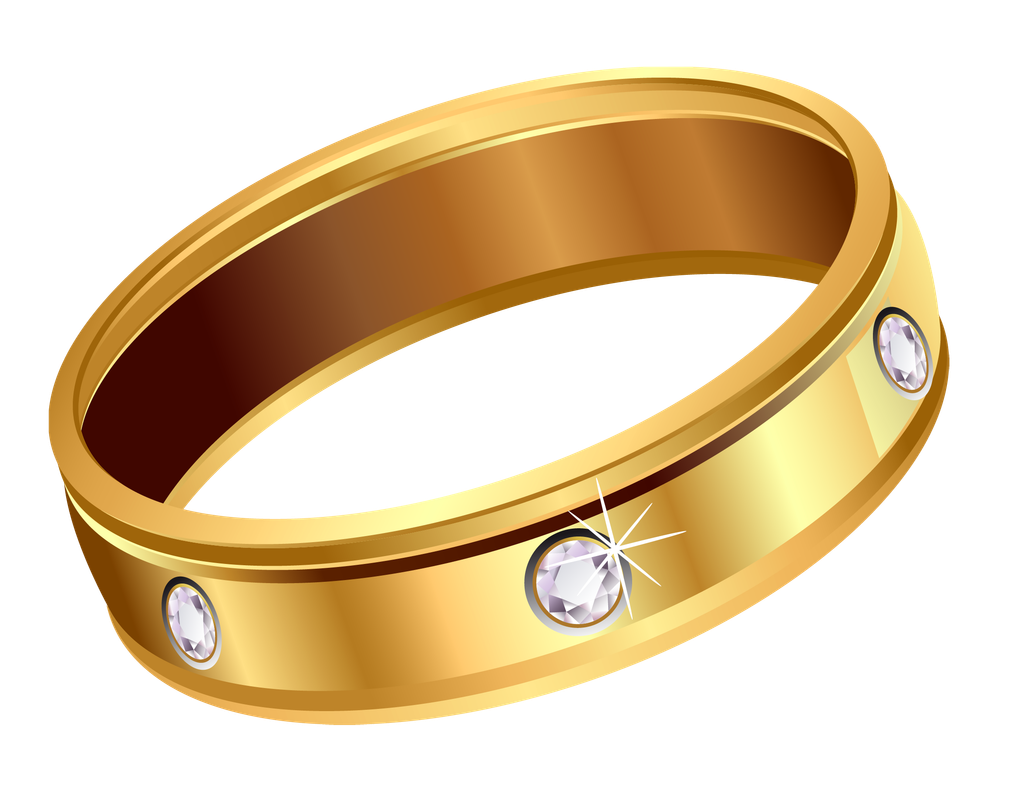
Wedding ring – many primitive peoples who believed in magic used a rope around the waist or the hand and feet, and later a ring, to symbolise that the bride was captured and spoken for, and also to ward off any evil spirits hovering around the bride and ensure marital bliss.
The ring hand– a symbol of the humiliating tradition of the man as the master – the right hand of the family – and the woman being the slave . The right hand stood for power and authority while the left hand expressed submission and serfdom.
The ring finger – Ancient Greek and Roman anatomists believed a vein or nerve led from the heart to the third finger – the healing finger – so they romantically linked this finger to the heart. There are also some more practical reasons the third finger continues to be used. It’s the most prominent for displaying a ring, and it cannot be extended to its full length on its own and usually remains slightly bent, preventing the ring slipping off.
So next time you look at a wedding ring, you can think back to how it came to be on someone’s left third finger,
Rituals of courting and marriage from ‘How Did it Begin’ by R. Brasch first published in 1965. In the word ‘Wedlock’, the lock isn’t a lock and chain but the Anglo-Saxon for gift, as wed means a promise. Wedlock pledged the gift of the happiness of a man and a woman. Nearly all courtship rituals can be traced back to early practises designed to ensure the fertility of a union. Kissing is thought to have started because primitive man believed exhaled air had magic power.
Signing an X for a kiss began in the Middle Ages when people were illiterate and used an X to sign and would then kiss the parchment to affirm their sincerity, like kissing the Bible to take an oath. The word ‘Spooning’ to describe courting came for the custom of young men in Wales to carve an elaborate spoon to give as a love token to the girl of their choice in the place of an engagement ring. Leap year proposals by women to men were a rare chance for women to correct an unjust state of affairs, just as the extra day in a leap year was a topsy-turvy day, a leapt over day in other years. In a time when there was a surplus of women, it was a chance of ensuring they were not left on the shelf.
In Jane Austen’s times craftsmen created boxes and containers of precious metals, leather, silks, and decorated them with jewels. Boxes, Cases, Etui, Necessaire and everything else that was used to carry essential items for travel, sewing, medicine, writing, and toiletries. Containers were engraved to make exquisite and expensive items as well as practical carrying cases. books2read.com/suziloveBoxesCases
Music history from the 17th, 18th, and 19th Centuries. Pianos, pianofortes, harps, viols, violins played during Jane Austen’s times. Musical Instruments were so important in most of the more affluent households in history that large industries grew all around the world to manufacture instruments, musical accessories, and to print sheet music. Musical instruction and encouragement could be found everywhere and both young ladies and gentlemen were encouraged to have musical appreciation. And of course, playing music was on the list of social requirements for all young ladies desirous of becoming a wife and homemaker.
London became Europe’s leading centre for the manufacture of scientific instruments and this led to the manufacture of more musical instruments as well as factories developed and rail transport helped the faster distribution of goods to regional areas. One of the first places that music was used to tell stories and to share enjoyment was in Christmas music. Because music was such an integral part of households, music was always a feature in Magazines. There were advertisements everywhere for musical instruments for sale, for sheet music, and for music lessons. And of course, of most interest to the ladies were the hundreds of fashion plates included in magazines where people were depicted with their musical instruments.
1845-1865 ca. Cream Silk Evening Slippers, British. Cream evening shoes with ankle ties and lace trim. Trim is unusual because mid 19th Century ladies’ shoes were often plain as only toes showed beneath fashionable long skirts. Designed By Hobbs, famous London shoemaker, and with a label attached to lining with a regal crest to show maker’s royal patronage. via Metropolitan Museum, NYC, U.S.A. metmuseum.org
Fashion Women 1815-1819 History Notes Book 28 https://books2read.com/SuziLoveFashionWomen1815-1819
A sedan chair is a portable enclosed chair for a single passenger. It was generally carried by two “chairmen” holding poles attached to either side of the chair. Sedan chairs were fashionable in England and Europe during the 17th, 18th and early 19th centuries and were an important part of the social life of the times. They were very useful for negotiating crowded, unsafe, narrow, winding and often filthy streets and were particularly used by “invalids, ladies and party goers”. Sedan chairs had the advantage of being able to be carried up and down stairs and could deliver the passenger from inside their own home to inside their destination without having to step outside.
1784 Sedan Chair. ‘The return from a masquerade. A morning scene.’ A young lady dressed as shepherdess with staff slumps in a sedan chair. Asleep or drunk her head and shoulders hang outside window. Two porters smile and dwarf chimney sweep carries a mask.’ By Robert Dighton and Cari.
1784 Sedan Chair. ‘The return from a masquerade. A morning scene.’ A young lady dressed as shepherdess with staff slumps in a sedan chair. Asleep or drunk her head and shoulders hang outside window. Two porters smile and dwarf chimney sweep carries a mask.’ By Robert Dighton and Cari.
The 19th century English author, Elizabeth Gaskell, described the use and function of the sedan perfectly in her novel “Wives and Daughters” when she reminisced how the Browning sisters chose to be transported to a ball by sedan chair, which ‘came into the parlor, and got full of the warm air, and nipped you up, and carried you tight and cosy into another warm room, where you could walk out without having to show your legs by going up steps, or down steps.’
The Bath Chair was invented in Bath, England, in the mid 18th Century to transport the wealthy and the sick around the city. It could be steered by the passenger and rivaled and then outdid the Sedan Chair as only one chairman was needed to operate it. The last Bath Chairman retired in 1949.
Typical 1700s, or Eighteenth Century Sedan Chair. Portable enclosed chair for single passenger usually carried by two chairmen holding poles attached to either side of chair. Fashionable during 17th, 18th and early 19th centuries when needed to negotiate crowded, unsafe, narrow, and dirty streets. Used by invalids, ladies and party goers. The sedan chair comprises a small kiosk with a curved timber roof which is covered with leather and studded with brass nails. The front and side panels are painted in green with floral decorations of cherubs and flowers. The back panel is of plain timber. Access to the chair was via a hinged door at the front. Inside, the chair is upholstered in silk and features padded upholstered arm rests. The windows have raw silk curtains which are gathered with tassels. The present brackets and poles are reproductions made in 1986 prior to display in the Transport exhibition. The total length of the new poles are 80 inches. The sedan chair door lock features the initials “V.F.” and a set of crossed keys with the wording “PARIS” and the number “34”. Via Powerhouse Museum, Sydney, Australia.
Typical 1700s, or Eighteenth Century Sedan Chair. Portable enclosed chair for single passenger usually carried by two chairmen holding poles attached to either side of chair. Fashionable during 17th, 18th and early 19th centuries when needed to negotiate crowded, unsafe, narrow, and dirty streets. Used by invalids, ladies and party goers. The sedan chair comprises a small kiosk with a curved timber roof which is covered with leather and studded with brass nails. The front and side panels are painted in green with floral decorations of cherubs and flowers. The back panel is of plain timber. Access to the chair was via a hinged door at the front. Inside, the chair is upholstered in silk and features padded upholstered arm rests. The windows have raw silk curtains which are gathered with tassels. The present brackets and poles are reproductions made in 1986 prior to display in the Transport exhibition. The total length of the new poles are 80 inches. The sedan chair door lock features the initials “V.F.” and a set of crossed keys with the wording “PARIS” and the number “34”. Via Powerhouse Museum, Sydney, Australia.
The longest journey recorded in a sedan chair was made by Princess Amelia, youngest daughter of King George III, who in 1728 was carried by 8 chairmen working in reliefs from London to Bath, a distance of 172 kms (107 miles). This sedan chair door lock features the initials “V.F.” and a set of crossed keys with the wording “PARIS” and the number “34”.
HN_10_D2D_RetailerBuyLink_ History Notes Book 10 books2read.com/SuziLoveTravel