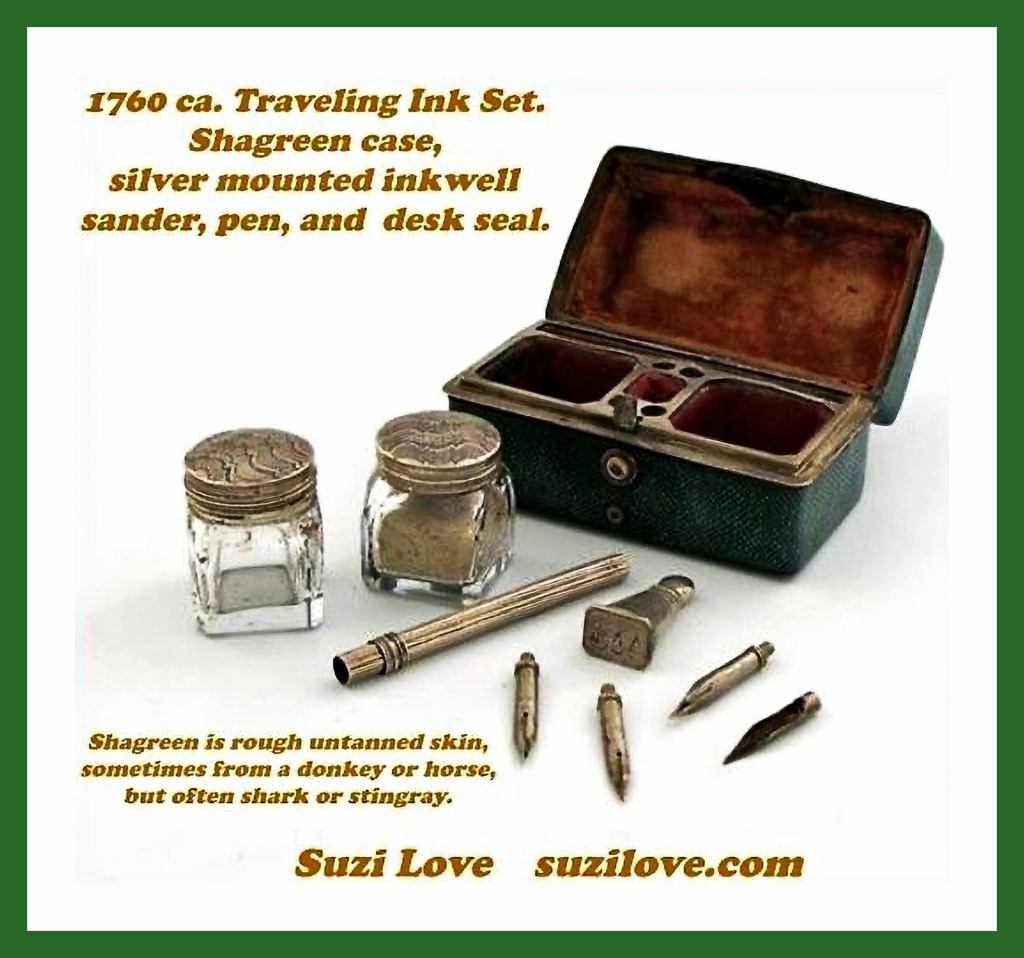
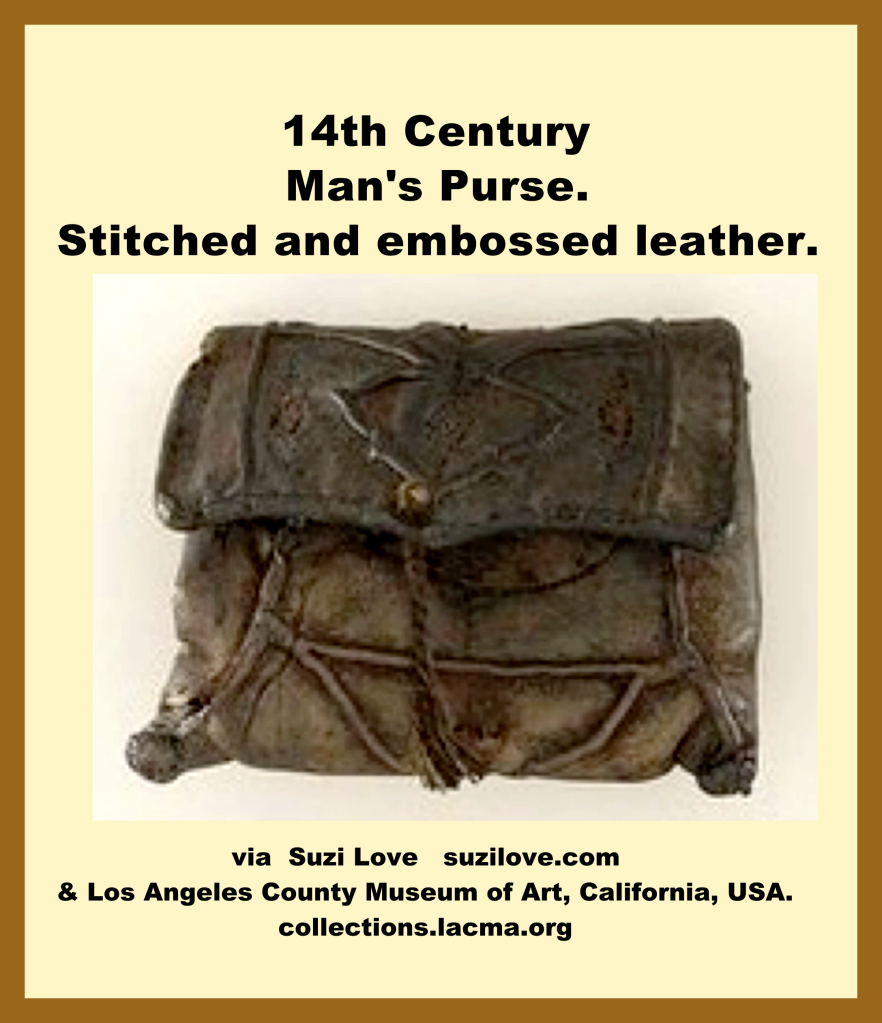
1760 ca. Traveling Ink Set. Rectangular Shagreen case with hinged cover which opens to reveal an unmarked silver mounted inkwell and sander, a pen, and a desk seal.
Definition Shagreen: Type of rough untanned skin, sometimes made from a donkey or a horse, but often from a shark or a stingray.
1890 ca. Ivory, Enamel, and Gold Carnet de Bal, or Dance Card. Formerly in the collection of lady Mairi Bury. Ribs are of ivory, numbered front to back from 1 to 24, either end decorated with polychrome enamel with a lotus flower motif, attached by chain to a ring. Maker’s marks, fitted case, Payne and Sons. via Sotheby’s Auctions. sothebys.com
Easy to read overview of what an older lady did, wore, and how she lived in Jane Austen and Bridgerton’s time. Information for history buffs and pictures for readers and writers of historical fiction. Older Lady’s Day Regency Life Series Book 5 by Suzi Love books2read.com/suziloveOLD
1890-1920 ca. Sterling Silver Chatelaine, England. Center Medallion With Portraits, three drops of monogrammed mesh purse, globe-shaped watch and book-shaped case. Via Augusta Auctions – augusta-auction.com
Definition
The word Chatelaine is French and means the keeper of the keys
Chatelaine” derives from the Latin word for castle
In Medieval times, the chatelaine was in charge of the day-to-day running of the castle.
What did a chatelaine do?
Most important task was keeper of the keys.
Also ordered supplies, did bookkeeping, supervised servants, taught castle children, and organized guests.
1763 Shagreen Etui Or Necessaire, English. via Gould Antiques ~ gouldantiques.com
Definition Etui Or Necessaire: Small toiletry, writing, or sewing containers carried by ladies and gentlemen in vast castles or large manor houses so their essentials were always on hand. Also used when traveling, where space was always limited. Easily carried in a pocket, or bag or reticule, to use for personal grooming, sewing repairs e.g. ripped hem or missing button, to do embroidery or to write a letter.
Definition Shagreen: Type of rawhide, originally made from the back of a horse or a wild donkey. In the 18th century, the skin of a shark was used as well.
1745-1750 ca. Necessaire, or small decorative box, with watch, probably German. Fitted with sewing and writing implements as well as a watch, this unmarked nécessaire shows delightful chinoiserie decoration in the Rococo style, echoing the work of the influential Munich designer François Cuvilliés (1695–1768). via Metropolitan Museum New York City, U.S.A. metmuseum.org
Small toiletry, writing, or sewing containers were called Necessaire or Etui: Tiny boxes or containers were carried in large castles or sprawling manor houses so a lady or gentleman had their essentials with them all day. They were also important when traveling by coach, trains, or ships where space was always limited. A necessaire or Etui was easily carried in a bag, reticule, or pocket so essentials were on hand for personal grooming, to repair a ripped hem, replace a button, to embroider, or to write a note or letter.
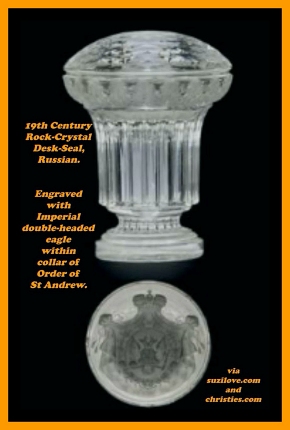
19th Century Rock-Crystal Desk-Seal, Russian. Fluted handle with domed top carved with oak leaves, matrix engraved with Imperial double-headed eagle within collar of Order of St Andrew, on ermine mantle and surmounted by the Imperial crown. via Christie’s Auction Rooms. christies.com. The type of seals that would have been on desks in Jane Austen’s times for sealing and identifying letters.